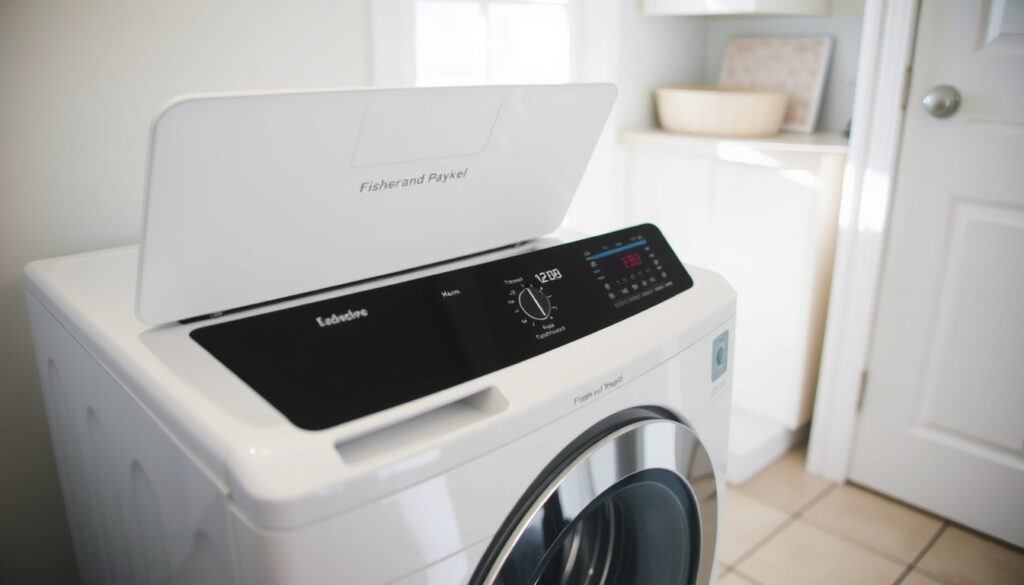
Fisher & Paykel Top Loader: Problems, Lifespan & Review
There’s something reassuring about a top loader washing machine — you can see the water, feel the clothes, and in many homes across Australia and New Zealand, a Fisher & Paykel top loader has been the workhorse for years. But when things go wrong, or when you’re deciding which brand to trust for the next decade, the picture gets more complicated. This article weighs the brand’s reputation, real-world failure data, and the economics of repair versus replacement to help you decide.
Average lifespan: 10–13 years ·
Warranty: 2 years parts and labor ·
Capacity range: 5.5 kg to 9 kg ·
Energy rating: 3–4 stars
Quick snapshot
- Founded in 1934, New Zealand heritage (Fisher & Paykel official site)
- Known for ergonomic design and SmartDrive technology (Fisher & Paykel technician training)
- High satisfaction in ANZ markets per consumer reviews (Fisher & Paykel official site)
- Lid switch failures and unbalanced loads (Fisher & Paykel technician training)
- Noise from worn belts or bearings (Consumer Reports)
- Control board faults reported on some models (Fisher & Paykel technician training)
- 10–13 years typical for top loaders (Consumer Reports)
- Depends on usage and maintenance (Consumer Reports)
- Comparable to industry average (Consumer Reports)
- Repair cost threshold: 50% of new machine (Fisher & Paykel technician training)
- Minor repairs (lid switch, drain pump) worthwhile (Fisher & Paykel technician training)
- Major control board or motor issues may justify replacement (Fisher & Paykel technician training)
Five specs that define Fisher & Paykel’s top loader range:
| Attribute | Detail |
|---|---|
| Founded | 1934, New Zealand |
| Popular top loader models | WL1064P1, WL1264P1, MW513 |
| Warranty | 2 years parts and labor |
| Capacity range | 5.5 kg to 9 kg |
| Energy rating | 3–4 stars (model dependent) |
Is Fisher and Paykel a good brand for washing machines?
What do user reviews say about Fisher & Paykel top loaders?
- Founded in 1934, Fisher & Paykel has built a reputation for ergonomic design and innovative features like SmartDrive (Fisher & Paykel technician training (repair industry source)).
- Consumer Reports (U.S. consumer advocacy nonprofit) notes that top-load HE washers have an 8% problem rate, the highest among washer types, indicating that while Fisher & Paykel may be popular, top loaders generally require careful maintenance (Consumer Reports).
- User reviews on retailer sites often praise the wash performance and easy loading but occasionally mention agitator models being less gentle on clothes.
The pattern: Fisher & Paykel’s brand strength lies in ergonomics and local heritage, but reliability data suggests buyers should pay attention to model-specific reviews and maintenance practices.
How does Fisher & Paykel compare to other top loader brands?
- In Australia and New Zealand, Fisher & Paykel dominates the top loader segment, while brands like Bosch focus on front loaders (Town Appliance (U.S. appliance retailer)).
- Bosch washers are generally reliable, with some concerns about door seals and long cycle times (Town Appliance).
- Consumer Reports data suggests top loaders have higher problem rates than front loaders, so the comparison may be apples to oranges (Consumer Reports).
The trade-off: Fisher & Paykel offers convenience and a strong local support network, while Bosch may edge ahead in energy efficiency and long-term reliability for those willing to switch to front loaders.
What are common issues with Fisher & Paykel top loaders?
What is the most common problem with a top loader washing machine?
- Unbalanced loads are the most frequent complaint across all top loaders, often due to overloading or uneven distribution (Consumer Reports).
- Water drainage failures and lid switch malfunctions are also common (Fisher & Paykel technician training).
What specific issues affect Fisher & Paykel top loaders?
- The technician training video highlights belt wear, control board faults, and noise during spin as recurring issues (Fisher & Paykel technician training).
- Rotor position sensor (RPS) failures have been noted on older SmartDrive models with a straight plain PCB (Fisher & Paykel technician training).
- Corroded out‑of‑balance switches caused by moisture leaks can lead to erratic spinning behavior (Fisher & Paykel technician training).
Many Fisher & Paykel issues stem from moisture ingress and component wear that can be prevented with regular cleaning and proper installation — but once corrosion starts, repairs mount quickly.
What this means: While many top loaders share common problems, Fisher & Paykel owners should watch for specific SmartDrive faults that may require professional diagnosis.
How long does a Fisher and Paykel washing machine last?
What is the average lifespan of a top loader?
- Consumer Reports data indicates top loaders typically last 10–13 years, with proper maintenance extending that range (Consumer Reports).
- The Fisher & Paykel warranty of 2 years parts and labor aligns with industry standards for mid-range appliances (Fisher & Paykel official site).
How does Fisher & Paykel compare to industry averages?
- Industry estimates from Consumer Reports suggest that well-maintained top loaders can reach 13 years; Fisher & Paykel models are considered within this band (Consumer Reports).
- However, the 8% problem rate for top‑load HE washers means a notable minority may fail earlier (Consumer Reports).
The upshot: Fisher & Paykel top loaders are not outliers — they follow the same 10‑ to 13‑year trajectory, but buyers should factor in the brand’s specific repair history when setting expectations.
Which is better: Bosch or Fisher and Paykel?
What are the key differences in reliability?
- Bosch is known for German engineering and efficiency, while Fisher & Paykel focuses on ergonomics and smart features (Town Appliance (U.S. appliance retailer)).
- Consumer Reports data indicates top loaders (where Fisher & Paykel plays) have higher problem rates than front loaders (Bosch’s strength) (Consumer Reports).
- Both brands offer 2‑year warranties and have similar reliability ratings in their respective categories.
Which brand offers better value for top loaders?
- Fisher & Paykel top loaders range from roughly $600 to $1,200 depending on capacity, while Bosch washers (mostly front loaders) start around $1,250 (Town Appliance).
- For households preferring a top loader, Fisher & Paykel offers the best local support and parts availability in ANZ markets.
- Bosch may be better for those who prioritise energy efficiency and are open to front loaders.
Choosing between Bosch and Fisher & Paykel isn’t just brand preference — it’s a decision between two different washing machine philosophies (top loader vs front loader) with distinct repair profiles and total cost of ownership.
The pattern: If a top loader is non-negotiable, Fisher & Paykel is the natural choice in this region. If reliability data and energy savings steer you, Bosch front loaders may be the safer bet.
Is it worth fixing a 7 year old Fisher and Paykel washing machine?
What are the signs that repair is cost-effective?
- Common rule: if the repair cost is less than 50% of a new machine, it’s usually worth fixing (Dons Appliances (U.S. appliance retailer)).
- Minor repairs like lid switch replacement or drain pump service are typically cost-effective (Fisher & Paykel technician training).
- Fisher & Paykel supports older models with parts, which improves the repair outlook.
When should you replace instead of repair?
- Major motor or control board failures can cost $300–$500, approaching 50% of a new machine’s price.
- Age and availability of parts: Fisher & Paykel’s support for older models helps, but if the machine is over 10 years old, replacement may be more economical.
- Energy efficiency improvements in newer models can offset repair costs over time.
The implication: For a 7‑year‑old Fisher & Paykel top loader, a minor repair is usually sensible. But if the control board or motor fails, the decision leans toward replacement — especially when factoring in energy savings from a current‑model machine.
What we know and what remains unclear
Confirmed facts
- Fisher & Paykel top loaders carry a 2‑year warranty (Fisher & Paykel official site).
- Common problems include unbalanced loads, lid switch failures, and water drainage issues (Consumer Reports).
- Average top‑loader lifespan is 10–13 years (Consumer Reports).
- Consumer Reports identifies an 8% problem rate for top‑load HE washers (Consumer Reports).
What’s unclear
- Exact failure rates for specific Fisher & Paykel models are not publicly available.
- Long-term repair costs compared to Bosch are not well documented.
- The effectiveness of the SmartDrive technology in reducing repair frequency is still debated among technicians.
- Whether Fisher & Paykel’s corrosion issues are more prevalent than in competing brands is unclear.
“Top-load HE washers were singled out for not cleaning clothes thoroughly, with an 8% problem rate, the highest among washer types in its cited reliability data.”
— Consumer Reports (consumer advocacy nonprofit)
“Bosch washing machines are generally reliable, with some reported concerns about door seals and control buttons.”
— Town Appliance (appliance retailer comparison article)
“Rotor position sensor (RPS) issues are flagged on earlier machines with a straight plain PCB on the IPS.”
— Fisher & Paykel SmartDrive technician training video
For an Australian or New Zealander with a 7‑year‑old Fisher & Paykel top loader, the choice is clear: budget for the occasional minor repair, but don’t hesitate to replace if the control board or motor fails. For buyers on the fence, Fisher & Paykel remains a solid top‑loader brand, provided you stay on top of maintenance and know the model‑specific pitfalls.
For a closer look at how this model stacks up against competitors, see our detailed Fisher & Paykel top loader review which covers common issues and real-world performance data.
Frequently asked questions
Does Fisher and Paykel make a top loader without an agitator?
Yes, some Fisher & Paykel top loaders use an impeller or SmartDrive system that does not have a traditional center agitator, although many models still include one.
How do I clean the lint filter on a Fisher and Paykel top loader?
The lint filter is usually located inside the drum or near the agitator. Pull out the filter, rinse it under running water, and replace it after every few loads.
What is the weight limit for a Fisher and Paykel 6kg top loader?
A 6kg top loader can typically handle around 6kg of dry laundry per cycle. Check the user manual for exact loading recommendations.
Can I install a Fisher and Paykel top loader in a tight space?
Yes, top loaders do not require side‑clearance for door swing, but leave at least 2.5 cm on each side for ventilation and stability.
How do I reset a Fisher and Paykel washing machine?
Unplug the machine for 2 minutes, then plug it back in. If the issue persists, refer to the error code table in the user manual.
Are Fisher and Paykel top loaders energy efficient?
Most models have 3‑ or 4‑star energy ratings, making them competitive for top loaders, though front loaders generally use less water and electricity.
Where can I find the serial number on a Fisher and Paykel top loader?
The serial number is typically located on a sticker inside the lid or on the back panel of the machine.
Related reading
More related posts
 Chelsea FC vs FC Barcelona Lineups: 2025 UCL Preview
 Cast of Little Fires Everywhere: Complete Actor Guide
 Interest Rate Comparison NZ 2024: Latest Mortgage & Savings Rates
 Best Savings Account NZ: Highest Rates & Safest Banks
 ANZ New Zealand SWIFT Code: ANZBNZ22 for International Transfers
 Punjab Kings vs Rajasthan Royals Match Scorecard IPL 2026
 Wellington Wind Warning Red – Status, Impacts and Safety Tips
 What Does Tinnitus Sound Like – Audio Examples and Descriptions