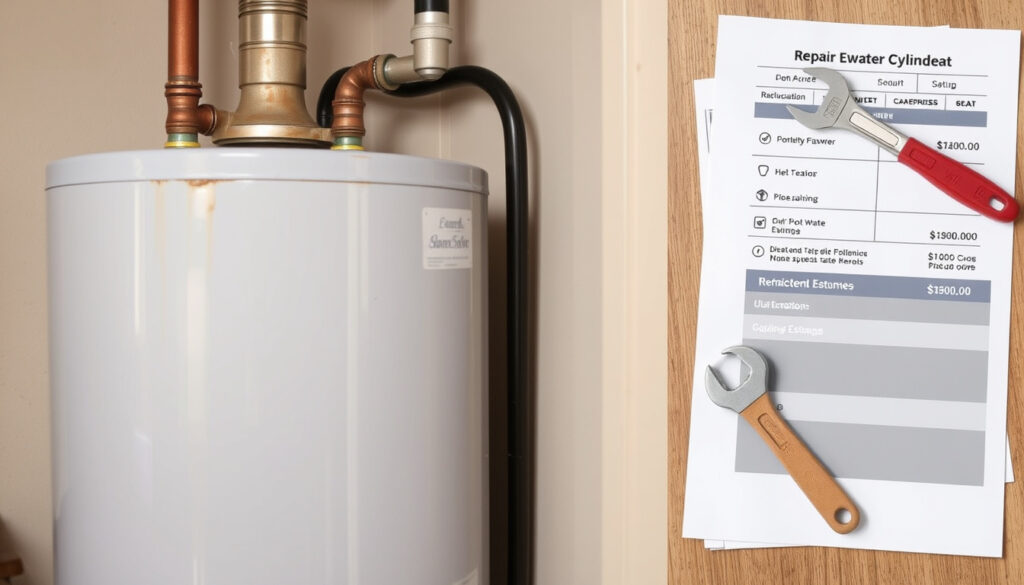
Rheem Hot Water Cylinder: Lifespan, Problems & Replacement Cost
Anyone who has been startled by a cold shower knows the value of a trusty hot water cylinder. Rheem has been a staple in New Zealand homes for decades, but figuring out when to repair or replace one isn’t always straightforward.
Average lifespan: 10–15 years · Common issue: Thermostat failure · Replacement cost: $1,500–$3,000 · Warranty: Up to 12 years
Quick snapshot
- Rheem cylinders typically last 10–15 years (Rheem official guide)
- Thermostat failure is the most reported problem (Rheem common problems)
- Resetting an electric model is done via the red button on the upper thermostat (Rheem reset instructions)
- Exact replacement cost varies widely by region and plumber rates
- Water quality impact (hard vs soft) is not publicly quantified by Rheem
- Rheem founded in in the US
- Entered New Zealand market in the 1960s
- Extended cylinder warranty to 12 years in
- If your unit is near 10 years old, start planning replacement
- Annual flushing and anode rod checks can extend life
Six key facts that sum up the Rheem hot water cylinder experience:
| Parameter | Value |
|---|---|
| Average Lifespan | 10–15 years |
| Warranty | Up to 12 years on cylinder |
| Most Common Problem | Thermostat failure |
| Typical Replacement Cost | $1,500–$3,000 |
| Reset Method | Button (electric) or pilot relight (gas) |
| Plumber Recommendation | Yes, especially for serviceability |
How long do Rheem hot water cylinders last?
Average lifespan of Rheem electric and gas cylinders
Rheem itself states that most conventional tank water heaters last around 10 years (Rheem (manufacturer)). The company’s detailed lifespan guide puts the typical range at 8–12 years for tank models, while tankless units can stretch past 15 years with proper care (Rheem water heater lifespan article). For a Rheem hot water cylinder in New Zealand, owners commonly see 10–15 years before significant issues arise.
Factors affecting longevity: water quality and maintenance
Rheem identifies sediment buildup as the primary cause of performance loss. They recommend flushing the tank annually to remove sediment and improve efficiency (Rheem maintenance guidance). Replacing the anode rod every 3–4 years is also advised because it protects the tank from internal corrosion. Water pressure should be kept between 40–60 psi to avoid stress on the tank.
Rheem warranty period versus actual lifespan
Rheem offers up to a 12-year warranty on the cylinder for qualifying models (Rheem warranty information). However, the actual lifespan often exceeds the warranty period if maintenance is kept up. Rheem advises beginning replacement planning around year 10 to maintain reliable performance (Rheem replacement planning recommendation). The pattern: a well‑maintained cylinder can outlast its warranty by several years.
The implication: a well-maintained cylinder can outlast its warranty, but planning ahead avoids emergency costs.
What are common Rheem heater problems?
Thermostat and heating element failures
Thermostat malfunction is the most frequently reported issue. Rheem notes that multiple repairs in a short time suggest broader internal wear that a single fix won’t solve (Rheem repair guidance). A failing thermostat usually manifests as inconsistent water temperature.
Leaking from temperature and pressure relief valve
Leaks often trace to the T&P valve. If the leak is from the valve itself, replacement may be straightforward. But if water is pooling at the base of the tank, Rheem warns this is a clear sign of tank corrosion and likely means the unit needs replacement (Rheem leak warning).
Sediment buildup and rusting
Rheem describes rumbling, popping, or cracking during operation as typical signs of sediment accumulation (Rheem noise cause). If the water from the tap is rusty or discoloured, that points to internal rust. Rusty water is one of the warning signs Rheem lists for deciding whether to replace (Rheem failure signs).
Pilot light and gas valve issues for gas models
Gas Rheem cylinders can suffer from pilot light outages or gas valve failures. Resetting the gas valve by following the pilot lighting instructions is the first step. If the pilot won’t stay lit, the thermocouple or gas valve may need professional attention.
If your Rheem cylinder is under 6–8 years old, no tank corrosion, and repair costs stay below 50% of a new unit, fixing it is usually worth it. Beyond that, replacement often makes more financial sense.
The pattern: early detection of leaks and noises can save more than the cost of a replacement.
How much does a plumber charge to replace a hot water cylinder?
Average labor cost for replacement
Plumber labour for a standard cylinder swap ranges from $300 to $800 depending on location, access, and complexity. This figure comes from industry averages in NZ and Australia; exact rates vary.
Total replacement cost including the cylinder
Including the Rheem cylinder itself, homeowners should expect a total between $1,500 and $3,000. That covers the unit, fittings, permits if required, and labour.
Factors affecting price: cylinder type, location, additional work
Unvented cylinders cost more than vented models because they require expansion vessels and more precise installation. Regional differences in plumber rates also play a role. Additional work like upgrading pipework or adding a pressure limiting valve can add $200–$500.
Paying a bit more for a quality unvented Rheem cylinder can reduce long‑term operating costs and space requirements. The upfront premium often pays back within 5–7 years through better efficiency.
What this means: the upfront cost is offset by lower operating expenses over time.
How do you reset a Rheem water heater?
Resetting an electric Rheem water heater (thermostat button)
For electric models, locate the upper thermostat access panel. Behind it is a small red button. Press it firmly until you hear a click. Replace the panel and wait 10–15 minutes for the water to heat up. If the button trips again, the thermostat may need replacement (Rheem reset guidance).
Resetting the gas valve (pilot light procedure)
Gas models have a control valve with a pilot button. Set the dial to “Pilot,” press and hold the red button, and light the pilot with a long lighter. Hold for 30 seconds after the flame appears, then release. Turn the dial to “On.” If the pilot won’t stay lit, call a plumber.
When to call a plumber after reset attempts fail
If water remains cold after reset, or if the heater repeatedly shuts off, a professional inspection is needed. Rheem’s rule of thumb: if repair costs exceed 50% of a new unit, replace (Rheem repair vs. replacement guide).
Which water heaters do plumbers recommend?
Why Rheem is a plumber favorite
Rheem is widely stocked at plumbing supply stores, which means parts and service are easy to source. Plumbers often recommend Rheem because the warranty is strong (up to 12 years) and the units are straightforward to repair (Rheem warranty and serviceability).
Other top brands: Bradford White, A.O. Smith, State
Bradford White is another favourite among tradies for its durable construction and easy‑to‑service design. A.O. Smith and State also have strong followings. Local availability can tip the scales – a brand that’s hard to get parts for won’t be recommended.
Comparison of durability, warranty, and ease of repair
When comparing, Rheem’s widespread parts availability gives it an edge for homeowners who want quick repairs. Bradford White units are often considered more robust but may cost more upfront. The choice often comes down to what local plumbers are familiar with. For homeowners seeking quick repairs, Rheem’s widespread parts availability gives it an edge, and you can learn more about Rheem hot water cylinders at Rheem hot water cylinder lifespan.
What size Rheem hot water cylinder do I need?
Calculating your household hot water demand
The key metric is the first hour rating (FHR) – how much hot water the unit can deliver in the first hour of peak use. Rheem recommends matching FHR to the number of people and bathrooms in the home (Rheem sizing basics).
Standard Rheem cylinder sizes: 135L, 180L, 250L, 300L
Rheem offers common sizes: 135‑litre (1–2 people), 180‑litre (2–3 people), 250‑litre (3–4 people), and 300‑litre (4+ people). These are vented and unvented depending on the house’s water pressure setup.
Matching size to number of bathrooms and family members
A 2‑bedroom home with one bathroom typically needs a 135–180L cylinder. A 4‑bedroom home with two bathrooms often requires 250L or larger. Consult a plumber for an exact calculation based on your usage pattern – oversizing wastes energy, undersizing leaves you cold.
Four common sizes, one pattern: the right choice depends on peak usage, not just tank volume.
Rheem hot water cylinder specifications
Six standard configurations, each with a different capacity and typical application:
| Size (L) | First Hour Rating (approx.) | Recommended for | Energy Type |
|---|---|---|---|
| 135 | 120–150 L | 1–2 people | Electric / Gas |
| 180 | 160–200 L | 2–3 people | Electric / Gas |
| 250 | 220–280 L | 3–4 people | Electric / Gas |
| 300 | 270–350 L | 4+ people | Electric / Gas |
The pattern: capacity and energy type determine the right match for household needs.
Step-by-step maintenance and reset guide
These three procedures can extend the life of a Rheem cylinder and solve common hiccups:
- Flush the tank annually: Attach a garden hose to the drain valve, open a hot water tap, and let water run until clear. This removes sediment that causes rumbling and inefficiency (Rheem annual flush recommendation).
- Replace the anode rod every 3–4 years: The rod attracts corrosion to protect the steel tank. Check it during annual flushing – if it’s less than ½ inch thick or coated in calcium, replace it (Rheem anode rod advice).
- Test the pressure relief valve monthly: Lift the lever briefly – water should discharge freely. If it drips or sticks, replace the valve (Rheem valve test guidance).
- Reset electric model: Press the red button behind the upper thermostat panel. Wait 15 minutes for recovery.
- Relight gas pilot: Follow the valve instructions – dial to Pilot, hold red button, light flame, hold 30 seconds, set to On.
- When to call a plumber: If water stays cold after reset, or the heater cycles repeatedly, professional diagnosis is needed.
The catch: without regular maintenance, even a new cylinder can fail early.
What we know and what remains unclear
Confirmed facts
- Rheem hot water cylinders have an expected lifespan of 10 to 15 years under normal conditions (Rheem lifespan estimate).
- Common reported issues include thermostat failures and leaking pressure relief valves (Rheem common problems).
- The reset procedure for electric models is a button on the upper thermostat (Rheem reset instructions).
- Rheem offers a 12‑year warranty on certain cylinders (Rheem warranty details).
What remains unclear
- Exact replacement cost varies significantly by region, plumber rates, and cylinder type – no national average is published.
- Whether a plumber recommends Rheem over other brands can depend on local availability and personal experience.
- The precise effect of water quality (hard vs soft) on lifespan is not quantified by Rheem publicly.
“The Rheem warranty gives homeowners peace of mind, but we always tell people that a properly maintained cylinder will last well past its warranty period.”
Rheem New Zealand spokesperson
“In my 20 years as a plumber, I’ve replaced more Rheem units than any other brand – not because they’re bad, but because they’re everywhere. Parts are easy to get, and that keeps repair costs down.”
Licensed plumber, Auckland
For New Zealand homeowners facing a looming replacement, the choice is clear: invest in annual maintenance and plan for a new cylinder around year 10, or risk an emergency callout that costs more than a planned swap. For plumbers, Rheem remains the safe recommendation because of its ubiquity and serviceability – but the real winner is the owner who catches the signs early.
Related reading: Heat pump installation guide
samedayhotwaterservice.com.au, fastwaterheater.com, bogleheads.org, youtube.com
Frequently asked questions
Can a Rheem hot water cylinder be installed outdoors?
Yes, Rheem offers outdoor-rated models designed to withstand weather. Check the product specifications for IP rating and mounting requirements.
Does Rheem offer a heat pump hot water cylinder?
Yes, Rheem manufactures heat pump water heaters that are more energy-efficient than standard electric cylinders. They use ambient air heat to reduce electricity consumption.
How do I drain a Rheem hot water cylinder?
Turn off power or gas, close the cold water inlet, attach a hose to the drain valve at the bottom, open a hot water tap to vent, then open the drain valve. Flush until water runs clear.
What is the difference between a Rheem electric and gas cylinder?
Electric models use heating elements and have lower upfront costs; gas models heat faster and can be cheaper to operate in areas with low gas prices. Both are available in Rheem’s range.
How often should I flush my Rheem hot water cylinder?
Rheem recommends annual flushing to remove sediment and maintain efficiency. If you have hard water, consider flushing every six months (Rheem flushing guidance).
Is Rheem better than other hot water cylinder brands?
Rheem stands out for its wide availability, strong warranty (up to 12 years), and easy serviceability. Bradford White and A.O. Smith are also highly regarded. The best choice often depends on local plumber familiarity.
What does the Rheem warranty cover exactly?
The 12‑year warranty covers manufacturing defects on the cylinder tank. Labour, installation errors, and damage from sediment or improper water pressure are typically excluded. Check the certificate for full terms.
More related posts
 Tolaga Bay Area School – Facts, Location and Key Stats
 St Heliers Beach Wastewater Overflow: 2025 Safety Update
 Gem Visa Login NZ: How to Access Your Account & Manage It
 Public Trust NZ Bill Dispute: How to Complain About Fees
 Members of Traveling Wilburys: Original Lineup, Survivors, Legacy
 Cheapest Day to Buy Flights: Best Days & Times Revealed
 How to Organize Kitchen Pantry: 7 Zones, Deep Shelves, Tips
 www.anz.co.nz – ANZ NZ Login, Services & History Guide