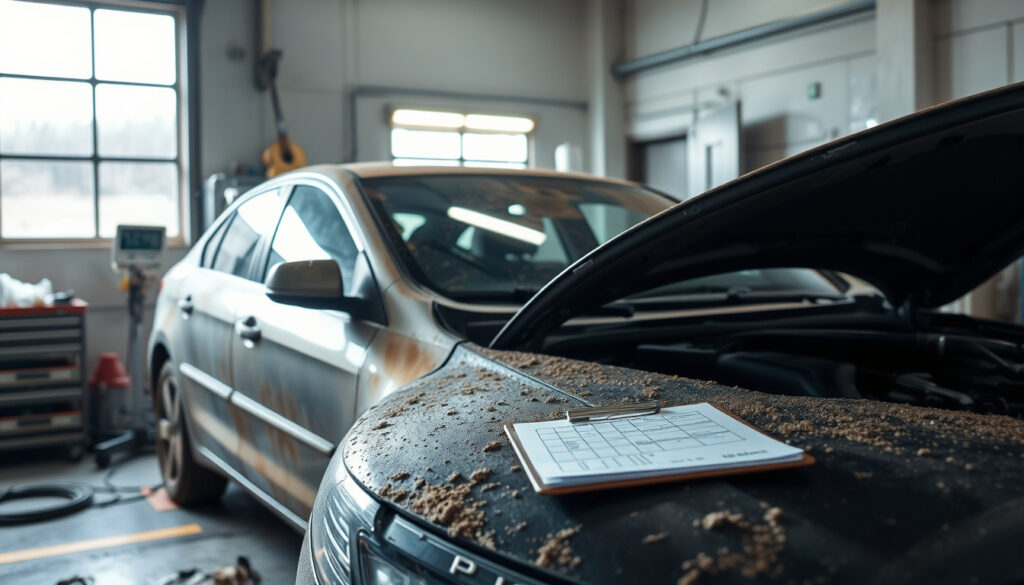
VTNZ Dirty Car Inspection: Policy, Cost & Checklist
You book a VTNZ WoF appointment, show up on time, and then get turned away because your car has dog hair on the seats. It sounds like a bad joke, but for two New Zealand drivers in May 2025, it was real.
Reported incidents of dirty car rejection: 2 customers turned away in May 2025 ·
Common reason cited for rejection: Dog hair ·
Additional issue found during inspection: Hole in rear seat belt
Quick snapshot
- VTNZ policy allows rejection if a vehicle is not clean and tidy (Otago Daily Times (NZ regional newspaper))
- Two customers were turned away in May 2025 for dirty cars, including dog hair (same source) (Otago Daily Times (NZ regional newspaper))
- One car also failed for a hole in the rear seat belt (same source) (Otago Daily Times (NZ regional newspaper))
- Whether the policy is applied uniformly across all VTNZ branches
- Exact thresholds for “too dirty” – no published criteria exist
- Cost of a VTNZ WoF inspection (pricing varies by branch)
- 16 May 2025 – RNZ reports two VTNZ rejections for dirty cars (Otago Daily Times (NZ regional newspaper))
- Expect more public attention on VTNZ’s cleanliness policy
- Drivers may face stricter enforcement of existing rules
Three key facts, one clear message: VTNZ’s policy is driven by inspection access, not aesthetics. Here’s what the official records say:
| Label | Value |
|---|---|
| Policy statement | VTNZ may reject vehicles if not in a clean and tidy state |
| Example rejection cause | Dog hair (May 2025) |
| Co‑occurring failure | Hole in rear seat belt |
| WoF frequency (pre‑2000 vehicles) | Every 6 months (VTNZ (official inspection provider)) |
| WoF frequency (2000+ vehicles) | Annually (same source) |
| Checklist item – tyres | Tread depth inspected (same source) |
| Checklist item – brakes | Operation checked (same source) |
| Checklist item – lights | Function and alignment (same source) |
| Checklist item – seat belts | Condition and buckles (same source) |
| Checklist item – airbags | Present and functional (same source) |
| Checklist item – exhaust | No leaks, excessive noise or smoke (same source) |
What is VTNZ’s policy on rejecting dirty cars?
VTNZ’s official position, confirmed by a spokesperson to RNZ, states that the company “reserves the right to reject a vehicle if it is not in a clean and tidy state, is contaminated, or is impossible to access and properly inspect critical safety components.” That’s not a secret internal rule – it’s written into the terms of service.
VTNZ reserves the right to refuse service if the vehicle is not clean and tidy
- The policy covers both interior and exterior cleanliness.
- Critical safety components must be visible and accessible: seat belts, airbags, steering column, lights, structural elements.
- Contamination could include excessive dirt, debris, pet hair, food waste, or any material that blocks access.
Specific examples from May 2025 include dog hair and general mess
- Two drivers were turned away during the same period; both cars had visible dog hair inside the cabin.
- One of those cars also failed for a hole in the rear seat belt – a mechanical defect unrelated to cleanliness.
- The story was covered by Otago Daily Times (NZ regional newspaper) and RNZ, sparking discussion on Reddit and Facebook.
VTNZ’s enforcement isn’t random – it’s tied to a legitimate safety access requirement. Drivers who arrive with a messy car risk being turned away and losing their appointment slot.
The pattern is clear: the policy is enforced when inspectors cannot do their job. For anyone with a dog or a dirty vehicle, a pre-appointment clean is the cheapest insurance.
How dirty does a car have to be to fail a VTNZ inspection?
There’s no published brightness or debris scale. The practical threshold is simple: if an inspector cannot see or reach a safety component, the car fails the pre‑inspection check and will be rejected.
Visibility and access to safety components
- The inspection covers seat belts, airbags, steering wheel, pedals, and interior structural panels – all must be visible.
- Clutter, food wrappers, tools, or cargo that blocks access is grounds for a refusal.
- VTNZ (official inspection provider) lists safety belts, airbags, and doors as WoF check items – each requires clear line of sight.
Interior contamination like excessive dog hair or food debris
- Dog hair was the specific contamination cited in the May 2025 incidents.
- Heavy pet dander, muddy carpets, or food debris that obscures seat belt anchors or floor panels can lead to rejection.
- Inspectors need to ensure seat belt webbing isn’t damaged – hair or dirt can hide wear.
External dirt that prevents proper inspection
- Number plates must be legible – mud or grime covering them is an immediate rejection reason.
- Headlights, tail lights, and indicators must function and be visible – thick dirt or snow can block light output.
- Structural rust checks require a clear view of underbody and panel edges – a caked undercarriage may be impossible to evaluate.
If you drive a working vehicle (farm ute, tradie van, dog owner’s SUV), you’re at higher risk. VTNZ’s policy specifically mentions contamination – and mud, hay, or pet hair all count.
What is the cost of a VTNZ WOF inspection?
WoF pricing in New Zealand is set by the inspection provider, not the government. VTNZ sets its own fees, and they vary by branch and vehicle type.
Standard WOF cost for a car or light vehicle
- As of 2025, a standard WoF for a car or light vehicle typically ranges from NZ$50 to NZ$70 at VTNZ.
- Exact pricing should be confirmed at your local VTNZ branch.
- There is no national fixed price – VTNZ (official inspection provider) notes that prices vary.
Additional charges for re‑inspection or cleaning services
- If your car is rejected for dirt, you will not be charged for the inspection (VTNZ does not charge if they cannot inspect).
- There is no published re‑inspection fee – you may need to book a new appointment and pay the full WoF cost again.
- VTNZ does not offer cleaning services on‑site; you must return the car in a clean state.
The catch: a rejection for dirt means you pay twice if you rebook. Knowing the cost helps you prioritise a quick vacuum over a wasted trip.
What items are on a VTNZ dirty car inspection checklist?
VTNZ doesn’t publish a separate “dirty car” checklist – the standard WoF checklist is the benchmark. Cleanliness is a prerequisite, not a separate item. But you can reverse‑engineer the requirements.
Interior cleanliness: seats, carpets, dashboard, no debris
- All seats must be visible and accessible – child seats, blankets, and pet bedding should be removed.
- Carpets and floor mats must be clear of mud, water, food, and sharp objects that could hide corrosion or sharp edges.
- The dashboard and centre console must be free of clutter that may obstruct airbag deployment zones.
Exterior cleanliness: windows, lights, number plates visible
- Every window (windscreen, side, rear) must be clean enough to see through – tint is fine, but dirt or frost that reduces visibility is not.
- All lights (headlights, tail lights, indicators, brake lights) must be clearly visible and not obscured by mud or tape.
- Number plates must be legible from 20 metres – a dirty or bent plate can cause rejection.
Access to safety systems: seat belts, airbags, steering column
- Seat belt webbing must be fully visible so the inspector can check for fraying or holes (as happened in the May 2025 incident).
- Airbag covers must be clear of stickers or mounted devices that could impede deployment.
- The steering column and pedals must be unobstructed – floor mats or cargo that could trap a pedal are a safety hazard.
The table below breaks down cleanliness standards by area, linking each to the safety reason.
| Area | Cleanliness standard | Why it matters |
|---|---|---|
| Cabin | Free of debris, pet hair, food | Inspector must see seat belts, airbags, floor area |
| Boot / cargo area | Items removed, surface clean | Spare tyre, jack, fuel filler access may be checked |
| Exterior panels | Mud, snow, grime removed | Rust and structural checks require bare metal visibility |
| Lights & plates | Clean, legible, unobstructed | Road legality and safety |
| Underbody | Not heavily caked with mud or oil | Brake and suspension components must be visible |
The pattern: every cleanliness requirement traces back to a safety inspection need. If an inspector cannot verify a safety component, the car is effectively un‑inspectable – and VTNZ’s policy gives them the right to refuse service.
How to prepare your car for a VTNZ inspection
Follow these steps to avoid a rejection for dirt:
- Vacuum all seats, carpets, and floor mats – pay extra attention to pet hair.
- Remove all clutter from the cabin: food wrappers, tools, blankets, child seats.
- Clean all windows inside and out – inspect for cracks while you’re at it.
- Wash number plates so they are legible from 20 metres.
- Clear mud or grime from headlights, tail lights, and turn signals.
- Check and clean the boot – remove spare tyre covers if necessary.
- Wipe down the dashboard and centre console to ensure airbag covers are unobstructed.
A 10‑minute clean before your appointment can save you the cost of a re-booking and the frustration of a wasted trip. For more on driving tests and licensing, see our guide on How to Book Full Licence Test NZ.
Are there reviews of VTNZ dirty car inspections?
The May 2025 news generated a wave of public commentary. Social media platforms – especially Reddit and Facebook – became the primary venues for NZ drivers to share their experiences and opinions.
Customer experiences shared on Reddit and Facebook
- Reddit discussion threads noted that the dog‑hair rejection wasn’t the only issue – one car also had a hole in the rear seat belt, indicating that the driver may have failed regardless of cleanliness.
- Facebook commenters expressed surprise that VTNZ actually enforces the policy, with many admitting they drive with messy interiors regularly.
- Some users backed VTNZ, arguing that inspectors should not be expected to work in unsafe or unsanitary conditions.
Reactions to the May 2025 news coverage
- The Otago Daily Times article (16 May 2025) was widely read and shared across NZ social media.
- Many commenters questioned whether VTNZ’s enforcement is consistent – some claimed to have passed inspections with equally messy cars at other branches.
- The story also reignited discussion about the broader WoF system and whether it should be reformed.
For NZ drivers who rely on their vehicle for work or family, a dirty‑car rejection can mean lost income or missed commitments. Knowing the policy – and how to avoid it – saves both money and frustration.
The public reaction shows that many drivers were unaware of the policy. The lesson: read the fine print before you show up.
Timeline: The May 2025 VTZN incident
- – RNZ reports that two VTNZ customers were turned away because inspectors deemed their cars too dirty (including dog hair). One car also failed for a hole in the rear seat belt. (Otago Daily Times (NZ regional newspaper))
Clarity check: confirmed vs. unclear
Confirmed facts
- VTNZ policy allows rejection for unclean vehicles (confirmed by spokesperson via RNZ) (Otago Daily Times (NZ regional newspaper))
- Two specific incidents occurred in May 2025 (same source)
- Dog hair was mentioned as a reason for rejection (same source)
- One car also failed for a hole in the rear seat belt (same source)
- Complaints should first go to VTNZ, then escalate to NZTA using a Vehicle Certification Complaint Form (same source)
What’s unclear
- Whether the policy is applied uniformly across all VTNZ branches
- Exact thresholds for “too dirty” – no published criteria exist
- Cost of a VTNZ WoF inspection (pricing varies by branch)
- Whether VTNZ will issue a warning or require immediate rebooking
- How many similar rejections happen each month (no public data)
VTNZ reserves the right to reject a vehicle if it is not in a clean and tidy state, is contaminated, or is impossible to access and properly inspect critical safety components.
— VTNZ spokesperson, via RNZ / Otago Daily Times (NZ regional newspaper)
If you turn up with a car full of dog hair, they will send you away. I’ve seen it happen.
— Reddit user comment (May 2025), cited in Otago Daily Times (NZ regional newspaper)
For NZ drivers, the takeaway is pragmatic: give your car a 10‑minute clean before every WoF appointment. Vacuum the seats, clear the footwells, wash the number plates. It’s not about vanity – it’s about giving the inspector a clear, safe path to inspect every safety system. The alternative is a wasted trip and a rescheduled appointment. Need to prepare for a driving test? Check out our Full Licence Test NZ Booking guide. For updates on transport regulation, see NZTA Wellington Public Transport Revenue Targets.
For more on why a dirty car can fail, see our detailed guide on VTNZ dirty car inspection policy and recent rejection cases.
Frequently asked questions
Can I clean my car at the VTNZ site before the inspection?
VTNZ does not offer on‑site cleaning facilities or equipment. You must arrive with a sufficiently clean vehicle.
Does a dirty engine bay affect the outcome of a VTNZ WoF?
The engine bay is not typically part of a WoF inspection unless there are obvious leaks or structural concerns. However, excessive oil or grime that hides leaks may raise concerns.
Will VTNZ reject a car for excessive mud on the exterior?
Yes, if mud covers lights, number plates, or structural panels that need to be inspected, the car can be rejected.
What should I do if my car is rejected for being dirty?
You will not be charged for the inspection. You must clean the car thoroughly and rebook a new appointment.
How long do I have to clean and return for a re‑inspection?
There is no grace period – you need to book a new WoF appointment. VTNZ does not hold your slot for a re‑inspection on the same day.
Does the policy apply to motorcycles and trailers as well?
Yes, the same condition applies to any vehicle presented for a WoF at VTNZ. Trailers also require clear access to lights, tyres, and couplings.
Are there any legal protections for consumers if a car is rejected unfairly?
If you believe the rejection was unjustified, first contact VTNZ directly. If unresolved, you can submit a Vehicle Certification Complaint Form to NZ Transport Agency Waka Kotahi.
More related posts
 Auckland Real Estate 2025: Prices, Rules & Living Costs
 When Is Crate Day 2025? NZ Dates, Rules & Traditions
 External Hard Drive NZ 2026: SSD vs HDD Buyer’s Guide
 www.anz.co.nz – ANZ NZ Login, Services & History Guide
 Bay of Islands Accommodation: Best Paihia & Kerikeri Stays
 Doubtful Sound Overnight Cruise: Worth It? Guide & Reviews
 Public Trust NZ Bill Dispute: How to Complain About Fees
 Find and Submit Dominion Post Death Notices Wellington