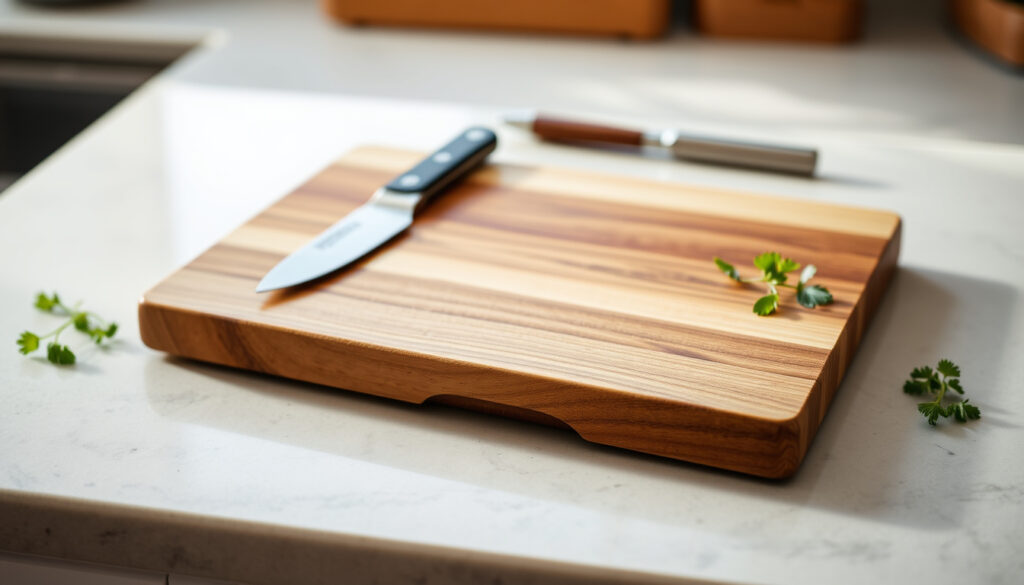
Best Wooden Chopping Board NZ: Complete Buying Guide
Anyone who has spent more than a few minutes prepping vegetables in a New Zealand kitchen has likely wondered whether their chopping board is doing its job. The wood you choose affects knife sharpness, food safety, and how long the board lasts.
Janka hardness of hard maple: 1450 lbf ·
Janka hardness of black walnut: 1010 lbf ·
Typical premium board thickness: 1.5 to 2 inches ·
Number of wood species suitable for boards: 10+
Quick snapshot
- Maple, walnut, cherry are popular imported options (The Cutting Board Company AU, specialist maker)
- Native rimu and macrocarpa are available locally (Countdown NZ, grocery retailer guide)
- Hardness and grain structure determine durability and knife care (Misen, kitchen brand)
- Wood is naturally antibacterial (Blade & Burnish, woodworking resource)
- Avoid softwoods and open‑grain woods like oak (Blade & Burnish, woodworking resource)
- Use separate boards for raw meat and produce (USDA Food Safety and Inspection Service)
- NZ‑made options from Woodzone, Woodnbits, Fab Slabs (Countdown NZ, grocery retailer guide)
- Retailers like Briscoes, IKEA, Kmart sell cheaper imports (IKEA NZ, product category)
- Consider sustainability and local sourcing (Countdown NZ, grocery retailer guide)
- Hand wash only, no dishwasher (Trading Pieces NZ, local maker)
- Oil with food‑grade mineral oil monthly (Trading Pieces NZ, local maker)
- Sand and re‑oil when dry or stained (Trading Pieces NZ, local maker)
Here are the key specifications that matter when choosing a board.
| Attribute | Value |
|---|---|
| Janka hardness of hard maple | 1450 lbf |
| Janka hardness of black walnut | 1010 lbf |
| Typical premium board thickness | 1.5 to 2 inches |
| Number of wood species suitable for boards | 10+ |
What is the best wood for a chopping board?
What is the best material for a wooden chopping board?
- Hard maple – Janka 1450 lbf, tight closed grain. Widely considered the gold standard for durability and knife‑friendliness (Misen, kitchen brand).
- Black walnut – Janka 1010 lbf, softer but attractive and moisture‑resistant (Trading Pieces NZ, local maker).
- Cherry – Janka 995 lbf, develops character over time (Betterwood, wood‑science resource).
- Spotted Gum, Blackbutt, Red Gum, Myrtle, Blackwood – Australian and New Zealand native timbers recommended for durability, hygiene, and knife‑friendliness (Countdown NZ, grocery retailer guide).
- Teak – Natural oils resist moisture but it is softer (around 1000 lbf) and better for light‑duty boards (Trading Pieces NZ, local maker).
What do professional chefs use?
A majority of professional chefs choose end‑grain wooden boards because they are gentle on knives and last longer (Trading Pieces NZ). The USDA also recommends using separate boards for raw meat and produce to prevent cross‑contamination (USDA Food Safety and Inspection Service).
Hard maple gives you longevity at the cost of knife sharpening frequency, while walnut spoils your knives less but dents more easily. For most NZ home cooks, a mid‑range Janka around 1100–1200 offers the best balance.
The implication: choose according to your knife maintenance tolerance and how much impact you can accept.
What is the best material for a cutting board in New Zealand?
Wood vs plastic vs bamboo vs glass
- Wood – Naturally antibacterial, gentle on knives, but requires oiling (Blade & Burnish).
- Plastic – Dishwasher‑safe but develops grooves that can harbour bacteria; the USDA advises replacing once heavily grooved (USDA).
- Bamboo – Very hard (Janka around 1400), but the glued layers can crack and it dulls knives quickly (Blade & Burnish).
- Glass – Easy to clean but destroys knife edges; not recommended by professionals.
New Zealand’s climate means humidity can affect wooden boards more than in drier countries. Teak and walnut handle moisture better than maple, though all benefit from regular oiling (Trading Pieces NZ).
The pattern: wood requires more care but outperforms alternatives in hygiene and knife preservation; choose based on your maintenance commitment.
Which is the healthiest chopping board to use?
Non‑toxic wood options
- Hard maple has natural antimicrobial properties and a light colour that makes food residues easy to see (Blade & Burnish).
- Teak contains natural oils that resist fungi and bacteria (Betterwood, wood‑science resource).
- End‑grain boards “self‑heal” after knife cuts, reducing bacterial hideouts (Misen).
Food‑grade mineral oil maintenance
Oiling a wooden board monthly with food‑grade mineral oil seals the surface and prevents cracking. This simple step keeps the board sanitary and extends its life.
A well‑oiled wood board actually reduces bacterial survival better than a scratched plastic board. The healthiest choice is not the material alone—it’s the combination of material and maintenance.
What this means: the safest board is one you maintain, regardless of material.
What wood should you avoid for a chopping board?
Softwoods like pine
- Pine and other softwoods absorb moisture, splinter easily, and harbour bacteria (Blade & Burnish).
Toxic woods like yew
- Some tropical hardwoods, including yew, can cause allergic reactions; they should never be used for food contact surfaces.
Woods with open grain like oak
- Oak’s open pores trap moisture and bacteria unless heavily sealed, making it unsuitable (Blade & Burnish).
Also avoid acacia, which is sold cheaply in New Zealand but tends to warp and crack over time (Betterwood).
The catch: common cheap woods often have hidden flaws that outweigh their price advantage.
How do I choose a chopping board?
Consider size and thickness
- A board should be at least 1.5‑inches thick for stability and durability (Misen).
- Choose a size that fits your sink for easy washing—typically 45×30 cm for home use.
Check for end‑grain vs edge‑grain
- End‑grain boards have the wood fibres running vertically, which is significantly more durable and gentle on knives (Misen).
- Edge‑grain boards are cheaper but show knife marks faster.
Look for NZ‑made or sustainably sourced
- New Zealand timbers like rimu and macrocarpa are viable if properly dried and sealed (Countdown NZ).
- Local makers such as Woodzone and Fab Slabs offer custom end‑grain boards using imported and native species.
The implication: investing in a well‑made local board supports sustainability and ensures better quality control.
This table compares the most common wood types available in NZ.
| Wood | Janka (lbf) | Pros | Cons | Best for |
|---|---|---|---|---|
| Hard maple | 1450 | Durable, antimicrobial, light colour | Can dull knives faster | Heavy daily use |
| Black walnut | 1010 | Knife‑friendly, moisture‑resistant | Softer, dents easier | Gentle on knives, humidity |
| Cherry | 995 | Beautiful patina, moderate hardness | Not as durable as maple | Aesthetic boards |
| Spotted Gum (AU/NZ) | ~1100 | Local, durable, knife‑friendly | Harder to find | Sustainable NZ choice |
| Teak | ~1000 | Natural oils resist moisture | Too light for heavy use | Humid climates, occasional boards |
Upsides and downsides of wooden chopping boards
Upsides
- Natural antibacterial properties (wood kills bacteria within minutes)
- Gentle on knife edges compared to glass, bamboo, or stone
- Self‑healing end‑grain boards reduce bacterial burrows
- Last for years with proper oiling
- Biodegradable and renewable resource
Downsides
- Requires regular oiling and hand‑washing (no dishwasher)
- Can warp if stored in damp areas
- More expensive than plastic or bamboo boards
- Heavier and bulkier than other materials
- Some imported woods (acacia) are low quality despite low price
The pattern: wood excels on hygiene and longevity but demands consistent care—a trade‑off many buyers accept.
Steps to choose and maintain a wooden chopping board in NZ
- Select a wood with Janka 900–1500 – Hard maple or Spotted Gum for daily use, walnut for lighter tasks.
- Prefer end‑grain construction – It lasts longer and keeps knives sharper (Misen).
- Buy from a trusted NZ maker – Woodzone, Fab Slabs, or Woodnbits for handcrafted boards.
- Hand wash only – Never submerge or put in dishwasher; wipe with hot soapy water and dry immediately.
- Oil monthly – Apply food‑grade mineral oil or board conditioner; let absorb overnight.
- Sand and re‑oil annually – Light sanding with 220‑grit paper removes stains and revives the surface.
The implication: a few minutes of care each month can double your board’s lifespan.
What’s confirmed and what’s still unclear
Confirmed facts
- Maple is a top choice for durability (Misen).
- Plastic boards need replacement when grooves appear (USDA).
- Wood boards can be sanitized with vinegar or hydrogen peroxide.
What’s unclear
- Are bamboo boards truly antibacterial after manufacturing? – (The Cutting Board Company AU) notes that glued layers may compromise hygiene.
- Which NZ native timber is most durable for cutting boards? – Rimu and macrocarpa are used but comparative data is sparse.
- Does the ‘end‑grain vs edge‑grain’ difference significantly affect knife edge retention in home use? – Professional opinions vary.
What chefs and the USDA say
“Use separate cutting boards for raw meat and produce to prevent cross‑contamination.” — US Department of Agriculture, Food Safety and Inspection Service (USDA)
“Chefs often prefer end‑grain wooden boards because they are gentle on knives and last longer.” — Professional chef perspective, referenced by Trading Pieces NZ
The implication for NZ cooks: a well‑oiled end‑grain board from a local maker balances knife care, hygiene, and durability better than any plastic alternative.
Frequently asked questions
Can I put a wooden chopping board in the dishwasher?
No. The heat and moisture cause warping and cracking. Always hand wash and dry immediately.
How often should I oil my wooden chopping board?
Monthly with food‑grade mineral oil, or whenever the wood looks dry.
Is rimu wood safe for chopping boards?
Yes, rimu is a safe native NZ timber, but it is softer than maple so it may show knife marks sooner.
What is the best glue for wooden boards?
Food‑safe PVA glue designed for cutting boards; avoid standard wood glues with solvents.
How to remove stains from a wooden chopping board?
Sprinkle salt and rub with half a lemon, let sit, then rinse. For deep stains, sand lightly with 220‑grit paper.
Are wooden chopping boards allowed in commercial kitchens in NZ?
Yes, as long as they are kept clean and sanitised. Many commercial kitchens use wood for prep, though separate boards for raw meat are required by food safety regulations.
What is the difference between end‑grain and edge‑grain boards?
End‑grain boards have wood fibres pointing up, making them gentler on knives and more durable. Edge‑grain boards show cuts more easily.
Does a wooden chopping board need a juice groove?
Not necessary, but a juice groove can keep liquids from spilling onto the counter. It is a matter of preference.
Related reading
- Best Down Duvet Inner NZ: Buying Guide & Top Picks
- Bed Bath and Beyond New Zealand – Status, Shipping & Alternatives
For New Zealand households, the choice is clear: a quality end‑grain hardwood board from a local maker, oiled monthly, will outlast a dozen plastic boards and keep your knives sharper. Invest in the wood that matches your cooking style, and you won’t look back.
More related posts
 Dodgers vs Blue Jays Timeline: 2025 World Series
 What Is a Dead Pixel? Causes, Detection, and Fixes
 New York Times Wordle Today: Hints, Answer and Strategies
 Home Loan Rates Comparison NZ: 2025 Best Rates & Repayments
 IRD Mileage Rate 2024: Km Rates for Business Vehicles
 Rose Park Hotel Auckland: Reviews, Location & Prices
 Castrol Oil Selector NZ: Find the Right Engine Oil for Your Car
 How to Get Rid of Eye Bags: Causes & Treatments