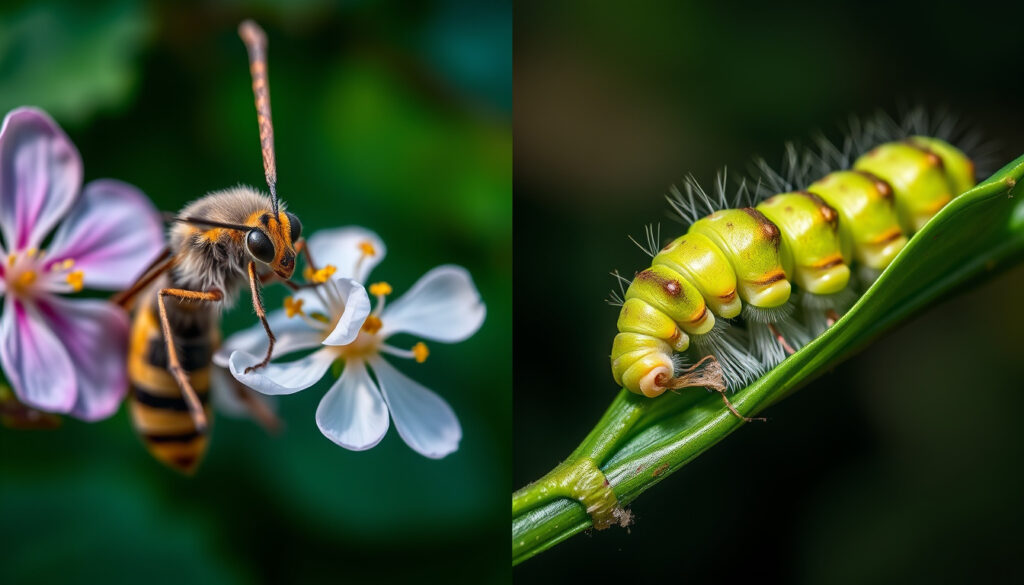
What Do Moths Eat? Adult Diet vs. Hungry Larvae
You spot a moth fluttering around your living room and you might wonder if it’s eyeing your wool sweater or the fruit bowl. It’s a fair question—the answer is more layered than you might expect: a moth’s diet depends entirely on its life stage and species, and we’ll break down exactly what they eat, from nectar-sipping adults to fiber-chewing larvae, and help you deal with an infestation.
Adult moths that feed: About 70% of moth species have functional mouthparts and feed on nectar, sap, or fruit.
Clothes moths’ diet: Clothes moth larvae digest keratin, a protein in wool, silk, fur, and feathers.
Pantry moths’ diet: Pantry moth larvae infest grains, flours, cereal, nuts, and dried pet food.
Non-feeding species: Some adult moths, like the luna moth, lack functioning mouthparts and eat nothing at all.
Hydration source: Moths drink water, tree sap, honeydew, and other liquids to maintain hydration.
Quick snapshot
- Adult moths primarily drink nectar, sap, and fruit juices (Natural History Museum)
- Exact dietary preferences for some rare moth species remain unknown (Utah State University Extension)
- Moth larvae cause most damage, and adult moths typically live 1-2 weeks (Natural History Museum)
- Prevention focuses on cleaning, proper storage, and monitoring traps (Utah State University Extension)
The table below summarizes how moth diet shifts across stages and species.
| Moth Stage | Primary Diet | Examples |
|---|---|---|
| Adult | Liquids | Nectar, sap, fruit juices, honeydew |
| Larva (clothes moth) | Keratin | Wool, silk, fur, feathers |
| Larva (pantry moth) | Stored foods | Grains, flour, cereal, nuts |
| Adult (non-feeding) | Nothing | Luna moth |
| Larva (natural) | Plant material | Leaves, roots, wood fibers |
What do moths eat?
Moths have a two-part answer to the question of diet, and it changes dramatically with their life stage. Adult moths are liquid specialists, while the larvae (caterpillars) are the chewing machines. Most adult moths feed on flower nectar, but they also drink tree sap, fruit juices, and honeydew. Natural History Museum confirms this broad liquid-based diet.
The larvae are a different story. While some moths feed on leaves and other plant matter, the ones you find in your home are often after specific targets. Clothes moth larvae feed on fabrics and materials containing keratin, a protein found in animal-derived fibers. National Pesticide Information Center is a key source here.
Adult moths you see fluttering around are not the ones damaging your belongings. The larvae, hidden in fabrics or food, are the real problem.
Pantry moth larvae are equally destructive but in a different way, infesting your food storage areas. They target grains, flours, and dried goods. Utah State University Extension provides thorough information on these pests.
The implication: identifying an infestation requires looking for larvae, webbing, or damage, not just adult moths.
What do moths eat in the house?
Indoor moths fall into two main groups: clothes moths and pantry moths. Their diet is the key to telling them apart and tackling an infestation. Clothes moths seek out animal-based materials, while pantry moths go for stored foods.
Here’s a quick breakdown of what they target:
- Clothes moth larvae: Wool, silk, fur, cashmere, feathers, and other animal-based fibers. The damage is done by larvae, which need the protein keratin to grow. Utah State University Extension highlights this.
- Pantry moth larvae: Grains, flour, cereal, rice, nuts, and dried pet food. They also infest processed foods like pasta and cookies. National Pesticide Information Center covers this.
You might also have adult moths inside, but they aren’t eating at all. They’re just flying around looking for a mate. As Utah State University Extension notes, most adult moths don’t damage your home.
You can’t spot a moth problem by looking at the insects that fly around. The damage is done by the caterpillar stage, which often stays hidden in the fabric or food, feeding and growing in the dark.
If you find holes in your clothes or see webbing in your pantry, it’s a good sign you have an infestation. Larvae are the cause of the damage, not the adults you might see flying.
The pattern: knowing the feeding habit of each moth type tells you where to inspect first.
What do moths eat and drink?
Moths, like all living things, need hydration. They get most of it from the liquids they feed on, like flower nectar. But what they drink and how they get it varies.
What do moths drink?
Adult moths drink liquids like nectar, sap, and fruit juices. They don’t chew or eat solid food. Instead, they use a proboscis, a long, straw-like mouthpart that lets them sip liquid. The Natural History Museum has a great guide on this.
Some moths even drink honeydew, a sweet substance produced by aphids and other insects. It’s a common part of a moth’s diet, especially in late summer. UK Moths offers useful info on moth behavior.
Do moths eat honey?
Yes, some moths enjoy honey. If you have an infestation of pantry moths, they might be in your honey, but it’s more common to find them in grains and flour. Adult moths will sip honey if they come across it. Mass Audubon explains that moths have a sweet tooth for many sugary liquids.
The catch: even though adults drink liquids, they still need to hydrate; a sugar-water dish may attract them but won’t solve an infestation.
What do moths eat at night?
Moths are mostly nocturnal, which means they do their feeding at night. They’re attracted to light, and you might see them fluttering around porch lights or street lamps. But what are they actually doing out there?
- Nectar from flowers that bloom at night
- Tree sap oozing from wounds in trees
- Rotten fruit that’s released sugars
Adult moths that are active at night are looking for these food sources. Butterfly Conservation notes that many moths are nocturnal and rely on night-blooming plants.
What this means: seeing moths at night near lights is normal; the real concern is larvae feeding inside your home.
What do moths eat naturally?
In the wild, moths are an important part of the ecosystem. They’re pollinators and food for other animals. Their diet varies widely depending on the species, but there are some common natural food sources.
- Flower nectar
- Tree sap
- Rotting fruit
- Honeydew from aphids
Some species have very specific diets. For example, some caterpillars feed on only one type of plant. This is what makes some moths rare and others widespread. The Butterfly Conservation has a detailed species guide.
Adult moths in the wild are also important pollinators. When they visit flowers to drink nectar, they pick up pollen and move it to other plants, helping them reproduce. Natural History Museum explains this role.
The implication: garden moths are beneficial; only the few species that enter homes become pests.
What do moths eat during the day?
You might think moths are strictly nocturnal, but some are active during the day. These are the ones you see fluttering around in the sun. Their feeding habits are similar, though.
Some moths, like the Hummingbird Hawk-moth, are active during the day and feed on nectar. They have a long proboscis that reaches into flowers. Butterfly Conservation has a list of day-flying moths.
Adult moths that feed at night or during the day all share the same basic need for liquid food. They don’t eat clothing or furniture; that’s the larvae’s job.
If you see moths during the day, they are likely nectar feeders. They are a sign of a healthy ecosystem, but they can also indicate a problem if they are in your home and laying eggs that lead to clothes-munching larvae.
The pattern: day-flying moths are rarely household pests—focus your worry on night-flying species that may be breeding indoors.
What do moths turn into?
Moths undergo a complete metamorphosis, which means they change significantly during their lifecycle. They start as eggs, hatch into larvae, pupate, and then emerge as adults. This lifecycle is key to understanding what they eat.
How long do moths live?
The moth’s lifespan varies by species. Some adult moths live for a few days, while others can live for weeks. The larvae stage can last from a few weeks to several months, depending on the species and environment. Utah State University Extension explains that clothes moths can complete their lifecycle in about 4 to 6 months, but it can be longer depending on temperature and food availability.
The longer a moth stays in the larval stage, the more damage it does. So, if you have a warm, food-rich environment, like a heated closet, you might be supporting a larger moth population than you think.
The larval stage is the main damage-causing stage. As Utah State University Extension points out, it’s the larvae that eat the most, and they need to consume enough to develop into adults.
Adult moths are focused on reproduction, and they often don’t eat at all. They may have mouthparts, but they use them only for drinking, not for chewing on your clothes.
The catch: controlling moths means targeting the larvae, not the short-lived adults.
What do moths eat: a closer look at household pests
It’s clear that moths have a split personality when it comes to their diet. Adults drink liquids, and larvae eat solid, fibrous material. Knowing this is the key to managing them in your home.
Here’s a quick table to clarify the differences:
| Feature | Clothes moth larvae | Pantry moth larvae |
|---|---|---|
| Food | Keratin in wool, silk, fur | Grains, flour, cereal |
| Damage | Holes in clothes, furniture | Contaminated food |
| Evidence | Webbing, larvae, adult moths | Webbing, larvae, adult moths |
| Habitat | Closets, drawers, storage | Kitchen, pantry, pet food |
Data from Utah State University Extension shows that the key is identifying which moth you have to know what to do.
The pattern: once you know the food source, you can target your cleaning and prevention efforts.
How to prevent and control moths
Now that you know what moths eat, it’s time to act. The fact that moths eat different things at different stages helps with control. Since the adults might not be eating much, the real focus is on the larvae and preventing them from hatching. Follow these steps:
- Identify the moth type: check for damage on fabrics (clothes moth) or in food packages (pantry moth).
- Clean thoroughly: vacuum closets, drawers, and pantry shelves; discard infested items.
- Wash or freeze infested items: hot wash (above 49°C) or freeze at -20°C for one week kills all life stages.
- Use pheromone traps to monitor adult moth activity and detect early signs.
- Store susceptible items in airtight containers (wool garments in sealed bags, grains in glass jars).
- Repeat cleaning and monitoring every few weeks until no new moths appear.
What kills moths immediately?
If you have a moth infestation, you want to get rid of them. For clothes moths, it’s essential to wash or dry-clean clothing, and vacuum drawers and closets. Utah State University Extension recommends dry cleaning or hot washing to kill moth larvae and eggs. Utah State University Extension has the details.
For pantry moths, you need to discard infested food and clean the area thoroughly. Freezing foods for a few days can also kill larvae and eggs. As the Utah State University Extension notes, freezing to -20°C for a week is an effective way to kill all life stages.
Prevention is the best defense
To prevent future problems, store clothing in airtight containers and keep your pantry clean. Vacuuming regularly, especially under and behind furniture, removes moth eggs and larvae. Los Angeles County Department of Public Health recommends sanitizing and regular cleaning as top prevention.
Monitoring with pheromone traps can help you catch a moth problem early. These traps attract male moths, which helps you see if you have an infestation. Utah State University Extension recommends them.
If you have a serious infestation, you may need to call a professional exterminator. They can help you identify the source and treat it effectively. Utah State University Extension suggests that severe infestations might require professional treatment.
Remember, the goal is to remove the food sources. For clothes moths, that means washing and storing your clothes properly. For pantry moths, it means cleaning and properly storing your food. You can control the problem with the right approach.
Confirmed facts and what’s unclear
Here’s a breakdown of what we know for sure about moths:
Confirmed:
- Clothes moth larvae feed on animal-based fibers like wool and silk. National Pesticide Information Center
- Pantry moth larvae infest stored grains and dried foods. Utah State University Extension
- Adult moths primarily drink nectar and sap. Natural History Museum
- Some adult moths do not feed at all. Utah State University Extension
What’s unclear:
- The full variety of food sources for some of the rarer moth species is still unknown.
- Long-term ecological impacts of some moth species that are not native to certain regions are unclear.
- It is unclear how moth diets vary across different climates and regions.
- The precise nutritional requirements of moth larvae in captivity remain poorly documented.
As a low-confidence fact, it’s best to be cautious. For most people, the essentials are clear: clothes moths and their larvae are the cause of damage to fabrics, and pantry moths cause problems in your food.
Moth diet: separating fact from fiction
The most common myth is that moths eat clothes. They don’t; their larvae do. Understanding this simple fact changes how you approach moth control.
Moth larvae are the culprits behind the holes in your clothes. The adult moths are just a sign that you have a problem.
National Pesticide Information Center
Another common question is whether moths are attracted to light. Yes, many species are attracted to light, but it’s not for eating. It’s more likely they are using it for navigation. Utah State University Extension notes that this is a common behavior.
If you’ve ever wondered why you find moths in your pantry, it’s because they’re not just after your flour. They’re also looking for a place to lay eggs. The larvae then eat the food, and the cycle continues.
When you are dealing with moths in the house, you have to break the cycle. This means finding and removing the larvae, cleaning the area, and taking steps to prevent adult moths from coming back. An expert from a pest control blog might say, “You need to be thorough.”
Moth management is not about a single action, it’s about a strategy. You have to clean, store, and monitor to see results.
Utah State University Extension
By understanding the moth’s life cycle and diet, you’re better equipped to deal with them. But for many, a few simple household fixes are all you need.
Conclusion: what moths eat and why it matters
So, what do moths eat? The answer is dinner and your wardrobe, but it depends on the life stage. Adult moths are liquid dieters, sipping nectar and sap. The larvae, however, are the true eaters, and their food is what causes damage in your home.
Indoor moths are a clear signal to inspect your food storage and fabric care routines. The choice for you is clear: adopt regular cleaning and proper storage habits, or risk costly damage to your clothes and pantry.
For a more in-depth look at protecting your belongings from other household pests, these resources can help guide you. Homeowners who take these steps save themselves from expensive repairs.
pubs.nmsu.edu, extension.entm.purdue.edu, entomology.mgcafe.uky.edu, njaes.rutgers.edu, pomais.com, moth-prevention.com, english-heritage.org.uk, hgic.clemson.edu
Frequently asked questions
What can you feed a moth?
If you’re looking to feed a moth, you can offer a simple sugar-water solution (one part sugar dissolved in four parts water) or provide overripe fruit like bananas or melon.
What do moths eat honey?
Yes, some moths are attracted to honey and may feed on it if they find it, though it is not a primary food source in the wild.
What kills moths immediately?
Hot washing (above 49°C) or dry cleaning kills moth larvae and eggs on clothes. Freezing at -20°C for one week kills all life stages on infested items.
What do moths hate the most?
Moths avoid strong scents like cedar, lavender, and cloves. Storing items with cedar blocks or lavender sachets can help repel them.
Are moths harmful to humans?
Adult moths are not harmful to humans—they do not bite or sting. The larvae can damage fabrics and contaminate food, but they pose no direct health risk.
More related posts
 What Do Cockroaches Eat? Diet, Favorite Foods & Facts
 SH1 Waikato Expressway Cambridge Closures: Updates & Detours
 Love Asia Restaurant & Bar: Menu, Hours & Reviews
 NZ Interest Rates Forecast 2026-2028: Drop or Rise
 Look Sharp St Lukes – What Our Investigation Revealed
 Prince Harry, Duke of Sussex: 2025 Health & Family Updates
 What Is a Dead Pixel? Causes, Detection, and Fixes
 Best Down Duvet Inner NZ: Buying Guide & Top Picks