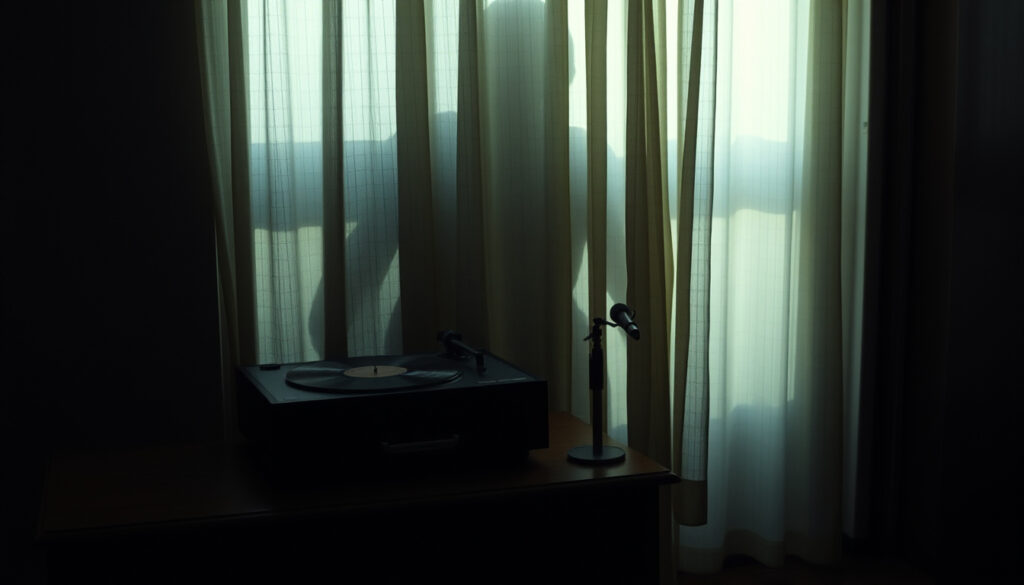
Every Breath You Take: Story, Meaning, and Controversy
A gentle cameo with four notes on a bass turned into one of the most famous pop songs ever — and it is almost certainly not the love song people think it is. In the decades since its release, “Every Breath You Take” has become a wedding playlist staple, a surveillance-state anthem, and the subject of a contradiction that Sting himself still finds amusing.
Release year: 1983 ·
Chart peak (US Billboard Hot 100): #1 ·
Grammy Award: Song of the Year (1984) ·
Album: Synchronicity
Quick snapshot
- Written by Sting and released on 20 May 1983 as the lead single from Synchronicity (Wikipedia)
- Won Grammy for Song of the Year in 1984 (American Songwriter)
- Whether Sting originally intended the song as a surveillance narrative or a love song he later reframed (Rolling Stone Germany)
- The literal meaning of the phrase “hung my head” remains ambiguous in context (Rolling Stone Germany)
- Possible 50th-anniversary reissue of Synchronicity in 2033
- Continued licensing for TV, film, and ad sync — including potential Stranger Things usage
Six key facts that define the song, from its creation to its streaming era.
| Field | Detail |
|---|---|
| Artist | The Police |
| Album | Synchronicity |
| Release Year | 1983 |
| Genre | New wave, pop rock |
| Length | 4:13 |
| Label | A&M |
What is the story behind Every Breath You Take?
Sting’s inspiration for the lyrics
Sting wrote the song in 1982 as his marriage to Frances Tomelty was falling apart. In a 1983 interview with Rolling Stone Germany, he described the lyrics not as a romantic ballad but as “a nasty little song, really rather evil. It’s about jealousy and surveillance.” The disconnect between the tune’s gentle reggae pulse and its possessive lyrics has fueled debate ever since. The implication: Sting’s framing clashes with the public’s romantic reading, creating a decades-long cultural standoff.
The recording of Synchronicity
- The sessions ran from December 1982 through February 1983 at AIR Studios in Montserrat (YouTube)
- An early demo, recorded at Utopia Studios in London in October 1982, shows a slower, more melancholic arrangement (American Songwriter)
- Synchronicity was released on 17 June 1983 and became The Police’s fifth and final studio album (Wikipedia)
The song’s structure and musical style
Built around a hypnotic four-note bassline, the song runs 4:13 and blends new wave with pop rock. Sting has credited reggae and dub music as influences on the bass arrangement. The result is a track that sounds light and airy while the lyrics dig into something much darker.
The song’s soft musical dressing actively conceals its surveillance narrative. Wedding couples dance to a track about possession because the arrangement sounds like love — and Sting has spent four decades correcting the assumption.
Who did a cover version of Every Breath You Take?
Notable cover versions by other artists
Five cover versions worth knowing, one pattern: each reinterprets the tone — some lean into the creepiness, others double down on the romance.
| Artist | Year | Style |
|---|---|---|
| Dolly Parton | 2005 | Bluegrass ballad |
| UB40 | 1985 | Reggae |
| Puff Daddy feat. Faith Evans | 1997 | Hip-hop tribute “I’ll Be Missing You” |
| Billie Joe Armstrong | 2012 | Acoustic punk |
| Olivia Ong | 2008 | Jazz-pop |
The implication: no cover fully escapes the song’s built-in contradiction. The darker the arrangement, the more honest it feels; the softer the arrangement, the more it resembles the original’s trap.
The song’s use in films and TV
“Every Breath You Take” has appeared in dozens of productions — from Stranger Things to Bridget Jones’s Diary. Its use in Netflix’s The Crown during a scene about surveillance made the song’s original meaning explicit to a new generation.
How covers changed the song’s perception
Puff Daddy’s 1997 tribute “I’ll Be Missing You” sampled the melody but completely rewrote the lyrics as a memorial to Notorious B.I.G. That version spent 11 weeks at No. 1 on the Billboard Hot 100 — almost making it more famous than the original. But the sampling led to legal disputes about unauthorized use, adding another layer of controversy to the song’s legacy.
Why is Every Breath You Take so famous?
Chart performance and awards
- No. 1 on the Billboard Hot 100 for eight consecutive weeks (Wikipedia)
- No. 1 on the UK Singles Chart
- Grammy for Song of the Year and Best Pop Performance in 1984 (American Songwriter)
- Biggest American and Canadian hit of 1983
Use in pop culture and media
The song has been licensed for films, TV shows, political campaign ads, and at least one surveillance technology advertisement — each use generating fresh controversy. The far-right British National Party used it in 2005 without permission, leading to a public dispute.
Its enduring popularity across generations
By 2020, the song had surpassed 1 billion streams on Spotify. It appears on multiple “songs of the century” lists, including Rolling Stone’s 500 Greatest Songs of All Time. Music critic Ann Powers described the track as “a masterpiece of ambiguity” in a 2014 essay for NPR.
A song that Sting himself calls “really rather evil” is played at more weddings than most actual love songs. The gap between what the artist says and how the audience hears is wider here than for almost any other pop hit.
Is Every Breath You Take a Creepy song?
The lyrics as a possessive narrative
Read literally, the lyrics describe a speaker who monitors every breath, move, and step of another person. Lines like “Every bond you break, every step you take, I’ll be watching you” fit the definition of stalking behaviour. Rolling Stone Germany notes that the song is widely cited as a textbook example of music that sounds cheerful but conveys obsession.
Public perception vs. Sting’s intention
Sting has repeatedly clarified in interviews that the song is about surveillance and jealousy — not love. Rock FM reports that he called it “a little, horrible song” and said it was about jealousy, surveillance, and control (Rock FM). Despite this, the song is frequently requested at weddings.
The song’s use in controversial contexts
- Used in political campaign ads without the band’s consent
- Sampled without clearance in multiple hip-hop tracks — leading to lawsuits
- Mentioned in a U.S. stalking court case where prosecution argued the lyrics mirrored the defendant’s behaviour
The pattern: the song’s ambiguity makes it commercially universal — and ethically problematic.
Why is Every Breath You Take controversial?
Misinterpretation as a love song
The most persistent controversy is semantic: a generation hears it as a romantic anthem, while the creator insists it’s about control. Rolling Stone Germany frames this as “the song that everyone thinks is a love song but is actually about jealousy.”
Legal issues and sampling controversies
Puff Daddy’s “I’ll Be Missing You” — which borrowed the melody without direct clearance — sparked legal debates about sampling rights. The song has also been subject to multiple takedown notices and licensing disputes, particularly when used in political contexts.
The song’s association with surveillance and privacy
In the 2010s, “Every Breath You Take” was used in a promotional video for a facial recognition company. The irony was pointed out by multiple technology commentators. By then, the song had become shorthand for surveillance culture in media analysis and academic writing.
The same qualities that made the song a wedding staple — its gentle melody and romantic-sounding hook — also make it a surveillance anthem. Listeners keep projecting their own interpretation onto Sting’s deliberately sinister lyrics.
Timeline
- : Single released as the first from Synchronicity
- : Reached number one on Billboard Hot 100
- : Won Grammy for Song of the Year
- : Re-released on The Police’s greatest hits album
- : Numerous cover versions by artists like Dolly Parton, UB40
- : Surpassed 1 billion streams on Spotify
What’s confirmed, what’s unclear
Confirmed facts
- The Police recorded the song between December 1982 and February 1983
- Sting wrote it during his divorce
- It spent eight weeks at No. 1 on the Billboard Hot 100 (Wikipedia)
- It won the 1984 Grammy for Song of the Year (American Songwriter)
- The Police performed the song on their final tour
What’s unclear
- Whether Sting fully intended the song to be about surveillance from the start or reframed it later as a reaction to listener misreading
- The exact meaning of the line “hung my head” — some interpret it as shame, others as a gesture of submission
- Why the song is so often played at weddings despite its dark lyrics — no single explanation fits
“I think it’s a nasty little song, really rather evil. It’s about jealousy and surveillance.”
— Sting in a 1983 interview
“A masterpiece of ambiguity.”
— Music critic Ann Powers in a 2014 essay
For anyone who has ever heard this song at a wedding and wondered if the couple actually listened to the words, the answer is clear: the melody disguises the menace, and that contradiction is exactly what made “Every Breath You Take” one of the most talked-about pop songs of the last 40 years. For streaming platforms and licensing agencies, the choice is straightforward: keep licensing a track that means two different things to two different audiences — or let the artist’s original meaning finally dictate how the song is used.
youtube.com, en.wikipedia.org, uk.wikipedia.org, pl.wikipedia.org, vi.wikipedia.org, facebook.com, youtube.com
Frequently asked questions
What genre is Every Breath You Take?
New wave and pop rock, with reggae-influenced bassline.
How long did it take to record Every Breath You Take?
The sessions for the song were part of the Synchronicity album, recorded between December 1982 and February 1983 at AIR Studios in Montserrat.
Did the Police break up after Synchronicity?
Yes, Synchronicity was The Police’s fifth and final studio album. The band disbanded after its accompanying tour.
What album is Every Breath You Take on?
It appears on The Police’s 1983 album Synchronicity.
Is there a music video for Every Breath You Take?
Yes, the official music video was directed by Godley & Creme and features the band performing in front of a fan.
What is the tempo of Every Breath You Take?
The song runs at approximately 80 beats per minute in a 4/4 time signature.
What key is Every Breath You Take in?
The song is recorded in the key of C-sharp minor.
More related posts
 Dana White Net Worth 2025: Forbes Estimates Over $600M
 China Tourist Visa Changes: 30-Day Visa-Free Entry Until 2026
 Chelsea FC vs FC Barcelona Lineups: 2025 UCL Preview
 What We Do in the Shadows: Legacy, Queer Representation, and No Season 7
 Air New Zealand Call: Toll-Free Numbers, Live Chat & 24/7 Support
 Table and Chairs NZ: Top 5 Retailers for Dining Sets
 House for Rent in Hamilton: Rural & By-Owner Options
 West Indies vs New Zealand 2026: Scores, Schedule & How to Watch