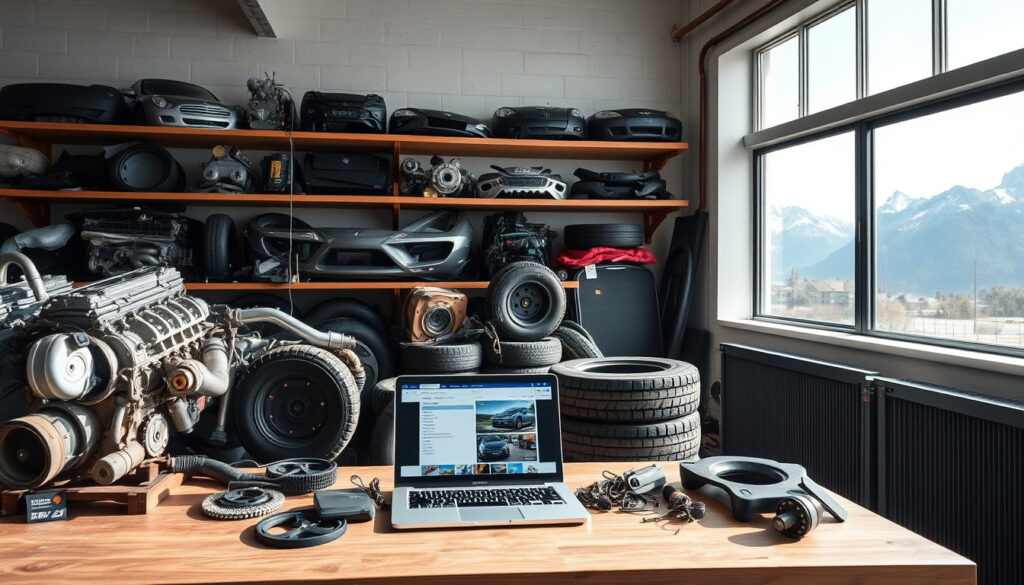
Trade Me Car Parts: NZ Buying & Selling Guide for Sellers
For many New Zealand car owners, finding affordable parts without waiting weeks for an overseas order is a real frustration. Trade Me Motors handles over 2 million car parts listings, making it the country’s largest online marketplace for both buyers and sellers—but the sheer volume means competing listings can stack up fast. This guide walks through how Trade Me car parts work, how it compares to alternatives, and what sellers need to know to get the most out of every listing.
Total Car Parts Listings: 2,019,126 · Wheels & Tyres Listings: 39,468 · Vintage Parts Listings: 2,364 · Primary Platform: Trade Me NZ · Key Category: Motors > Car Parts & Accessories
Quick snapshot
- Trade Me leads NZ vehicle sales with around 80,000 listings (MoneyHub NZ)
- 2026 platform projections remain uncertain
- Regional NZ pricing variations not fully documented
- Trade Me reached 865,000 listings in 2007, now exceeds 2 million (Trade Me Help)
- Ping fee increased to 2.19% from December 2024 (Trade Me Help)
- Buyer Protection improvements on Trade Me
- Continued growth in NZ online car parts market
Trade Me dominates New Zealand’s online vehicle marketplace, significantly outpacing competitors in both listings volume and buyer traffic.
| Field | Value |
|---|---|
| Platform Origin | New Zealand |
| Main Category URL | trademe.co.nz/a/motors/car-parts-accessories |
| Listings Volume | Over 2 million |
| Key Subcategory | Wheels & Tyres (39k+) |
What is the best marketplace to sell car parts?
Trade Me consistently has the most vehicle listings of any website, around 80,000 (July 2024), compared to AutoTrader (around 40,000) (MoneyHub NZ). Beyond volume, Trade Me offers a structured buyer protection system and seller guarantees that give both parties confidence. The platform’s Motors category covers vehicles, accessories, and car parts under one roof, making it the default destination for NZ car enthusiasts.
However, Trade Me charges a 7.9% success fee on sales over $1 (maximum $499) (Trade Me Help). Payment processing through Ping costs an additional 2.19%, and Afterpay adds 4.95% on top of the item price and shipping (Trade Me Help). For parts under $100, those fees can quietly eat margins.
Trade Me vs Facebook Marketplace
Facebook Marketplace allows sellers to display their cars without paying any fees (Consumer.org.nz). There is no cost to list an item and sellers do not pay a sold fee either. Sales on Facebook Marketplace can be fast due to local pickup and no auction end date, but the platform lacks Trade Me’s structured search and buyer protections.
For car parts specifically, Facebook Marketplace is criticized for poor searchability (Bob Is The Oil Guy Forum). Finding a specific make and model year of part is harder than on Trade Me, where filters are more detailed. NZ Facebook Groups like “Cheap Cars New Zealand | Sell | Buy | Swap | Trade” supplement the main Marketplace for car-specific searches.
Other online channels for 2026
- AutoTrader charges a fixed $20 fee for car listings (MoneyHub NZ). For higher-value parts, this flat fee is cheaper than Trade Me’s percentage but the audience is smaller (around 40,000 vehicle listings).
- Turners Auctions provides an alternative for sellers who want auction-style sales without using Trade Me (CheapCars.co.nz).
- eBay is less effective for NZ car parts due to the non-local market—international buyers add shipping complexity that usually outweighs the broader audience.
Trade Me’s 7.9% fee sounds small, but on a $50 part it is nearly $4. Add 2.19% for Ping and you are looking at roughly 10% total deduction on most sales. Facebook Marketplace has no fees at all, making it the better choice for budget parts where every dollar counts.
What are the disadvantages of Trade Me?
The main complaint about Trade Me is the cost structure. The 7.9% success fee plus payment processing fees combine to roughly 10% deduction on most car parts sales (Trade Me Help). For a $100 part, that means only around $90 reaches the seller after fees. Parts priced under $150 often leave very thin margins.
Fees and competition issues
Sellers compete against thousands of similar listings, which pressures prices downward. A parts seller cannot easily charge premium prices when comparable items are listed at lower prices nearby. The volume that makes Trade Me powerful for buyers simultaneously creates a race-to-the-bottom dynamic for sellers.
Trade Me eliminated success fees in recent Marketplace changes (Trade Me Help), but the Motors category still carries fees, and the Ping fee increased from 1.95% to 2.19% from December 2024 (Trade Me Help). The fee landscape is shifting but not yet cost-free.
Consumer NZ comparison insights
Consumer.org.nz notes that Facebook Marketplace suits local, quick car parts sales where buyers can inspect the part before paying (Consumer.org.nz). The trade-off is that Facebook Marketplace lacks Trade Me’s dispute resolution and buyer protection guarantees.
Upsides
- Highest NZ traffic for vehicle and parts sales
- Structured buyer protection and seller guarantees
- Detailed search filters by make, model, and part type
- Official safety guide for car parts transactions (Trade Me)
Downsides
- 7.9% success fee plus payment processing costs
- Heavy competition can depress prices
- Listing durations capped at 14 days
- No listing or success fees on Facebook Marketplace makes it cheaper for low-value parts
The pattern here is clear: Trade Me extracts roughly 10% from every sale through stacked fees, which erodes seller margins most on budget parts.
How do I sell auto parts?
Selling car parts on Trade Me follows a specific workflow designed to attract serious buyers. Start by choosing the correct subcategory within Motors—being vague about the part type hurts visibility in search results. Sellers who are precise about make, model, year range, and part number consistently rank higher in searches.
Steps for Trade Me listings
- Choose the subcategory within Motors that matches the part exactly. Vague listings get filtered out by buyers using specific search terms.
- Write a clear title that includes make, model, year range, and the exact part name. Example: “Toyota Corolla 2015–2019 Brake Pads Front Set.”
- Add 10+ photos from multiple angles showing the part’s condition. Include close-ups of any wear, markings, or damage. Buyers on Trade Me expect thorough documentation.
- Set a competitive price by checking completed listings for similar items. Search the exact part name and filter by “sold” to see real prices.
- Select listing duration (7 or 14 days). Extended duration costs more but reaches more buyers.
- Choose payment options: Ping (2.19% fee), Afterpay (4.95% fee), or cash on pickup (no fee). Offering local pickup avoids shipping complications.
- Respond promptly to enquiries. Sellers who reply within hours stay competitive.
- Arrange delivery for non-local buyers. Local pickup is simplest; use NZ Couriers for wider reach.
Sellers who skip photos or use vague descriptions lose sales to competitors with better listings. Trade Me’s algorithm rewards detailed, accurate listings with higher search placement.
Can I negotiate prices on Trade Me?
Negotiation is built into Trade Me’s DNA. Buyers can submit offers below the asking price, and sellers can accept, counter, or decline. The platform explicitly supports this back-and-forth, unlike fixed-price sites. Sellers can mark items as “price is firm” to discourage lowball offers, but most buyers expect some room to negotiate.
Negotiation tactics for cars and parts
For parts, the best strategy is to price slightly above the minimum acceptable amount to allow room for negotiation without giving away too much. Check completed listings to see what similar parts actually sold for—this data is publicly available and gives sellers a realistic floor.
Trade Me Motors advises sellers to highlight what is included with the part (bolts, gaskets, hardware) to justify the price. Bundling related items at a slight discount encourages buyers to spend more rather than hunting for each piece separately.
Trade Me Motors advice
Sellers who want to avoid negotiation can use the “Buy Now” option at a fixed price. For parts that are hard to move, offering “Pickup only” eliminates shipping complexity and attracts local buyers who prefer to inspect before purchasing.
A seller who prices a $80 part at $90 and accepts $82 still nets more than selling for $50 on a fee-free platform after that platform’s fees. The math matters: trade-offs between platform fees and negotiation flexibility depend on the part’s value.
What are the most common car parts to replace?
The most frequently replaced parts are high-wear items that every car needs periodically. Brake pads, batteries, tyres, oil filters, air filters, spark plugs, and wing mirrors top the list. These parts sell consistently because every car eventually needs them.
High-demand Trade Me parts
- Brake pads — replaced every 40,000–80,000 km, high turnover
- Batteries — typically replaced every 3–5 years
- Tyres — replaced every 40,000–60,000 km; Wheels & Tyres is one of Trade Me’s largest subcategories with over 39,000 listings
- Oil filters and air filters — replaced at every service interval
- Spark plugs — replaced every 80,000–100,000 km
- Wing mirrors — frequently damaged; easy to ship and install
Vintage and specialty parts
For sellers willing to wait, rare parts for discontinued models command premium prices. A wing mirror for a 1990s Toyota Corolla in good condition can sell for significantly more than the same part for a common current model. Trade Me’s 2,364 vintage parts listings show that specialized inventory attracts buyers willing to pay more.
The strategy for sellers is clear: start with common parts like brake pads and batteries to build a seller reputation quickly, then expand into specialty and vintage parts once the account has positive feedback and faster-moving inventory.
Most valuable parts to part out
When scrapping or parting out a vehicle, certain components are worth extracting: engines and transmissions, body panels for rare makes, and interior parts for in-demand models. An engine from a non-running car can sell for $200–$2,000+ on Trade Me versus $100–$300 from a wrecker. Parting out a car typically returns 2–5× more than scrapping the whole vehicle.
Trade Me now has almost as many cars listed as giant US eBay.com. (Lance Wiggs, Blogger/Analyst)
Facebook allows sellers to display their cars without paying any fees. (MoneyHub NZ, Financial Guide)
How to maximize Trade Me car parts trades vs alternatives
Three platforms dominate NZ car parts sales: Trade Me, Facebook Marketplace, and AutoTrader. Trade Me commands the largest audience but levies a 7.9% success fee (Trade Me Help) plus payment processing. Facebook Marketplace has no fees but lacks structured buyer protections (Consumer.org.nz). AutoTrader offers a flat $20 fee with a smaller but focused audience (MoneyHub NZ).
No fees on Facebook Marketplace is appealing, but the platform struggles with car parts searchability (Bob Is The Oil Guy Forum). eBay waives listing fees but the cluttered search experience and international buyer base make it a poor fit for NZ car parts.
For sellers who value speed and broad audience reach, Trade Me is the clear choice. For sellers focused on maximizing every dollar on lower-value parts, Facebook Marketplace eliminates the 7.9% fee entirely. The decision ultimately depends on part value and seller priorities.
Related reading: Best USB-C Car Charger · IRD Mileage Rate 2024 NZ
Trade Me sellers often source quality used parts from local yards like Pick A Part NZ stock lists to boost listings.
Frequently asked questions
What types of car parts are on Trade Me?
Trade Me Motors covers a wide range including engines, transmissions, body panels, brakes, suspension, electrical components, interior parts, wheels and tyres, and accessories. With over 2 million car parts listings, most common and specialty parts are available.
How do I find Toyota car parts on Trade Me?
Use the Motors category filters to select make (Toyota), model, and year range. Search by the specific part name (e.g., “Toyota Corolla 2015 Alternator”). Check the sold listings to see actual prices for the specific part you need.
Is Trade Me safe for buying used car parts?
Trade Me provides an official safety guide for buying car parts (Trade Me) and has buyer protection policies for Marketplace purchases. Listings from registered dealerships offer additional buyer safeguards.
What is the Trade Me car parts phone number?
Trade Me customer support can be reached through their help centre at help.trademe.co.nz. They do not publish a direct car parts phone line, but the help centre handles enquiries for Motors category issues.
Are there Trade Me car parts reviews?
Trade Me does not have a centralized review system for car parts specifically. However, sellers build reputation through feedback scores on completed transactions. Check a seller’s feedback rating before purchasing.
How to contact Trade Me for car parts?
Use the Trade Me help centre at help.trademe.co.nz for account, listing, and transaction issues. For general enquiries, the help centre covers Motors category questions including fees, safety, and policy matters.
What are used car parts NZ options on Trade Me?
Trade Me has thousands of used car parts across all categories. Use the “Condition: Good” or “Condition: Fair” filters to find used parts. Vintage parts specifically have their own subcategory with over 2,000 listings for discontinued models.
More related posts
 Little Learners Love Literacy: Complete Phonics Guide
 How to Get Rid of a Stye Fast: 3 Proven Home Treatments
 Lulutox Detox Tea NZ: Reviews, Ingredients & Safety Guide
 House for Rent in Hamilton: Rural & By-Owner Options
 Bed Bath and Beyond New Zealand – Status, Shipping & Alternatives
 ANZ New Zealand SWIFT Code: ANZBNZ22 for International Transfers
 Spanish Language Classes Near Me for Seniors
 475 F to C: Convert 475°F to Celsius + Fan Oven Tips