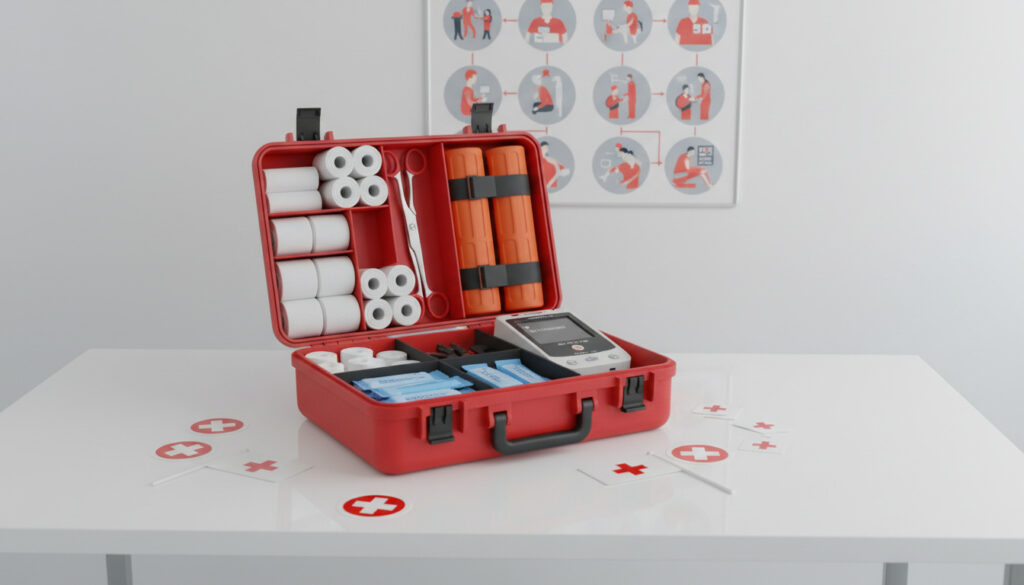
St Johns First Aid Course – Essential Skills for Emergencies
Essential Life Skills: Understanding St John First Aid Certification
When emergencies unfold seconds matter. Whether facing a sudden cardiac arrest at the office or a kitchen accident at home, knowing how to respond effectively transforms bystanders into lifesavers. St John Ambulance first aid courses have established themselves as the gold standard for emergency preparedness across New Zealand, combining practical skills with evidence-based protocols that meet both workplace compliance requirements and personal safety goals.
Modern first aid training extends far beyond bandages and antiseptic wipes. Today’s certification programs encompass automated external defibrillator (AED) operation, fracture management, and psychological first aid for crisis situations. For Auckland residents seeking community health resources, these courses provide structured pathways from basic emergency response through to advanced pre-hospital care qualifications.
Course Pathways and Certification Levels
St John structures its training portfolio across distinct competency tiers, ensuring participants receive instruction matched to their specific environments and responsibilities. The Essential First Aid program suits home-based caregivers and community volunteers, while the Comprehensive First Aid certificate satisfies workplace regulatory requirements under New Zealand health and safety legislation.
Specialized streams address unique contexts. Paediatric first aid focuses on infant airway management and childhood emergency protocols, while occupational first aid prepares designated workplace responders to manage injuries until ambulance services arrive. Maritime and remote-area variants account for prolonged casualty care when professional help remains hours away.
Key Insights: Training Efficacy and Accessibility
Recent analysis reveals that hands-on practice significantly outperforms digital-only instruction when building muscle memory for CPR compressions. Courses maintaining a 1:6 instructor-to-participant ratio demonstrate higher competency retention rates at six-month follow-up assessments compared to larger group settings. St John training methodologies emphasize repetitive scenario-based learning, ensuring skills remain accessible under stress.
Accessibility improvements have expanded training reach. Evening and weekend sessions accommodate shift workers, while on-site corporate programs eliminate travel barriers for businesses maintaining compliance across multiple locations. Scholarship programs and community subsidies ensure socioeconomic factors do not preclude access to these critical skills.
Program Comparison: Selecting Appropriate Training
| Course Title | Duration | Certification Period | Primary Content | Regulatory Status |
|---|---|---|---|---|
| Basic First Aid | 1 day | 2 years | Wound care, bleeding control, shock management | General public |
| Comprehensive First Aid | 2 days | 2 years | CPR, AED use, medical emergencies, trauma | Workplace compliant |
| Pre-Hospital Emergency Care | 5 days | 2 years | Patient assessment, oxygen therapy, advanced airway | Advanced responder |
| Paediatric Emergency Care | 7 hours | 2 years | Child-specific CPR, choking, fever management | Childcare compliant |
Training Methodology and Assessment Standards
Instruction follows a blended learning approach. Participants complete theoretical modules covering anatomy, emergency response systems, and legal obligations regarding casualty consent and duty of care. Practical sessions utilize manikins that provide real-time feedback on compression depth and rate, alongside role-playing scenarios involving simulated bleeding and airway obstruction.
Assessment combines written examination with practical demonstration. Candidates must achieve 80% accuracy on multiple-choice testing covering recognition of stroke symptoms, diabetic emergencies, and anaphylaxis. Practical evaluation requires successful performance of two-minute uninterrupted CPR cycles and correct AED pad placement. WorkSafe New Zealand guidelines specify that workplace first aiders must demonstrate these competencies every two years to maintain valid certification.
Certification Timeline and Renewal Protocols
Initial certification demands full attendance and successful assessment. Upon completion, participants receive wallet cards and certificates immediately, with digital verification available through the St John portal within 48 hours. Credentials remain valid for twenty-four months.
Renewal processes differ based on qualification level. Basic certificates require refresher training covering protocol updates and skill verification. Advanced certifications demand more intensive revalidation, including scenario-based assessments that simulate multi-casualty incidents. Instructors recommend annual practice sessions between formal renewals to combat skill degradation, particularly regarding compression technique and rescue breathing ratios.
Clarity: Addressing Common Misconceptions
Many assume that online-only modules satisfy workplace first aid requirements. However, NZQA unit standards mandate physical demonstration of CPR and choking response for recognized qualifications. Digital components supplement but do not replace hands-on assessment.
Liability concerns often deter potential participants. New Zealand’s Good Samaritan legislation protects those rendering assistance in good faith, provided they act within their training limits. First aiders never exceed their scope by attempting procedures reserved for medical professionals, focusing instead on stabilization and life preservation until emergency services assume care.
Workplace Integration and Risk Assessment
Organizations evaluating workplace safety standards in Auckland must balance legal compliance with practical emergency preparedness. The Health and Safety at Work Act 2015 requires adequate first aid provisions relative to workplace hazards, employee numbers, and proximity to medical facilities. Construction sites and manufacturing facilities typically require higher ratios of certified first aiders compared to office environments.
Cost-benefit analysis reveals that internal training programs reduce per-employee certification costs while building team cohesion. Comparative first aid research indicates that regular scenario practice improves response times by up to 40% during actual emergencies. Designated first aid rooms equipped according to St John specifications further enhance response capability.
Practitioner Perspectives
The confidence you gain isn’t just about knowing where to place your hands during compressions. It’s understanding the entire chain of survival—when to call for help, how to manage bystanders, and how to communicate effectively with emergency dispatchers. That holistic approach saves lives.
— Senior Training Officer, St John Ambulance
After my comprehensive course, I encountered a cyclist accident on the Northwestern Motorway. Without that training, I would have frozen. Instead, I automatically checked for responsiveness, controlled the bleeding, and kept him stable until paramedics arrived. The protocols were automatic.
— Course Graduate, Auckland CBD
Summary: Investing in Emergency Preparedness
First aid education represents more than regulatory checkbox compliance. These skills create resilient communities capable of bridging the critical gap between incident onset and professional medical arrival. St John’s tiered curriculum ensures everyone from parents to industrial safety officers can access relevant, rigorous training.
For individuals weighing certification options, the comprehensive two-day course offers optimal value, covering cardiac emergencies, traumatic injuries, and medical crises within a single qualification. Organizations should audit current first aid capabilities against international resuscitation guidelines to ensure protocols remain current with evolving medical evidence.
Frequently Asked Questions
How long does St John first aid certification remain valid?
Certification lasts for two years from the date of successful assessment. After this period, you must complete a refresher course to maintain valid credentials, as skills retention diminishes over time without practice.
Can I complete St John first aid training entirely online?
No. While theoretical components may be available through digital platforms, NZQA requirements and WorkSafe regulations mandate in-person assessment for CPR, AED operation, and choking management to ensure physical competency.
What is the difference between Basic and Comprehensive First Aid?
Basic First Aid covers wound management, bleeding control, and shock recognition over one day. Comprehensive First Aid extends to two days, adding cardiac arrest response (CPR), defibrillator use, and medical emergency management required for workplace compliance.
Does St John training meet workplace compliance requirements?
Yes. St John Comprehensive First Aid satisfies the Health and Safety at Work Act 2015 requirements for workplace first aiders. Ministry of Health guidelines recognize these qualifications as meeting national standards for emergency response in occupational settings.
Are there age restrictions for first aid courses?
Participants must typically be fourteen years or older to achieve full certification, though younger students may attend with parental consent. Physical ability to perform CPR on the floor is required, though modifications can be discussed with instructors.
More related posts
 Love Asia Restaurant & Bar: Menu, Hours & Reviews
 UC Term Dates 2025: University of Canterbury, UCD, UCC
 New Years Festivals NZ 2026: Best Events & Guide
 5 Letter Word With Most Vowels: Best Wordle Starting Words
 Auckland Real Estate 2025: Prices, Rules & Living Costs
 NZD to Pound Sterling Exchange Rate: Convert, Forecast & History
 TV Entertainment Unit NZ: Best Buys & Buying Guide 2025
 West Coast Wildlife Centre: See Kiwi in Franz Josef | Guide & Tickets