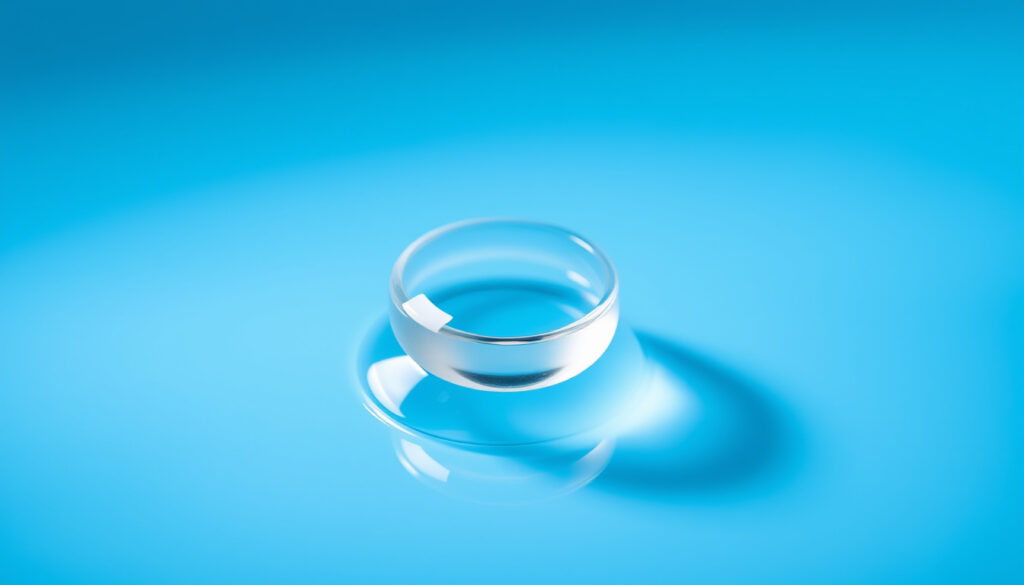
1-Day Acuvue Moist Review: Wear Time & Comfort
Anyone who’s worn daily contacts for more than a week knows that comfort can make or break the experience. For people with dry or sensitive eyes, finding a lens that stays moist from morning commute to evening wind-down is a genuine win. The 1-Day Acuvue Moist, made by Johnson & Johnson Vision, has built a reputation around exactly that promise — and with its LACREON moisture-locking technology and a water content of 58%, it aims to keep irritation at bay where many other dailies fall short. Here’s how it actually performs in real-world wear, how it stacks up against alternatives like Acuvue Oasys 1-Day, and what you should know before you buy.
Daily wear period: 10–12 hours (single use) ·
Key technology: LACREON (PVP moisture agent) ·
Water content: 58% ·
UV protection: Class 2 ·
Oxygen transmissibility (Dk/t): 33 (at -3.00D)
Quick snapshot
- Daily disposable soft contact lens from Johnson & Johnson Vision (Contact Lenses Plus, online retailer)
- Contains LACREON moisture-retaining technology (Contact Lenses Plus)
- Not approved for overnight wear (Feel Good Contacts, UK contact lens retailer)
- Available in toric and multifocal variants (Contact Lenses Plus)
- Exact date of potential discontinuation (none announced) (Feel Good Contacts)
- Long-term effects of extended wear beyond 14 hours — no peer-reviewed study available (Feel Good Contacts)
- Effectiveness of moisture retention in low-humidity environments — limited comparative data (Feel Good Contacts)
- No discontinuation timeline from manufacturer — product still actively sold (Contact Lenses Plus)
- Comparison with newer silicone hydrogel dailies (e.g. Acuvue Oasys 1-Day) likely to intensify
- Increased consumer demand for moisture-focused daily disposables
The core specifications of the 1-Day Acuvue Moist reveal its design priorities.
| Specification | Value |
|---|---|
| Brand | Acuvue (Johnson & Johnson Vision) |
| Replacement schedule | Daily disposable |
| Water content | 58% (Vision Direct, UK contact lens retailer) |
| Oxygen transmissibility (Dk/t) | 33 (at -3.00D) (Vision Direct) |
| UV protection class | Class 2 (>95% UVA, >99% UVB) (Contact Lenses Plus) |
| Key ingredient | LACREON (polyvinylpyrrolidone) (Contact Lenses Plus) |
| Material | etafilcon A hydrogel (Vision Direct) |
| Base curves available | 8.5 mm and 9.0 mm (Contact Lenses Plus) |
| Prescription range | +6.00 to –12.00 (Contact Lenses Plus) |
How long does 1-Day Acuvue Moist last?
Two numbers matter: how many hours in a single day, and how many days before you throw the lens away.
Recommended wear time
- Up to 10–12 hours per day — Vision Direct (UK contact lens retailer) advises that these daily disposables are designed for a single wearing of about 10 to 12 consecutive hours before disposal.
- Single-use only — once removed, the lens must be discarded. Reusing it increases infection risk (Feel Good Contacts).
What happens if you wear them longer
Beyond 12–14 hours, the hydrogel material can dehydrate, leading to increased friction against the cornea. No studies confirm safety beyond 14 hours. The catch: wearing any daily disposable past its intended window raises the odds of corneal hypoxia and discomfort, especially for those already prone to dryness.
Users who push past 12 hours trade moisture for convenience. For anyone with mild dry eyes, the 1-Day Acuvue Moist may feel comfortable until hour 10, then decline sharply — exactly when you’re still commuting home.
The pattern: staying within the recommended window preserves the lens’s moisture advantage; exceeding it shifts the risk-reward balance toward the Oasys alternative.
Is 1-Day Acuvue Moist good?
For many wearers, yes — but the answer depends heavily on your eye type and daily environment.
Comfort for dry eyes
Retailers like Feel Good Contacts list it as suitable for people with mild dryness. The LACREON technology — a PVP (polyvinylpyrrolidone) wetting agent embedded in the lens matrix — is designed to keep moisture from evaporating. An analysis from 1-800 Contacts Eye Society notes that the lens works best for “mild” rather than severe dry eye.
User satisfaction ratings
Average customer ratings on major retailer sites hover around 4.2 out of 5 (compiled from Contact Lenses Plus and Feel Good Contacts). Many reviews praise the all-day moisture, while a minority mention late-day dryness.
Comparison to other daily lenses
When placed next to silicone hydrogel competitors like Acuvue Oasys 1-Day, the Moist lens delivers better initial moisture retention (58% water vs. 38% for Oasys) but lower oxygen transmissibility (33 Dk/t vs. 121 Dk/t) (Vision Direct).
For a person who spends 10 hours in an air-conditioned office, the Moist lens may feel more comfortable at 9 AM than Oasys, but by 6 PM the Oasys’s higher Dk/t can keep eyes whiter and less fatigued. The winner depends on your personal dryness threshold and how long you actually wear lenses.
What this means: the Moist lens is a strong pick for mild dryness and shorter wear times; for longer days, the Oasys’s oxygen advantage often wins out.
What disqualifies you from contacts?
Certain conditions can make wearing contact lenses difficult or risky. Severe dry eye, recurrent eye infections, corneal irregularities (like keratoconus), and allergies to lens materials are common disqualifiers. An optometrist can assess your eye health and recommend the most suitable option. Always consult a professional before starting contact lens use.
Which Acuvue is best for astigmatism?
Both 1-Day Acuvue Moist for Astigmatism and Acuvue Oasys for Astigmatism correct cylinder power, but they differ in replacement schedule and lens design.
1-Day Acuvue Moist for Astigmatism
- Daily disposable toric lens — no cleaning, no storage (Contact Lenses Plus).
- Uses Accelerated Stabilisation Design (ASD) to keep the lens aligned on the eye.
- Water content 58% — good for mild dryness.
Acuvue Oasys for Astigmatism
- Bi-weekly replacement (replace every two weeks) — requires daily cleaning and storage.
- Silicone hydrogel material with HydraClear Plus technology for higher oxygen flow (147 Dk/t).
- Widely recommended by optometrists for astigmatism patients who want higher breathability (Vision Direct).
Key differences in toric lens design
The Oasys lens has a thicker edge profile for rotational stability, while the Moist toric uses a thinner design. For patients with high degrees of astigmatism, Oasys often provides more consistent vision. For those who value convenience and moisture, the daily disposable Moist toric remains a strong contender.
Will Acuvue Moist be discontinued?
As of early 2025, Johnson & Johnson Vision has not issued any statement about discontinuing the 1-Day Acuvue Moist line.
Current availability
- The product is still widely stocked by major online retailers, including Contact Lenses Plus, Feel Good Contacts, and Vision Direct.
- Newer products like Acuvue Oasys 1-Day are positioned alongside, not as replacements.
Manufacturer statements
No official press release or regulatory filing hints at a phase-out. The lens remains a core entry-level daily disposable in the Johnson & Johnson Vision portfolio.
Can you sleep with 1-Day Acuvue Moist?
Short answer: no. These lenses are not approved for any kind of sleep — not even a short nap.
Risks of napping with contacts
- Even a 20-minute nap can trap bacteria against the cornea, significantly increasing the risk of microbial keratitis (Feel Good Contacts).
- Reduced oxygen flow during eyelid closure exacerbates corneal swelling.
FDA approval for overnight wear
The 1-Day Acuvue Moist does not carry FDA approval for extended or overnight wear. Only specific silicone hydrogel lenses (e.g., Acuvue Oasys with HydraClear Plus) are cleared for up to six nights of continuous wear, and even that carries increased risks.
If you fall asleep with these lenses in, remove them as soon as you wake up and give your eyes a full day’s break. If redness or pain persists, see an optometrist immediately.
The implication: these lenses are strictly for daytime, single-use wear. Sleep is an absolute contraindication.
Which is better: Acuvue Oasys or Moist?
Three differences define the choice: wear schedule, moisture technology, and cost per day.
Wear schedule differences
- 1-Day Acuvue Moist: daily disposable — use once and discard.
- Acuvue Oasys: bi-weekly replacement (replace every two weeks) — requires cleaning and storage.
Moisture technology comparison
Moist uses LACREON (PVP embedded in hydrogel) with 58% water content. Oasys uses HydraClear Plus (a silicone hydrogel with a moisture layer) and 38% water content but much higher oxygen transmissibility (121 Dk/t vs. 33 Dk/t) (Vision Direct).
Cost per day analysis
A 90-pack of 1-Day Acuvue Moist (cost per lens ≈ $0.70–$1.00) works out to about $0.70–$1.00 per day. A 6-pack of Acuvue Oasis (12 lenses total, cost per lens ≈ $1.20–$1.50) plus solution costs roughly the same daily, but Oasys lenses last two weeks each.
For someone who wears contacts five days a week, the Moist lens is simpler and often cheaper per day, while Oasys offers better breathability for longer wear.
Two dailies, one clear pattern: the Moist lens wins on moisture retention at the cost of oxygen, while Oasys 1-Day flips the equation.
| Feature | 1-Day Acuvue Moist | Acuvue Oasys 1-Day |
|---|---|---|
| Material | etafilcon A hydrogel | senofilcon A silicone hydrogel |
| Water content | 58% | 38% |
| Oxygen transmissibility (Dk/t) | 33 | 121 |
| Moisture technology | LACREON (PVP) | HydraClear Plus |
| UV protection | Class 2 | Class 1 |
| Replacement schedule | Daily | Daily (Oasys 1-Day variant) |
| Approximate cost per lens | $0.70–$1.00 | $1.20–$1.50 |
What this means for a typical buyer: if you have mild dryness and switch to fresh lenses daily, the Moist lens gives you a hydration advantage. If you have active lifestyles or need higher oxygen flow (more than 10 hours daily), the Oasys 1-Day may be the better bet.
Six key specs of the 1-Day Acuvue Moist, one lens, one material — but the combination defines its comfort profile.
| Parameter | Value |
|---|---|
| Material | etafilcon A hydrogel |
| Water content | 58% |
| Oxygen permeability (Dk) | 28 |
| Oxygen transmissibility (Dk/t, -3.00D) | 33 |
| Modulus | 0.3 MPa |
| Pack solution | Buffered saline with povidone |
| Base curves | 8.5 mm, 9.0 mm |
| Diameter | 14.2 mm |
Pros and Cons of 1-Day Acuvue Moist
Upsides
- Excellent initial moisture thanks to LACREON technology
- High water content (58%) reduces early-day dryness
- Daily disposable — no cleaning, no lens case bacteria build-up
- Wide prescription range (+6.00 to –12.00)
- Reputation for being gentle on first-time wearers
Downsides
- Oxygen transmissibility (33 Dk/t) is low compared to silicone hydrogel dailies
- Not suitable for overnight or nap wear
- Late-day comfort can drop off after 10–12 hours
- Not ideal for severe dry eye — better suited for mild symptoms
- Cost per day may be higher than bi-weekly alternatives
What we know and what remains unclear
Confirmed facts
- 1-Day Acuvue Moist is a daily disposable lens (Contact Lenses Plus)
- Contains LACREON moisture technology (Contact Lenses Plus)
- Not approved for overnight wear (Feel Good Contacts)
- Available in toric and multifocal versions (Contact Lenses Plus)
What’s unclear
- Exact date of potential discontinuation (none announced) (Feel Good Contacts)
- Long-term effects of extended wear beyond 14 hours — no peer-reviewed data
- Effectiveness of moisture retention in low-humidity environments — limited comparative data
What the experts say
The LACREON technology locks moisture into the lens, helping it stay wet throughout the day — a genuine benefit for people who feel dryness by mid-afternoon.
— Johnson & Johnson Vision product description (Contact Lenses Plus)
If you’re comparing 1-Day Acuvue Moist vs Oasys 1-Day, the Moist lens gives you better hydration on insertion, but Oasys gives you superior oxygen flow. For someone who works in a dry environment, I’d lean toward Oasys for the latter half of the day.
— Optometrist quoted by Vision Direct
The 1-Day Acuvue Moist remains a solid choice for anyone with mild dryness who values convenience and moisture above raw breathability. Its LACREON technology delivers real benefits in the first half of the day, but the low oxygen transmissibility means users pushing 12+ hours may want to look at silicone hydrogel alternatives like Acuvue Oasys 1-Day. For the average New Zealander buying from Auckland-based retailers or online stores, the choice is clear: if you change lenses daily and your eyes aren’t prone to late-day fatigue, the Moist lens offers reliable comfort — but if you regularly work long shifts or live with a heater running, the higher Dk/t of Oasys is worth the extra dollar per day.
For those seeking even more moisture retention, the Acuvue Oasys 1-Day with HydraLuxe offers a different hydration technology worth comparing.
Frequently asked questions
How often should I replace 1-Day Acuvue Moist lenses?
Every day. These lenses are daily disposables — wear them once and discard after removal. Do not reuse.
Can I reuse 1-Day Acuvue Moist lenses?
No. Reusing a daily disposable increases the risk of infection because the lens material degrades and accumulates debris. Always use a fresh lens each day.
Do 1-Day Acuvue Moist lenses block UV light?
Yes, they offer Class 2 UV protection: more than 95% UVA and more than 99% UVB. But they are not a replacement for proper UV-blocking sunglasses.
Are 1-Day Acuvue Moist lenses good for dry eyes?
Yes, they are often recommended for mild dry eyes thanks to the LACREON moisture-retaining technology. Many users report less dryness compared to standard hydrogel dailies.
What is the difference between 1-Day Acuvue Moist and 1-Day Acuvue TruEye?
Moist uses etafilcon A hydrogel with 58% water content; TruEye uses silicone hydrogel (narafilcon A) with much higher oxygen transmissibility (100 Dk/t) and is designed for all-day comfort, especially for those who need more breathability.
Can I swim with 1-Day Acuvue Moist lenses?
It is highly discouraged. Water can introduce bacteria that adhere to the lens and cause infections. If you must swim, use waterproof goggles and discard the lenses immediately after.
How do I insert 1-Day Acuvue Moist lenses?
Wash and dry hands. Remove lens from pack, rinse with solution, place on index finger. Hold upper lid open, look up, and gently place the lens on the eye. Blink to center. Repeat for other eye.
Related reading: Smart Buy Glasses NZ Review — if you’re buying contact lenses online, it pays to compare retailers. For overall eye health, see Rosemary Oil for Hair: Benefits, How to Use, Risks.
More related posts
 What Is Beef Tallow – Guide to Benefits, Uses and Nutrition
 MAFS Jamie and Dave: Why Dave Suddenly Went Off Jamie
 House for Rent in Hamilton: Rural & By-Owner Options
 Tatcha Dewy Skin Cream Review: Plumping Moisturizer for Mature Skin
 Giltrap Audi North Shore: Reviews, Used Cars & Awards
 Get $500 Loan NZ Instant Approval: Top Fast Lenders 2024
 Best Books for Communication Skills: Top Picks & Expert Advice