Mobile Service Providers NZ: Compare 2degrees, Spark, One NZ
Anyone who’s shopped for a mobile plan in New Zealand has felt the confusion: three networks, a dozen resellers, and prices that bounce from $15 to $100 a month. The market has quietly consolidated around Spark, One NZ, and 2degrees, yet the best choice for you depends on where you live, how much data you need, and whether you’re willing to switch.
Major network providers in NZ: 3 ·
Network operators: 2degrees, Spark, One NZ ·
One NZ rebranded from: Vodafone (2023) ·
Population coverage: Almost all inhabited areas
Quick snapshot
- Three network operators own the infrastructure: Spark, One NZ, and 2degrees (Canstar NZ (finance comparison site))
- One NZ was formerly Vodafone New Zealand, rebranded in 2023 (Canstar NZ)
- Mobile Compare reports the three networks collectively cover almost all places where Kiwis live and work (Mobile Compare (NZ telecom comparison platform))
- Exact population coverage percentages per provider — claims vary and aren’t independently audited
- Which MVNOs lease from which network — affiliations change and aren’t always listed transparently
- Vodafone NZ rebranded to One NZ in 2023 (Canstar NZ)
- Consumer NZ published its best-and-worst mobile providers survey in 2025 (Consumer NZ (independent consumer watchdog))
- Satellite-to-mobile services from One NZ and Spark are rolling out, with Spark offering data+text from day one (Bill Bennett (NZ tech analyst))
- MVNO segment is growing — more budget options from Skinny, Warehouse Mobile, and others (Bill Bennett (NZ tech analyst))
The table below summarizes the key facts about New Zealand’s mobile service providers, drawing from the research notes.
| Attribute | Details |
|---|---|
| Number of major networks | 3 |
| Network operators | 2degrees, Spark, One NZ |
| One NZ rebrand year | 2023 |
| Typical plan price range | $15 – $100 per month |
| Population coverage estimate | Over 99% (from provider claims) |
| MVNO examples | Skinny (Spark), Warehouse Mobile (2degrees) |
| Satellite text add-on (One NZ) | From $5/month |
| Satellite add-on (Spark) | From $10/month |
The implication: while all three operators boast high coverage, the fine print on satellite add-ons and rural reach separates them.
What is the best mobile network provider in NZ?
Overview of the three main networks
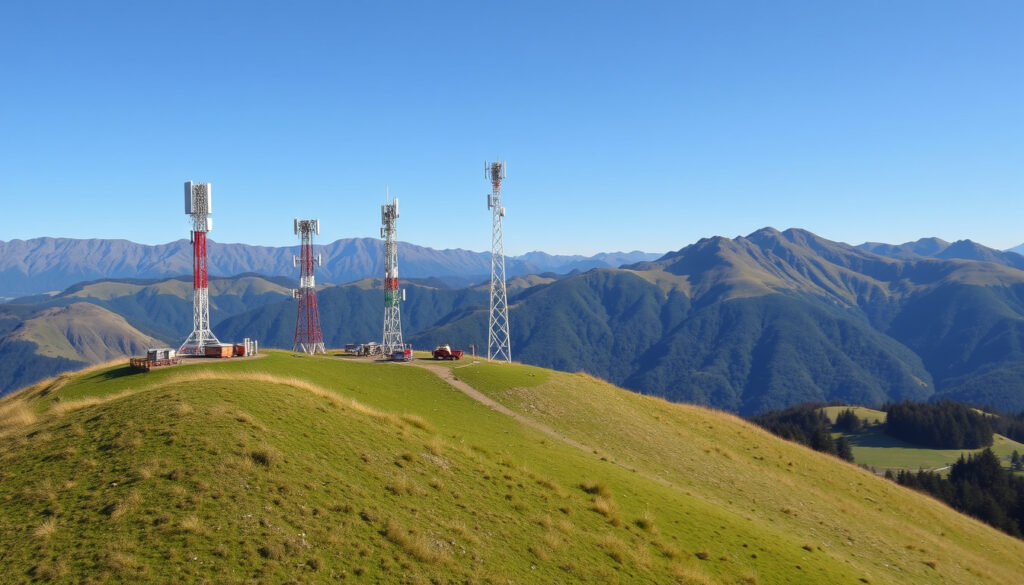
New Zealand’s mobile market rests on three infrastructure owners: Spark, One NZ, and 2degrees. Each built and operates its own network, as noted by NZ Pocket Guide (travel and NZ information site). No other provider owns towers — everyone else leases capacity.
- Spark: The largest 4G/5G footprint overall. According to Canstar NZ, Opensignal data shows Spark has the widest general coverage, followed by One NZ, then 2degrees.
- One NZ: Formerly Vodafone, rebranded in 2023. Same network, same towers. Canstar NZ reports Opensignal data puts One NZ ahead on 5G coverage — just slightly ahead of Spark.
- 2degrees: The smallest of the three by coverage, but competitive in urban areas and pricing.
Coverage and reliability of 2degrees, Spark, and One NZ
Mobile Compare (NZ telecom comparison platform) reports that the three networks collectively cover almost all places where Kiwis live and work. For most urban users, any of the three will work fine. The difference shows up in rural and highway zones: Spark is commonly presented as stronger for travel and rural coverage, according to NZ Pocket Guide.
How to choose based on your location
Start with a coverage check on each provider’s website — they publish maps by street address. If you’re in a city centre, price and plan features matter more than coverage. For frequent travellers or rural dwellers, Spark’s larger 4G footprint gives it an edge, though One NZ’s 5G lead in metro areas is worth weighing.
The implication: coverage leadership is split between Spark (general reach) and One NZ (5G density). Your home and commute determine which leader actually serves you.
Spark covers more places overall, but One NZ covers more places with 5G. For a city commuter, One NZ’s faster speeds in metro areas may matter more. For a regional traveller, Spark’s wider 4G blanket is the safer bet.
Which Mobile Network Does Your Provider Use in NZ?
Understanding MVNOs and resellers
Mobile Virtual Network Operators (MVNOs) lease capacity from one of the three infrastructure owners. They don’t build towers or manage spectrum. Mobile Compare explains this is how the NZ market allows more competition without duplicating expensive infrastructure.
The table below lists the major MVNOs and the host network they each use.
| Provider | Underlying network | Notes |
|---|---|---|
| Skinny | Spark | Budget brand, prepaid and postpaid |
| Warehouse Mobile | 2degrees | Retailer-owned, listed by MoneyHub in July 2026 |
| Rocket Mobile | Spark (reportedly) | Smaller reseller |
| Kogan Mobile | One NZ (reportedly) | Australian brand, NZ presence |
What this means: every MVNO in NZ rides on Spark, One NZ, or 2degrees. If you sign up with Skinny, you’re on Spark’s towers. If you choose Warehouse Mobile, you’re on 2degrees’ network.
How to check which network your provider uses
Check the provider’s coverage map or FAQs — reputable resellers disclose their host network. Canstar NZ and MoneyHub (NZ personal finance guide) both publish tables showing affiliations. If a provider doesn’t say, ask directly — it’s a red flag if they won’t answer.
What this means: budget plans from Skinny, Warehouse Mobile, and others give you the same signal as their host network. The trade-off is usually slower data speeds during peak times or lower customer support priority.
Who has the best mobile plans in NZ?
Comparing plan features: data, minutes, texts
MoneyHub’s July 2026 comparison includes plans from Spark, One NZ, 2degrees, Skinny, Warehouse Mobile, and others. Features vary mainly by data allowance, rollover policy, and whether international calling is included.
- Basic plans ($15–$30/month): 1–5GB data, usually prepaid. Skinny and 2degrees lead here.
- Standard plans ($30–$60/month): 10–50GB, often with rollover. Spark and One NZ are competitive.
- Unlimited plans ($70–$100/month): Truly unlimited data, though speeds may throttle after heavy use. One NZ and Spark both offer these.
Best value plans for light, medium, heavy users
For light users (under 5GB/month), Skinny or 2degrees’ prepaid options are cheapest — around $15/month. Medium users (10–30GB) get good value from Spark’s $36 plan or One NZ’s $39 plan. Heavy users should look at One NZ’s unlimited data plan at $89/month or Spark’s unlimited at $89/month — both are effectively the same price.
Unlimited data plans and their fine print
Unlimited in NZ usually means no hard cap, but speeds may drop after 100–200GB in a billing period. Check the fair use policy. Bill Bennett (NZ tech analyst) notes that One NZ and Spark now also offer satellite add-ons — One NZ at $5/month for text, Spark at $10/month for text and data — which changes the value proposition for rural users.
The catch: unlimited plans look similar on paper, but the real difference is in the satellite bolt-ons and whether you need rural coverage.
A heavy data user in central Auckland might save $20/month by choosing 2degrees over Spark. But a heavy user who travels to the Coromandel every weekend needs Spark’s wider 4G reach — and the satellite add-on cost becomes a rounding error compared to having signal.
Is Vodafone now called One NZ?
The rebranding timeline and reasons
Yes. Vodafone New Zealand rebranded to One NZ in 2023. Canstar NZ confirms the name change but stresses that “the same company, same network” operates underneath. Vodafone Group sold its NZ arm to Infratil and Brookfield Asset Management in 2019, and the new owners rebranded to establish a local identity independent from the global Vodafone brand.
What changed for existing Vodafone customers
If you were a Vodafone customer before 2023, your plan and number carried over automatically. The network didn’t change. SIM cards work the same. The only visible difference is the logo and the name on your bill. Plans are still called One NZ plans, and the company continues to offer mobile, broadband, and business services.
How One NZ plans compare to Spark and 2degrees
One NZ’s postpaid plans start at $29/month, compared to Spark’s $15/month entry level. Consumer NZ’s 2025 survey placed Spark and One NZ at the bottom for customer satisfaction — an interesting twist given their network coverage leadership. Meanwhile, 2degrees and MVNOs like Skinny scored higher on customer experience.
The paradox: the two networks with the best coverage (Spark and One NZ) also had the lowest satisfaction scores, suggesting that network leadership doesn’t guarantee happy customers.
What is the cheapest One NZ phone plan?
One NZ prepaid and postpaid plan options
One NZ’s cheapest prepaid plan starts at $15/month — that gets you 1GB of data and unlimited texts. Their cheapest postpaid plan is $29/month for 3GB of data. Both are available on One NZ’s website.
The table below shows One NZ’s plan pricing and data allowances.
| Plan type | Price per month | Data allowance |
|---|---|---|
| Prepaid Basic | $15 | 1GB |
| Prepaid Standard | $29 | 3.5GB |
| Postpaid Essentials | $29 | 3GB |
| Postpaid Standard | $39 | 12GB |
| Unlimited Plan | $89 | Unlimited (fair use applies) |
The pattern: One NZ’s pricing tiers jump sharply after the $29 entry point. The $39 plan gives 12GB — decent for moderate users, but 2degrees and Spark offer more data at similar or lower prices for the same tier.
Comparing One NZ budget plans to competitors
At $15/month, One NZ’s prepaid is competitive with Skinny and 2degrees. But the data allowance is small. MoneyHub’s comparison shows that for $29/month, Spark offers 5GB (postpaid) and 2degrees offers 8GB on prepaid. One NZ’s $29 postpaid gives only 3GB — less data for the same price as competitors.
The trade-off: One NZ’s budget plans are not the market-leader for value. They work best for someone who prioritises One NZ’s 5G coverage over raw data volume.
“There are three network providers in New Zealand, 2degrees, Spark, and One NZ, and they collectively provide mobile coverage to almost all of the places where Kiwis live and work.”
— Mobile Compare (NZ telecom comparison platform), 2025 report
Related reading: Interest Rate Comparison NZ 2024 · Air New Zealand Call: Toll-Free Numbers, Live Chat & 24/7 Support
esimnewzealand.com, newzealand-finance.nz, mobile-phones.co.nz, reddit.com
Frequently asked questions
Can I keep my phone number when switching providers in NZ?
Yes. New Zealand has mobile number portability. When you switch to a new provider, they will handle the transfer within a few hours to one business day. Your old number stays active.
Do 2degrees, Spark, and One NZ offer 5G?
Yes, all three have 5G networks. According to Canstar NZ, Opensignal data shows One NZ has the widest 5G coverage, just ahead of Spark. 2degrees’s 5G footprint is smaller and focused on urban centres.
What is the average mobile data usage in New Zealand?
Average data usage per month in NZ is around 10–15GB per subscriber, though heavy users can exceed 50GB. Unlimited plans are becoming more popular for households that stream video or work remotely.
How do I check mobile coverage in my area?
Visit each provider’s coverage map: Spark.co.nz, OneNZ.co.nz, and 2degrees.co.nz. Enter your address or postcode to see predicted signal strength. Third-party site NZ Pocket Guide also offers general coverage summaries.
Are there any mobile plans with free international calls?
Several plans include free calls to certain countries. One NZ and Spark both have add-on packs for international calling. MoneyHub lists providers that bundle international minutes, typically in the $39–$59/month range.
What is the difference between prepaid and postpaid plans in NZ?
Prepaid means you pay upfront for a set allowance — no credit check, no bill at the end of the month. Postpaid means you’re billed monthly after using the service, often with higher data caps and the option to finance a phone. Prepaid is simpler and better for budget control.
Which provider offers the best rural coverage?
Spark generally has the widest 4G coverage in rural and regional areas. One NZ comes second with strong highway coverage. 2degrees is reliable in towns but weaker in remote zones. Both Spark and One NZ are rolling out satellite-to-mobile services to fill gaps.
New Zealand’s three-network structure leaves consumers with real choices — but also real trade-offs. For the urban commuter who wants fast 5G, One NZ is the logical pick. For the weekend adventurer who needs signal in remote spots, Spark’s wider coverage plus satellite text add-on is the safer bet. For the budget-conscious household, 2degrees or an MVNO like Skinny delivers dependable service at half the cost. The decision is clear: match your provider to your geography and usage, not to a brand logo.
More related posts
 What Do Moths Eat? Adult Diet vs. Hungry Larvae
 Westpac Variable Rate Cut August 2025: Key Details
 Old-Fashioned Pikelet Recipe: Fluffy Secrets
 Samsung Galaxy S25 FE vs S25: Differences, Price, 2026 Verdict
 How to Draw Anime: Beginner’s Step-by-Step Guide
 What is a Nonce in Crypto? Definition, Uses, and Error Fixes
 Chelsea FC vs FC Barcelona Lineups: 2025 UCL Preview
 The Haunting of Hill House: Scare, Season 2 & Bly Manor Guide