Tolaga Bay Area School – Facts, Location and Key Stats
Tolaga Bay Area School: A Comprehensive Overview
What is Tolaga Bay Area School?
Tolaga Bay Area School stands as a unique educational institution on New Zealand’s East Coast, serving students from Years 1 through 13 in a single state-run composite setting. Located in the small rural settlement of Tolaga Bay within the Gisborne District, the school provides comprehensive education to approximately 257 students as of August 2025. The current principal is Nori Parata, who leads an institution operating under the authority of the Napier Ministry of Education Office. Unlike many New Zealand schools that separate primary and secondary education, Tolaga Bay Area School offers an unbroken educational pathway from early childhood through to senior secondary qualifications, reflecting the area school’s historical role in serving isolated rural communities where distances to other educational institutions would otherwise create significant barriers.
The school operates as a state, co-educational institution, meaning it is funded by the government and open to all students regardless of background. Its composite structure places it within a distinctive category of New Zealand education, where the traditional divide between primary and secondary schooling has been intentionally bridged to accommodate regional circumstances. This arrangement allows younger students to remain within their community for longer, potentially reducing the disruption and travel burdens that would otherwise affect families in this remote coastal location. The school’s classification as an “area school” specifically denotes its role in serving a defined geographic catchment, often in settings where population density does not support multiple separate institutions.
Area schools represent a distinctive feature of New Zealand’s educational landscape, designed primarily to serve rural and semi-rural communities where student populations are too small to sustain separate primary and secondary institutions. These composite schools combine both educational phases under one administration, offering families in remote locations the advantage of keeping children within their community throughout their schooling years.
Where is Tolaga Bay Area School Located?
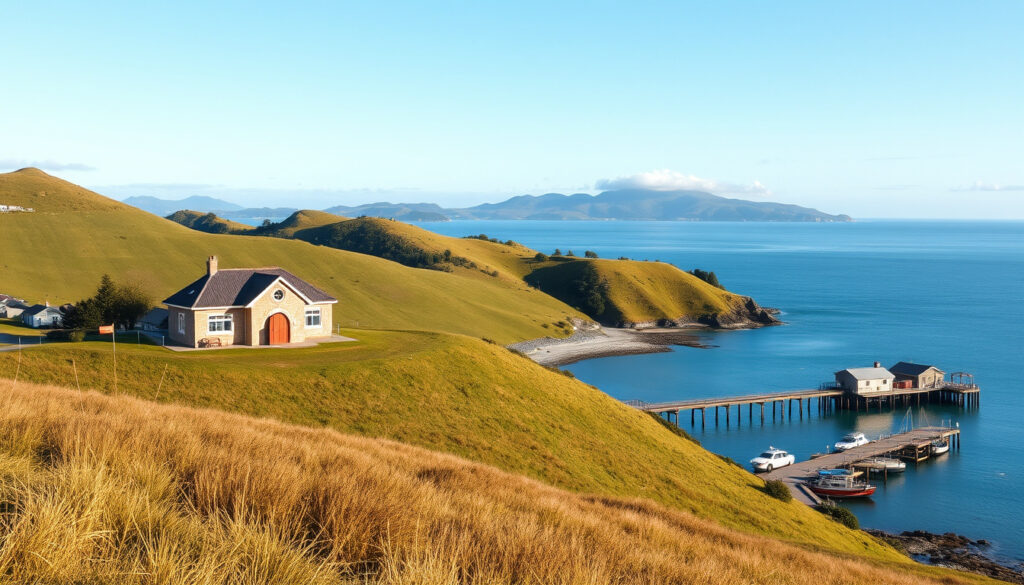
The school occupies a prominent position at 24 Resolution Street in Tolaga Bay, with the full postal address listed as Tolaga Bay Area School, 24 Resolution Street, Gisborne. The physical and postal addresses are identical, simplifying correspondence for families and community members. Tolaga Bay itself sits along the Pacific Coast of New Zealand’s North Island, approximately 45 kilometers north of Gisborne city, making it one of the more remote educational institutions in the region. The settlement’s coastal location and relatively isolated position underscore why the area school model has remained relevant for local families who might otherwise face considerable travel distances to access secondary education.
For those seeking to make contact, the school maintains several communication channels. The telephone number is 06-8626765, while general enquiries can be directed to the email address tolaga.school@uawa.ac.nz. The school’s official website, accessible at tbay.school.nz, provides a hub for current information regarding school activities, enrolment procedures, and community updates. Given the rural setting, with an Isolation Index rating of 2, the school occupies an important community anchor point that extends beyond purely educational functions to serve as a focal gathering place for the broader Tolaga Bay community.
Reaching the School from Gisborne
Travelers approaching from Gisborne city will find Tolaga Bay accessible via State Highway 35, which traces the eastern coastline of the North Island. The journey takes approximately 45 minutes under normal driving conditions, passing through several small settlements and alongside farmland characteristic of the East Coast region. For prospective families visiting from further afield, Gisborne Airport provides regional air connections, with ground transportation then required to complete the remaining distance to Tolaga Bay.
Key Statistics for Tolaga Bay Area School
Understanding the quantitative profile of Tolaga Bay Area School requires examining several official metrics that collectively paint a picture of the institution’s scale, resources, and community positioning. The current student roll stands at 257 as of August 2025, a figure that reflects Ministry of Education census data and represents the most recent comprehensive count available. Historical roll data spanning from 1996 through 2025 is maintained in Ministry datasets, though detailed Tolaga Bay-specific historical trends are not readily accessible in the available sources.
School Profile Overview
New Zealand replaced its school decile system with the Equity Index (EQI) in 2023 for funding purposes. The EQI uses socio-economic indicators to determine resourcing levels, with lower scores indicating higher levels of disadvantage. Tolaga Bay Area School’s EQI of 527 places it within a specific funding band that reflects the community’s particular circumstances and educational needs.
The school’s Equity Index (EQI) stands at 527, a figure that replaced the previous decile classification system in 2023 as part of nationwide changes to educational funding allocation. This index provides a socio-economic measure that helps determine the level of additional resources the school receives to support student achievement. Alongside the EQI, the school carries an Isolation Index of 2, which classifies Tolaga Bay as a rural settlement for administrative and funding purposes. These two indices together inform the Ministry of Education’s understanding of the school’s operational context, recognizing that rural and socio-economic factors create distinct educational challenges that may require tailored support approaches.
| Metric | Details | Source |
|---|---|---|
| School Type | State Composite (Years 1-13) | Ministry of Education |
| Current Roll | 257 students (August 2025) | Ministry of Education Census |
| Principal | Nori Parata | School Records |
| Equity Index | 527 | Ministry of Education |
| Isolation Index | 2 (Rural Settlement) | Ministry of Education |
| School Code | 212 | Ministry of Education |
| Authority Type | State, Co-educational | Ministry of Education |
| Ministry Office | Napier | Ministry of Education |
How Area Schools Function Within New Zealand Education
Tolaga Bay Area School belongs to a category of institutions that has played a significant role in New Zealand’s educational history, particularly in serving communities where geographic isolation would otherwise limit access to secondary education. A 2013 report examining New Zealand’s schools sector provides context for how composite schools like Tolaga Bay fit within the broader educational framework, distinguishing between area schools and the more common separate primary and secondary institutions found in urban and larger semi-rural settings.
The area school model allows for pedagogical continuity across year groups, enabling teaching staff to work with students over extended periods and allowing curriculum to be delivered with awareness of each student’s educational journey from the earliest years. For rural communities, this arrangement often means that older students can remain at home with their families rather than relocating to attend secondary school, a factor that carries both economic and social significance for regional families.
Historical Context and Timeline
While comprehensive historical records for Tolaga Bay Area School are limited in the available sources, the institution’s presence in the community extends well into the past. The school was referenced in the 2005 Schools Sector Report, which mentioned it by code number 212 alongside national discussions about roll growth patterns, teacher professional development initiatives, and funding allocation trends affecting New Zealand’s educational sector during that period.
During the mid-2000s, Tolaga Bay Area School appeared in national conversations regarding educational improvement initiatives. The Numeracy Development Project, a nationwide program aimed at improving mathematical outcomes for students, was noted as benefiting even the lowest-achieving students at schools like Tolaga Bay, suggesting that the institution was actively participating in professional development opportunities provided through the Ministry of Education. Additionally, funding increases of 8.8% per student were implemented between 2004 and 2005, representing a period of increased investment in New Zealand’s school system that would have affected institutions like Tolaga Bay.
The 2005 Schools Sector Report positioned schools like Tolaga Bay within broader national educational trends, including discussions about roll growth patterns and the importance of professional development for teachers in rural settings. These historical documents provide valuable context for understanding how the school’s role has evolved alongside changes in New Zealand’s educational policy landscape.
Regional History Surrounding Tolaga Bay
The Tolaga Bay area itself carries historical significance that predates the establishment of formal educational institutions. Records from the early twentieth century document the region’s economic activities, including a sawmilling industry that declined significantly by 1909. Historical business listings from 1953 further illustrate the commercial life of the settlement during the mid-twentieth century. While these regional historical references do not directly document the school’s development, they provide environmental context that shaped the community the school would eventually serve.
What We Know and What Remains Unclear
When examining available information about Tolaga Bay Area School, a clear distinction emerges between what can be stated with confidence based on official sources and what remains undocumented or inaccessible through current research channels.
The available research sources do not contain information regarding specific sports achievements, Maori immersion programs, detailed community roles, student outcome data beyond roll figures, or comprehensive updates beyond August 2025. Families seeking the most current information should consult the school’s official website or contact the Ministry of Education directly for the latest details.
| Established Information | Information That Remains Unclear |
|---|---|
| School type: State composite, Years 1-13 | Specific sports achievements |
| Current roll: 257 students | Details of Maori immersion programs |
| Principal: Nori Parata | Student academic outcomes data |
| Location: 24 Resolution Street, Tolaga Bay | Community partnerships and roles |
| Contact details confirmed | Recent news and events |
| Equity Index: 527 | Updates beyond August 2025 |
The verified facts—school type, current roll, principal, location, contact information, and equity index—derive from official Ministry of Education records and the school’s own administrative data. However, gaps exist in public documentation regarding extracurricular achievements, cultural programs, detailed student performance metrics, and ongoing community involvement. For families seeking this information, direct contact with the school through its official channels represents the most reliable approach to obtaining current and comprehensive details.
The Role of Area Schools in Rural New Zealand
Tolaga Bay Area School functions within a broader system of rural education that addresses unique challenges faced by communities separated from urban centers by considerable distances. Area schools like Tolaga Bay serve multiple functions beyond their core educational mandate, often acting as community hubs and maintaining social cohesion in settlements where the local school may represent one of the few remaining institutional anchors.
The New Zealand government’s official guidance on area schools recognizes their particular importance in maintaining educational access across diverse geographic contexts. These institutions are specifically designed to ensure that families in rural locations do not face impossible choices between maintaining family cohesion and accessing quality secondary education. The composite structure of schools like Tolaga Bay means that siblings can remain together within the same educational institution, that parents can maintain single points of contact for their children’s learning journeys, and that the community retains a focal institution that connects families across generational lines.
The Equity Index funding model acknowledges that rural schools often face additional operational challenges, from transportation logistics to difficulties in attracting and retaining specialized teaching staff. Tolaga Bay’s EQI of 527 reflects the Ministry of Education’s recognition that socio-economic factors in communities like Tolaga Bay create specific educational needs that require sustained support. This funding approach ensures that rural students have access to comparable educational resources despite the additional costs associated with operating schools in less populated areas.
Sources and Official References
Several official sources provide documented information about Tolaga Bay Area School, each contributing different aspects to the available picture of the institution. The Ministry of Education’s official school database, accessible through Education Counts, maintains comprehensive records including roll data, demographic information, and administrative details for all registered schools including Tolaga Bay. The school directory maintained at davewilcox.co.nz aggregates Ministry data and provides an accessible reference point for basic institutional facts.
Equity Index data and related socio-economic information for Tolaga Bay Area School are sourced from Education Counts via the Ministry of Education, with supplementary data available through independent education data platforms like Figure.nz that track New Zealand school statistics over time.
Historical context regarding New Zealand’s area school system and the broader educational policy environment comes from official reports held in government document repositories. The 2005 Schools Sector Report provides specific references to schools with code 212 within national educational discussions of that period, while the 2013 Nga Kura o Aotearoa report contextualizes the role of composite schools within the wider New Zealand educational landscape.
Summary
Tolaga Bay Area School represents a vital educational institution serving the rural East Coast community of Tolaga Bay in Gisborne, New Zealand. As a state composite school covering Years 1 through 13, it provides a continuous educational pathway for approximately 257 students under the leadership of Principal Nori Parata. The school’s Equity Index of 527 and Isolation Index of 2 reflect both the socio-economic context of its community and its geographic positioning as a rural settlement. Contact can be made through the school’s address at 24 Resolution Street, by telephone at 06-8626765, or via email at tolaga.school@uawa.ac.nz, with additional information available through the school’s official website.
The area school model ensures that families in this remote coastal location have access to comprehensive education without requiring relocation or extensive daily travel, maintaining community connections that extend beyond purely educational functions. While certain details regarding extracurricular programs, student outcomes, and recent activities remain undocumented in available public sources, the school’s official channels provide the most reliable avenue for families seeking current information about enrollment, programs, and community involvement.
Frequently Asked Questions
What type of school is Tolaga Bay Area School?
Tolaga Bay Area School is a state composite school offering education from Years 1 through 13. It is co-educational and operates under the Napier Ministry of Education Office.
How many students attend Tolaga Bay Area School?
The current roll stands at 257 students as of August 2025, according to Ministry of Education census data.
Who is the principal of Tolaga Bay Area School?
Nori Parata serves as the current principal of Tolaga Bay Area School.
What is Tolaga Bay Area School’s Equity Index?
The school has an Equity Index (EQI) of 527, which replaced the decile system in 2023 for funding allocation purposes.
How can I contact Tolaga Bay Area School?
The school is located at 24 Resolution Street, Tolaga Bay 4077. Phone: 06-8626765. Email: tolaga.school@uawa.ac.nz.
What is the school code for Tolaga Bay Area School?
Tolaga Bay Area School carries the official Ministry of Education school code 212.
Where is Tolaga Bay Area School located?
The school is situated in Tolaga Bay, a rural settlement in the Gisborne District on New Zealand’s East Coast, approximately 45 kilometers north of Gisborne city.
Does Tolaga Bay Area School offer Maori immersion education?
The available research sources do not contain documented information about specific Maori immersion programs at Tolaga Bay Area School. Direct inquiry with the school is recommended for current program offerings.
More related posts
 1/2 Cup in Grams: Conversions for Flour, Sugar & Butter
 How to Check Prezzy Card Balance Online (Free & Phone Options)
 240 USD to NZD: $240 US to New Zealand Dollars Today
 Money Machine Near Me – Find Free ATMs and Avoid Fees
 The Twelve Season 3: UK Release, Cast, Ending & Cape Rock Killer
 Westpac Variable Rate Cut August 2025: Key Details
 Funny Secret Santa Gifts: Hilarious Ideas for Everyone
 Sex on the Beach Cocktail: Recipe, Ingredients, and Tips