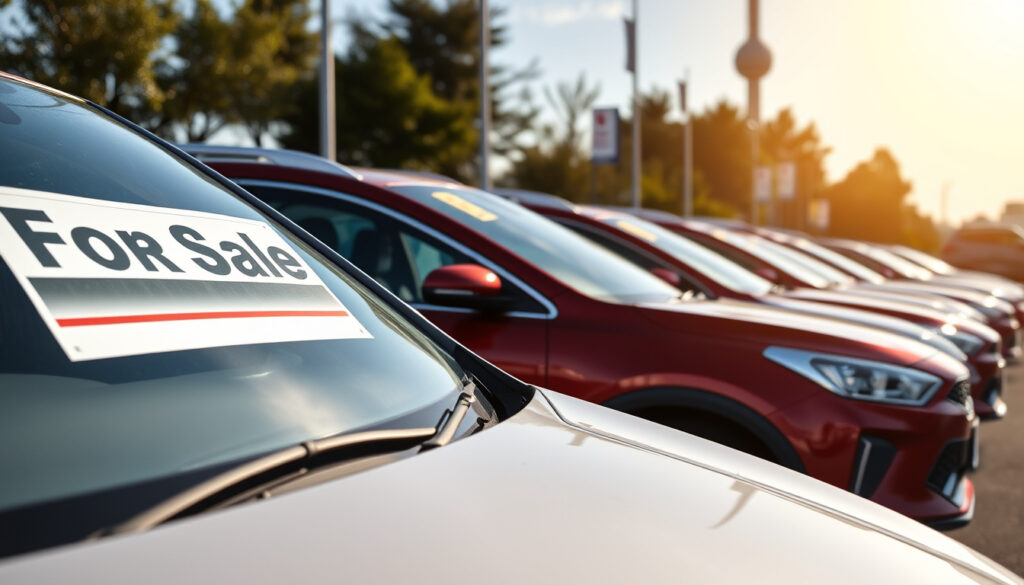
Cars for Sale Auckland: Complete Buyer’s Guide for NZ
Anyone who’s searched for a “car for sale Auckland” has likely felt the overwhelm — thousands of listings, dozens of dealers, and endless questions about costs and legality. This guide cuts through the noise with concrete numbers and local insights, so you know exactly what to expect whether you’ve just landed in New Zealand or you’re a long-time local upgrading your ride.
Cars listed on Auto Trader NZ: Over 40,000 ·
Listings on Trade Me Motors: 69,614 ·
Used cars in Auckland at Turners: Over 1,000 ·
2 Cheap Cars locations nationwide: 10
Quick snapshot
- Foreigners can buy a car in NZ with a valid driver’s license (Consumer Protection NZ guidance)
- Dealer-sold cars are covered by the Consumer Guarantees Act (Consumer Protection NZ (regulator))
- 4-second rule for following distance in poor conditions is official NZTA recommendation (New Zealand Government transport site)
- Used vehicles sold by dealers must display a Consumer Information Notice (CIN) (Consumer Protection NZ (regulator))
- Which car color is least stolen varies across studies — no single definitive answer (New Zealand Police)
- Exact average price for a cheap car in Auckland depends on age and condition (New Zealand Police)
- Negotiation tactics (starting at 25% below asking price) are suggestions, not guarantees (MoneyHub (personal finance guide))
- AA Preferred Dealers network specifics by location may change over time (AA (motoring association))
- Notify Waka Kotahi within 7 days of purchase to avoid fines (Consumer Protection NZ guidance)
- Vehicle needs a valid WoF before being used on the road (New Zealand Government transport site)
- Choose your buying route: dealer (CGA protection) vs private seller (no CGA protection) (Capital City Mazda (dealer perspective))
- Inspect and test drive before committing (Consumer NZ (independent advocacy group))
- Complete registration, insurance, and license conversion if needed (Capital City Mazda (dealer perspective))
| Fact | Details |
|---|---|
| Total listings on Auto Trader NZ | Over 40,000 |
| Listings on Trade Me Motors | 69,614 |
| Used cars in Auckland at Turners | Over 1,000 |
| 2 Cheap Cars locations | 10 nationwide |
| Foreign buyers allowed? | Yes, no residency requirement |
| Dealer protection law | Consumer Guarantees Act applies |
| Registration notification deadline | Within 7 days of purchase |
| WoF requirement | Required before road use |
| AA Preferred Dealers in Auckland region | At least 10 locations |
| Average used car price NZ | Around $15,000 |
Can Foreigners Buy a Car in New Zealand?
Yes — and there are no residency or visa requirements to make a purchase. Foreigners can buy a car in New Zealand with a valid driver’s license from their home country, as long as it’s in English or accompanied by an official translation (Consumer Protection NZ (regulator) guidance).
What documents do foreigners need?
- A valid driver’s license (original or IDP)
- Proof of address (e.g., bank statement or utility bill)
- Passport for identity verification
You’ll need to register the vehicle in your name with Waka Kotahi and get third-party insurance at minimum. The process is straightforward and takes about an hour at a post office or AA center (New Zealand Government transport site).
Can I buy a car on a visitor visa?
Yes — visitors can purchase and register a car during their stay. However, you’ll need to provide a New Zealand address for registration, and the car must have a current warrant of fitness to be used on public roads (New Zealand Government transport site).
What this means: If you’re new to NZ, the process is simpler than you might expect — just bring your documents and a local address.
How Much Does a Car Cost in New Zealand?
The average used car price in New Zealand sits around $15,000, but Auckland’s market offers plenty under $10,000 if you know what to look for (MoneyHub (personal finance guide)). Japanese imports — particularly Toyota Corollas and Honda Fits — dominate the budget segment for their reliability and parts availability.
What car can I buy for $4,000?
At this price point, you’re looking at older models (early 2000s) with higher mileage — typically 150,000 km or more. Reliable candidates include the Toyota Corolla, Nissan Tiida, or Suzuki Swift. Expect some cosmetic wear, and always get a pre-purchase inspection (Consumer NZ (independent advocacy group) recommendation).
What car could I get for $10,000?
For $10,000, the options expand significantly. You can find late-2000s Japanese imports like the Mazda Demio, Honda Fit, or Toyota Vitz with around 80,000–120,000 km. Many dealers at Turners Cars and 2 Cheap Cars stock these models with warranties (AutoTrader NZ dealer directory).
What is the best value for money car in NZ?
- Under $5,000: Suzuki Swift (2005–2010) — cheap parts, good fuel economy
- $5,000–$10,000: Toyota Corolla (2008–2013) — bulletproof reliability
- Budget-conscious: Nissan Leaf (electric) — low running costs, but check battery health
Budget buyers face a real tension: a $4,000 car may save upfront cash but often needs $1,000–$2,000 in repairs within a year. For Auckland drivers, spending $7,000–$10,000 buys significantly more reliability and fewer breakdowns.
The pattern: Each price tier opens up more reliable options, but the best value for most buyers sits in the $7,000–$10,000 range.
What Are the Key Driving Rules in New Zealand?
New Zealand has unique driving rules that catch many newcomers off-guard. The NZ Transport Agency (NZTA) publishes two critical following-distance rules every driver should know (New Zealand Government transport site).
What is the 4 second rule?
In poor conditions (rain, fog, or darkness), drivers should maintain a minimum 4-second gap behind the vehicle ahead. This accounts for reduced traction and longer stopping distances. Pick a fixed point — when the car ahead passes it, count “one thousand and one… one thousand and four.” If you reach the point before finishing, you’re too close (New Zealand Government transport site).
What is the 12 second rule?
The 12-second rule is about scanning: look at least 12 seconds ahead of your vehicle (about two city blocks or a long straight on the highway). This gives you time to anticipate hazards, read signs, and adjust speed. Both rules are from the NZTA and are part of the official road code (New Zealand Government transport site).
How to maintain safe following distance?
- Use the 2-second rule in dry conditions, 4-second in wet
- Increase distance behind trucks or trailers — they need more space to stop
- In Auckland’s heavy traffic, avoid tailgating even at low speeds
Auckland drivers: the 4-second rule is not a suggestion. Rear-end collisions are the most common crash type in NZ’s urban areas. Following these two rules alone could halve your accident risk.
The implication: Mastering these two rules will make you a safer, more confident driver in Auckland traffic.
What Color Car Gets Stolen the Least?
The New Zealand Police track vehicle theft statistics, and color does play a role in risk. However, the research is mixed on which color is safest (New Zealand Police).
Most stolen car colors in NZ
- Silver and white are consistently reported as most stolen — likely because they’re the most common colors
- Black and red also appear in theft lists, but data varies by region
Least stolen car colors
- Less common colors like green, beige, or purple are statistically less likely to be stolen
- Bright yellow and orange also show lower theft rates in some studies
The more important factor is whether the car is parked in a secure location — a locked garage or well-lit street — rather than the paint color itself (New Zealand Police).
The catch: While color can influence theft risk, where and how you park has a greater impact on your car’s safety.
Is 40 Too Old to Move to New Zealand?
No — there is no age limit for moving to New Zealand. While some visa categories have age caps (e.g., Skilled Migrant Category requires under 55), you can move at any age through other visa routes and buy a car once you’re here (Consumer Protection NZ guidance).
Age requirements for moving to NZ
For work visas there’s no upper age limit, but points-based residence visas cap at 55. Visitors and retirees can buy a car regardless of age. The key requirement is a valid driver’s license — if it’s not in English, you need an official translation or an International Driving Permit (New Zealand Government transport site).
Buying a car after moving
Once you have a New Zealand address, the buying process is identical to any resident’s. You can walk into a dealer like Turners in Penrose or 2 Cheap Cars in Manukau and drive away the same day — after registration and insurance (Consumer Protection NZ guidance).
Driving license for older immigrants
You can drive on your overseas license for 12 months. After that, you must convert to a New Zealand license — which requires passing a theory test and a practical driving test. For those over 40, there’s no special restriction, but you’ll need to demonstrate familiarity with NZ road rules (New Zealand Government transport site).
Older immigrants face no car-buying barrier, but the 12-month license conversion deadline is firm. Fail to convert, and you’re driving illegally.
The pattern: Age is not a barrier to buying a car in NZ, but staying on top of license requirements is essential.
Dealer vs Private Seller: Which Is Safer?
In Auckland alone, thousands of used cars change hands monthly through both dealers and private sales. The difference in legal protection is stark (Consumer Protection NZ (regulator) guidance).
7 key differences, one clear trade-off:
| Factor | Dealer | Private Seller |
|---|---|---|
| Consumer Guarantees Act protection | Yes — full coverage | No |
| Fair Trading Act compliance | Yes — must not mislead | No |
| Consumer Information Notice (CIN) | Required | Not required |
| Motor Vehicle Sales Act registration | Required | Not applicable |
| Price typically | 5–15% higher | Lower |
| Warranty options | Often available | Rarely |
| Legal recourse for faults | Yes — can reject or seek repair | Limited — caveat emptor |
Auckland buyers who prioritize legal safety: pay the dealer premium for CGA protection. Private sellers offer lower prices but zero recourse — a bad engine failure means full loss. For budget buyers with $4,000–$6,000, the 15% dealer markup buys insurance you may actually need.
The implication: for any buyer under $10,000, the dealer route adds legal safety that could save thousands if the car has hidden faults. MoneyHub suggests using market prices to negotiate — get a dealer quote, then check private listings for comparable models (MoneyHub (personal finance guide)).
Upsides
- Dealer: full legal protection (CGA, FTA)
- Dealer: mandatory CIN with accurate details
- Dealer: warranty options reduce risk
- Private: lower price, room to negotiate
- Private: no dealer markup or fees
Downsides
- Private: no legal protection for faults
- Private: no CIN — harder to verify history
- Private: no warranty; full repair cost if broken
- Dealer: 5–15% price premium
- Dealer: some dealers may push add-ons
Steps to buy a used car in Auckland
- Choose a make and model that fits your budget and needs.
- Decide between buying from a dealer or private seller based on your risk tolerance.
- Inspect the vehicle and take it for a test drive.
- Check the vehicle history and paperwork using CarJam or AA.
- Complete the purchase, register the car with Waka Kotahi, and arrange insurance.
“Stay local in your search — don’t commit to viewing a car in another city when there are thousands of options in Auckland alone.”
MoneyHub (personal finance guide)
“Notify Waka Kotahi within seven days of buying a vehicle — the fine for late registration is not worth the delay.”
Consumer Protection NZ guidance
For Auckland buyers navigating the used car market, the choice between dealer and private seller comes down to risk tolerance. A buyer spending $7,000 on a 2008 Toyota Corolla from a registered dealer has legal recourse if the transmission fails in three months. The same car from a private seller leaves that buyer with $7,000 in the hole and no safety net. For newcomers to New Zealand, the dealer route is the clearest path to a safe, legally protected purchase.
armstrongs.co.nz, nextlevelmotors.co.nz, reddit.com, youtube.com
Om du letar efter en bil i Auckland till ett lägre pris, finns det budgetvänliga bilar under 10 000 NZD som är värda att överväga.
Frequently asked questions
Do I need a New Zealand driver’s license to buy a car?
No — a valid overseas license (in English or with a translation) is sufficient for purchase and registration. You’ll need a NZ address for the registration paperwork (Consumer Protection NZ guidance).
Can I buy a car with cash?
Yes — cash purchases are common in New Zealand, especially for private sales. Dealers prefer bank transfers or EFTPOS for amounts over $10,000 to comply with anti-money-laundering rules.
What is the cheapest car in Auckland?
Reliable cheapest options include the Suzuki Swift (2005–2010) at $3,000–$5,000 and the Nissan Tiida (2006–2012) at $4,000–$6,000. Check 2 Cheap Cars or Turners for budget models with warranties.
How to check car history in NZ?
Use CarJam or AA’s vehicle history check — both provide odometer readings, stolen status, and finance information. Always verify before buying (Consumer NZ (independent advocacy group)).
Is it cheaper to buy from a dealer or private seller?
Private sellers are cheaper (5–15% less), but dealers offer full legal protection under the Consumer Guarantees Act. For buyers at $4,000–$10,000, the dealer markup is often worth the safety net (MoneyHub (personal finance guide)).
What insurance do I need for a used car in NZ?
Third-party insurance is the legal minimum. Comprehensive insurance is recommended for cars worth over $10,000. Compare quotes from AA Insurance, State, and Tower.
Can I test drive a car before buying?
Yes — test drives are standard practice. Dealers require a valid driver’s license and often accompany you. Private sellers should also allow a test drive, but verify insurance coverage first.
- Auckland car buying guide — dealers vs private sellers
- Budget tips for buying a used car in Auckland
More related posts
 Inter Milan vs Arsenal Lineups: Starting XI (Jan 20, 2026)
 How Long Till 3:10? Countdown and Calculation Guide
 Members of Fleetwood Mac: Original, Current & In Between
 Castrol Oil Selector NZ: Find the Right Engine Oil for Your Car
 House for Rent in Hamilton: Rural & By-Owner Options
 Toyota Aqua Hybrid NZ Guide: Prices, Problems & Battery Life
 Best Bang Bang Chicken Salad Recipe (Easy & Healthy)
 Lioness Bloom Long Sleeve Review and Best Dupes