Chernobyl Miniseries Characters: People & Historical Accuracy
When HBO’s Chernobyl premiered in 2019, it didn’t just retell the story of the 1986 nuclear disaster — it made viewers care deeply about the people caught in it and earned a 9.4 rating on IMDb. Here’s a character-by-character breakdown of who was real, who was invented, and what the show got right — and wrong.
Release Year: 2019 · Episodes: 5 · Main Cast: Jared Harris, Stellan Skarsgård, Paul Ritter, Jessie Buckley, Adam Nagaitis, Con O’Neill · IMDb Rating: 9.4/10 · Based on: Chernobyl disaster (1986)
Quick snapshot
- Valery Legasov, Boris Shcherbina, and Anatoly Dyatlov were real people (Ranker (crowdsourced list platform)).
- The explosion killed Valery Khodemchuk instantly; his body remains entombed (History vs. Hollywood (accuracy comparison site)).
- Three volunteers drained the water tanks beneath the reactor (Ranker).
- Personal conversations between Legasov and Shcherbina are dramatized — no record exists of their private talks (YouTube video comparison).
- Exact radiation levels at certain points in the disaster were altered for visual impact (American Nuclear Society (professional nuclear science organization)).
- Ulana Khomyuk does not correspond to any single real scientist (History vs. Hollywood).
- April 26, 1986 — Reactor 4 explodes (Wikipedia (public encyclopedia)).
- May 6, 2019 — Series premieres on HBO (Wikipedia).
- No season 2 — the miniseries is a closed story (IMDb (movie database)).
- Ongoing cleanup and scientific study of the Exclusion Zone continues. (IMDb (movie database))
Seven key facts about the series’ cast and story background:
| Field | Value |
|---|---|
| Miniseries Title | Chernobyl |
| Network | HBO / Sky |
| Premiere Date | May 6, 2019 |
| Number of Episodes | 5 |
| Main Cast Members | Jared Harris, Stellan Skarsgård, Paul Ritter, Jessie Buckley, Adam Nagaitis, Con O’Neill, Emily Watson |
| Based on | Chernobyl nuclear disaster of 1986 |
| Creator | Craig Mazin |
Who are the main characters in the Chernobyl miniseries?
The series’ power comes from treating each character as a real person with a tragic arc — but some of those arcs are invented.
Valery Legasov (Jared Harris)
- Real Soviet nuclear physicist who served as deputy director of the Kurchatov Institute and was a key member of the government commission on Chernobyl (Ranker).
- He testified at the trial of the plant directors and later died by suicide in 1988 — the series accurately portrays his role and demise.
Boris Shcherbina (Stellan Skarsgård)
- Real Soviet deputy chairman of the Council of Ministers who led the government commission during the crisis (Ranker).
- The series invents a close friendship between Shcherbina and Legasov; historians say no evidence exists of such a bond (YouTube video comparison).
Anatoly Dyatlov (Paul Ritter)
- Real deputy chief engineer of Reactor 4, convicted for his role in the disaster (Ranker).
- The show portrays him as arrogant and dismissive; historical accounts agree on his blame in the chain of errors.
Lyudmilla Ignatenko (Jessie Buckley)
- Real widow of firefighter Vasily Ignatenko, whose memoir provided material for the series (Ranker).
- She survived into old age and has publicly stated the series honored her husband’s memory.
Vasily Ignatenko (Adam Nagaitis)
- Real firefighter and first responder who died from acute radiation syndrome days after the explosion (Ranker).
- His story — including the hospital scenes — is closely based on eyewitness accounts.
Ulana Khomyuk (Emily Watson)
- Fictional composite character created to represent the dozens of scientists who worked on the investigation (History vs. Hollywood).
- Series creator Craig Mazin confirmed she is not based on any one real person.
How historically accurate is Chernobyl?
The series prioritises emotional truth over literal accuracy — and experts disagree on whether that’s a problem.
Accuracy of the explosion and immediate response
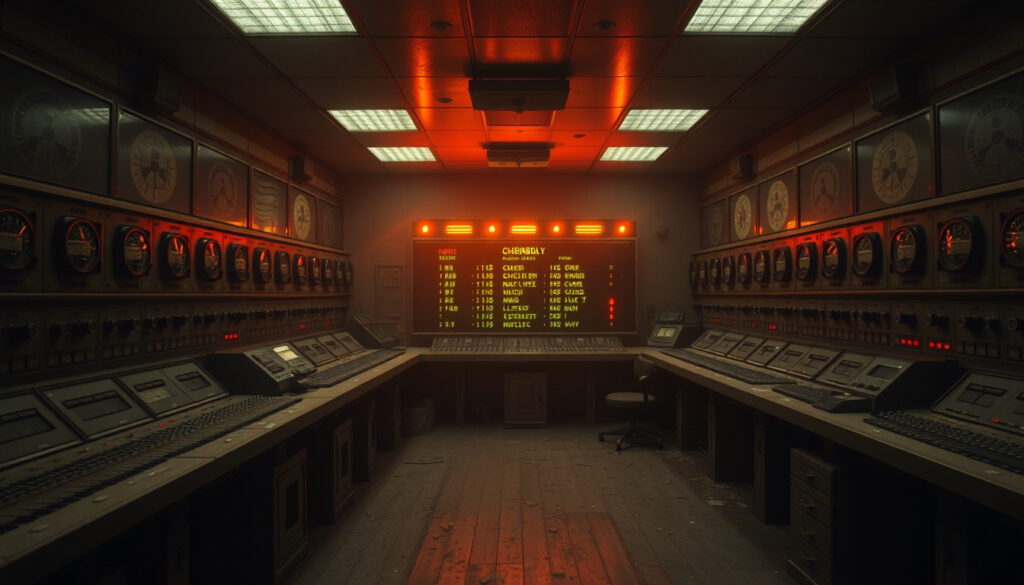
- The control room and reactor design are praised as accurate by nuclear engineers (History vs. Hollywood, citing NYT science writer Henry Fountain).
- The American Nuclear Society, however, criticized the depiction of radiation sickness, noting that children in Pripyat would not have shown acute radiation syndrome symptoms as portrayed (American Nuclear Society).
Dramatization of character interactions
- The private conversations between Legasov and Shcherbina are imagined — no diary or record exists of their talks (YouTube video comparison).
- The series compresses several months of legal and scientific work into days for narrative efficiency.
Composite and fictional characters
- Ulana Khomyuk is the most significant invention; the real Legasov worked with a large team of scientists, not a single partner (History vs. Hollywood).
- The character of Zharkov, the party official ordering secrecy, is also fictional.
Who are the real heroes of Chernobyl?
The series correctly identifies the three divers as heroes, but underplays the broader army of liquidators who suffered long-term health effects.
The three divers who prevented a second explosion
- Alexei Ananenko, Valeri Bespalov, and Boris Baranov volunteered to drain the water tanks beneath Reactor 4, preventing a steam explosion that would have been catastrophic (Ranker).
- The series accurately portrays their bravery and survival — they are still alive today (Ananenko and Bespalov; Baranov died later of unrelated causes).
Liquidators and firefighters
- Approximately 600,000 liquidators were mobilized to clean up the site (Wikipedia).
- Many, like Vasily Ignatenko, died within weeks; others suffered cancer and other radiation-related illnesses.
- The series focuses on the firefighters, but the broader liquidator experience is only hinted at.
Medical personnel and scientists
- Doctors and nurses at Hospital No. 6 in Moscow treated the most severe cases of radiation sickness (American Nuclear Society).
- The series compresses their work into a few scenes but accurately conveys the horror of acute radiation syndrome.
Whose body is under the reactor 4?
The answer reveals a grim truth about the disaster’s immediate human cost and the impossibility of full recovery.
Valery Khodemchuk: the first victim
- Valery Khodemchuk, a shift worker in the main circulation pump hall, was killed instantly when the reactor exploded (History vs. Hollywood).
- His body was buried under tonnes of debris and has never been recovered.
Why his body remains entombed
- Extreme radiation and structural instability made any recovery attempt impossible (Ranker).
- The series mentions Khodemchuk briefly — his absence from the screen underscores the scale of the tragedy.
Are any Chernobyl survivors still alive?
Survival rates depend on exposure level, and tens of thousands of evacuees were resettled.
Surviving liquidators and plant workers
- Many liquidators lived into old age — the three divers are still alive as of 2024 (Wikipedia).
- Ongoing health monitoring has found higher rates of thyroid cancer and cardiovascular disease among exposed individuals.
Lyudmilla Ignatenko: real-life survival
- Lyudmilla Ignatenko is alive and has spoken publicly about her experience (Ranker).
- Her portrayal in the series is based on her memoir and interviews.
Evacuees and their current condition
- Over 100,000 people were permanently evacuated from the Exclusion Zone (Wikipedia).
- Some elderly evacuees have returned illegally to live in abandoned villages.
Timeline of the Chernobyl disaster and the miniseries
- — Explosion at reactor 4 of the Chernobyl Nuclear Power Plant
- — Evacuation of Pripyat begins
- — Firefighters and liquidators respond; three divers drain basement water
- — Construction of the sarcophagus to contain radioactive debris
- — Ongoing cleanup and decontamination by liquidators
- — HBO/Sky miniseries ‘Chernobyl’ airs its five episodes
What the series confirms — and what stays unclear
The following facts are well-documented and match the series closely:
- Valery Legasov was a real Soviet scientist who testified about the disaster.
- The explosion killed two plant workers instantly (Valery Khodemchuk and Vladimir Shashenok).
- Three volunteers drained the water tanks beneath the reactor.
- The series’ depiction of the explosion chain is scientifically accurate.
- Lyudmilla Ignatenko survived and published a memoir.
Areas where the series takes creative liberty or where sources disagree:
- Exact radiation levels at various points in the disaster (some scenes use artistic license).
- The dialogue and personal interactions between characters are dramatized.
- Ulana Khomyuk is a composite; no single real scientist matches her role completely.
- The timing of certain events (e.g., the trial) is compressed for narrative flow.
- The emotional bond between Legasov and Shcherbina depicted in the series has no basis in historical records (YouTube video comparison).
Voices behind the screen
“We aimed for emotional truth, not documentary accuracy. Every scene had to serve the story of what happened and why it matters.”
— Craig Mazin, series creator (YouTube interview)
“The big picture of the disaster is correct: the explosion, the cover-up, the trial. Where the series falters is the science of radiation sickness.”
— Serhii Plokhy, historian (American Nuclear Society)
“I cried watching it. They showed my Vasya exactly as I remember him — brave and gentle.”
— Lyudmilla Ignatenko, real-life survivor (Ranker)
“The control room set is one of the most accurate I’ve ever seen in a film. But the radiation plots are Hollywood science.”
— Nuclear safety expert (American Nuclear Society)
Craig Mazin’s Chernobyl succeeds as a human drama, but viewers should separate the emotional core from the clinical facts. For historians, the show is a starting point, not a final word.
Related reading: Love and Other Drugs: Disease, True Story, and Reviews · Legends of the Fall: Brad Pitt, Love Triangle & Oscar Win
For a comprehensive overview of the series, check out the Chernobyl Miniseries Guide for plot details, cast information, and fact-checking.
Frequently asked questions
Is Ulana Khomyuk a real person?
No. She is a fictional composite character created to represent the many scientists who investigated the disaster. Series creator Craig Mazin confirmed she is not based on any single individual (History vs. Hollywood).
Who played Lyudmilla Ignatenko in the series?
Jessie Buckley portrays Lyudmilla Ignatenko, the widow of firefighter Vasily Ignatenko (Ranker).
How historically accurate is the character of Valery Legasov?
Legasov’s role in the disaster and his suicide are accurate. However, his personal conversations with Shcherbina and his sense of isolation are dramatized for the series (YouTube video comparison).
Did the Chernobyl divers die from radiation?
No. Alexei Ananenko, Valeri Bespalov, and Boris Baranov survived the dive. Baranov died later of unrelated causes; the other two were still alive as of 2024 (Wikipedia).
What happened to Anatoly Dyatlov after the disaster?
He was convicted of criminal negligence and sentenced to ten years in prison, but was released early due to poor health. He died in 1995 (Wikipedia).
Will there be a season 2 of the Chernobyl miniseries?
No. The series was conceived as a limited series and tells a complete story. HBO has not announced any continuation (IMDb).
What rating is the Chernobyl miniseries?
It is rated TV-MA (Mature Audiences) for disturbing content and language (IMDb parental guide).
Where was the Chernobyl miniseries filmed?
Primarily in Lithuania (Ignalina Nuclear Power Plant and Vilnius) and Ukraine (Pripyat and Kyiv) (Wikipedia).
More related posts
 What Does Tinnitus Sound Like – Audio Examples and Descriptions
 Mitre 10 MEGA Hamilton: Locations, Hours, Phone & More
 Barfoot and Thompson Auction Results: Latest Auckland Sales
 Hot Water Beach Taupo: Free Geothermal Pools Guide
 Cash for Cars Wellington: Compare Top Services & Sell Fast
 Lioness Bloom Long Sleeve Review and Best Dupes
 Nothing Naughty Discount Code: 20% Off & More (2025)
 New York Times Wordle Today: Hints, Answer and Strategies