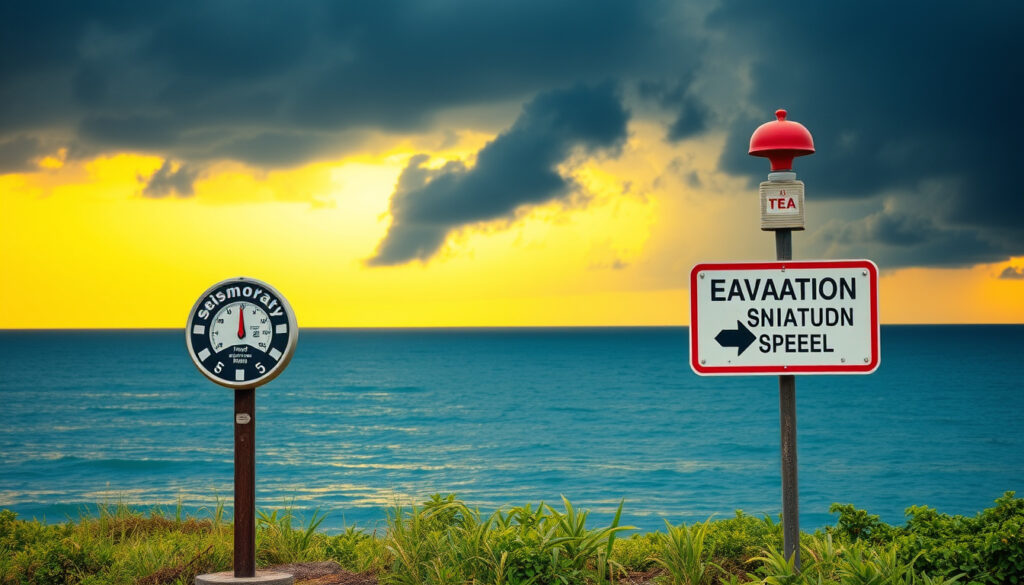
Philippines Earthquake Today: Tsunami Safety Steps
When a strong earthquake strikes offshore, the question on everyone’s mind is whether a tsunami will follow. In the Philippines, where subduction zones line the ocean floor, that question has real weight. This guide cuts through the noise, separating what PHIVOLCS advisories actually mean from the historical record of deadly tsunamis like the 1976 Moro Gulf event — and lays out concrete steps to prepare.
Official source: PHIVOLCS ·
Deadliest Philippine tsunami: 1976 Moro Gulf ·
Hardest-hit country in 2004: Indonesia ·
Major subduction hazard: Manila Trench
Quick snapshot
- PHIVOLCS is the official Philippine tsunami advisory agency (PHIVOLCS Seismological Observation and Earthquake Prediction Division)
- The 1976 Moro Gulf earthquake is the deadliest Philippine tsunami on record (Wikipedia (community-edited encyclopedia))
- Indonesia suffered the highest casualties in the 2004 Indian Ocean tsunami (Wikipedia (community-edited encyclopedia))
- The Manila Trench is a major subduction zone west of Luzon (Wikipedia (community-edited encyclopedia))
- Whether a specific “today” earthquake has triggered a tsunami advisory — check PHIVOLCS live updates (PHIVOLCS)
- Exact timing and magnitude of a future Manila Trench rupture cannot be predicted (PHIVOLCS press release (government science agency))
- Maximum wave heights from a Manila Trench event remain uncertain (Wikipedia (community-edited encyclopedia))
- 1976: Moro Gulf tsunami kills thousands in the Philippines (Wikipedia)
- 2004: Indian Ocean tsunami devastates countries; Indonesia hardest hit (Wikipedia)
- Ongoing: PHIVOLCS issues tsunami advisories for Philippine offshore quakes (PHIVOLCS)
- Monitor PHIVOLCS for the latest advisory (PHIVOLCS)
- Coastal residents should prepare evacuation routes (PHIVOLCS press release)
- Expect aftershocks and follow Drop, Cover, Hold On (PHIVOLCS safety card)
The table below distills the key facts from the snapshot cards into a single reference for quick scanning.
| Official source | PHIVOLCS Tsunami Advisory and Warning |
| Deadliest Philippine tsunami | 1976 Moro Gulf |
| Hardest-hit country in 2004 | Indonesia |
| Major subduction hazard | Manila Trench |
The pattern: official data comes from one science agency, while historical context draws from disaster records.
What is the latest Philippines earthquake today tsunami warning?
PHIVOLCS maintains a live feed of earthquake events and issues advisories when necessary. As of publication, the agency has listed multiple minor events across the archipelago — none of which have triggered a tsunami warning. For the most current information, always check the PHIVOLCS Seismological Observation and Earthquake Prediction Division site directly. The agency states that all Philippine coastal areas are tsunami-prone (PHIVOLCS press release).
A tsunami advisory means a potential wave threat exists; a warning means a wave is confirmed or highly likely. PHIVOLCS distinguishes these levels to guide evacuations without over-warning. The catch: knowing the difference before an earthquake hits determines whether you spend those first minutes packing or leaving.
How to interpret PHIVOLCS alerts
- Tsunami Advisory – A tsunami may have been generated. Stay away from beaches and monitor updates. (PHIVOLCS press release)
- Tsunami Warning – A tsunami is occurring or imminent. Evacuate immediately to higher ground. (PHIVOLCS press release)
- Tsunami Watch – A distant earthquake may generate a tsunami; prepare. (PHIVOLCS press release)
The pattern: PHIVOLCS uses a graduated system so that residents know how urgently to act. The key takeaway for coastal communities is to know which level triggers evacuation — and not to wait for a formal warning if strong shaking or receding water is observed.
Has a tsunami ever hit the Philippines?
Yes. The Philippines sits along the Pacific Ring of Fire and has experienced multiple destructive tsunamis. The most deadly struck in 1976. More recently, PHIVOLCS issues advisories for offshore earthquakes, reflecting that tsunamis remain a live threat (PHIVOLCS press release).
What happened in 1976 in the Philippines?
On August 17, 1976, a magnitude 7.9 earthquake struck the Moro Gulf region on the southern island of Mindanao. The quake generated a tsunami that hit the shores of the Gulf within minutes, killing thousands. According to Wikipedia (community-edited encyclopedia), it remains the deadliest tsunami in Philippine history, with casualty estimates ranging from 5,000 to 8,000 people.
What is the biggest earthquake in the Philippines history?
By magnitude, the 1976 Moro Gulf earthquake (M7.9) is among the strongest ever recorded in the Philippines. PHIVOLCS keeps a list of destructive earthquakes and updates it as data comes in (PHIVOLCS). However, magnitude alone does not determine tsunami risk; depth, seafloor displacement, and coastal geography all matter.
A large magnitude earthquake far from populated areas may cause little damage, while a moderate quake near a vulnerable coast can be catastrophic. That’s why PHIVOLCS monitors location and depth, not just magnitude, before issuing tsunami alerts. The implication: residents should not assume a small quake is harmless, nor that a big one guarantees a wave.
What will happen if Manila trench collapses?
The Manila Trench is a deep subduction zone running west of Luzon. A “collapse” — more accurately, a large rupture — could generate a very powerful earthquake and a tsunami that would threaten the densely populated west coast of Luzon, including Metro Manila. Wikipedia (community-edited encyclopedia) notes that the trench is capable of producing magnitude 8+ quakes. PHIVOLCS continuously monitors the region and has prepared scenario models.
What is the Manila Trench?
- A 1,300 km subduction zone where the Sunda Plate dives beneath the Philippine Sea Plate (Wikipedia)
- Potential to generate a magnitude 8.5+ earthquake and a basin-wide tsunami (Wikipedia)
- Last major rupture event: several centuries ago, but exact recurrence interval is unknown (Wikipedia)
The implication: while a Manila Trench event is possible, its timing is unpredictable. The best preparation is knowing evacuation routes and heeding official warnings.
What to do during an earthquake and tsunami
PHIVOLCS provides clear safety steps for both earthquake shaking and tsunami threat.
During earthquake shaking
- Drop, Cover, and Hold On until shaking stops (PHIVOLCS safety card)
- Do not run outside or to another room — it’s safer to stay in place (PHIVOLCS safety card)
- If outdoors, move to an open area away from buildings, trees, power lines, and fuel lines (PHIVOLCS safety card)
- Expect aftershocks and repeat Drop, Cover, Hold On if another shock occurs (PHIVOLCS safety card)
After the earthquake — tsunami signs and action
- Natural warnings: strong ground shaking, sudden sea-level change (water receding or rising), a roaring sound (PHIVOLCS press release)
- If you observe any sign, move immediately to high ground and stay away from beaches and waterways (PHIVOLCS press release)
- Do not wait for an official alert — locally generated tsunamis can arrive within minutes (PHIVOLCS press release)
- Return only when PHIVOLCS and local authorities say it is safe (PHIVOLCS safety card)
After the disaster
- Use flashlights, not candles, to avoid fire during power outages (PHIVOLCS safety card)
- Do not enter damaged buildings until authorities declare them safe (PHIVOLCS safety card)
- Call the national emergency hotline 911 if needed (PHIVOLCS safety card)
Timeline: Philippine tsunamis and key events
- 1976 – Moro Gulf earthquake and tsunami kills thousands in the Philippines (Wikipedia)
- 2004 – Indian Ocean earthquake and tsunami devastates countries; Indonesia is hardest hit (Wikipedia)
- Ongoing – PHIVOLCS issues tsunami advisories and warnings for Philippine offshore earthquakes (PHIVOLCS)
What we know and what we don’t
Confirmed facts
- A major tsunami hit the Philippines in 1976. (Wikipedia)
- Indonesia sustained the highest number of casualties in the 2004 Indian Ocean tsunami. (Wikipedia)
- PHIVOLCS is the agency that issues tsunami advisories and warnings in the Philippines. (PHIVOLCS)
- The Manila Trench is a subduction zone capable of producing large earthquakes. (Wikipedia)
What’s unclear
- Whether a specific “today” earthquake generated a tsunami depends on official alerts. (PHIVOLCS)
- The exact timing and magnitude of a future Manila Trench rupture cannot be predicted. (Wikipedia)
- Maximum wave heights from a Manila Trench event remain uncertain. (Wikipedia)
- Whether a tsunami warning has been issued for the most recent Philippine earthquake as of publication. (PHIVOLCS)
Quotes from experts and official sources
“All Philippine coastal areas are prone to tsunamis. Locally generated tsunamis can strike within minutes.”
— PHIVOLCS press release (government science agency)
“A magnitude 4.0 earthquake at 29 km depth was recorded near Baganga, Davao Oriental. No expected damage and no expected aftershocks.”
— PHIVOLCS earthquake bulletin (official monitoring)
“The 1976 Moro Gulf earthquake and tsunami killed thousands and remains the deadliest tsunami in Philippine history.”
— Wikipedia (community-edited encyclopedia)
“Indonesia was the country hardest hit by the 2004 Indian Ocean tsunami, with over 160,000 deaths.”
— Wikipedia (community-edited encyclopedia)
What these sources show: the threat is real, but the response system — from PHIVOLCS alerts to local evacuation drills — is in place. Historical events underline the need for preparedness without panic.
Related reading: Canterbury Red Wind Warning: 160km/h Gusts Hit NZ · Best Home Insurance NZ 2025: Compare Top Providers & Save
x.com, earthquake.phivolcs.dost.gov.ph, tsunami.phivolcs.dost.gov.ph, khaleejtimes.com
Frequently asked questions
What is the difference between a tsunami advisory and a tsunami warning?
A tsunami advisory means a tsunami may have been generated; remain alert and avoid beaches. A tsunami warning means a tsunami is confirmed or imminent and evacuation is required. (PHIVOLCS press release)
How much time is there to evacuate after an offshore earthquake?
Locally generated tsunamis can arrive within minutes. If you feel strong shaking, do not wait for an official alert — move to high ground immediately. (PHIVOLCS press release)
Where can I get the latest official earthquake and tsunami updates in the Philippines?
PHIVOLCS provides live earthquake data and advisories on its website at earthquake.phivolcs.dost.gov.ph. The agency also issues press releases and operates social media channels.
Do all strong earthquakes in the Philippines cause tsunamis?
No. Tsunamis require vertical seafloor displacement, which typically occurs with subduction zone earthquakes. Many shallow quakes do not generate waves. PHIVOLCS evaluates each event for tsunami potential. (PHIVOLCS press release)
What should I do if I am near the coast during a tsunami warning?
Move inland or to high ground immediately. Do not stay near beaches or waterways. Do not return until PHIVOLCS and local authorities say it is safe. (PHIVOLCS press release)
Can a Philippine earthquake trigger a tsunami in other countries?
Yes. A very large earthquake in the Philippine region can generate a tsunami that travels across ocean basins. The 2004 Indian Ocean tsunami, generated off Sumatra, affected countries as far away as East Africa. (Wikipedia)
For Filipino coastal residents, the choice is clear: know your evacuation route, follow PHIVOLCS advisories, and act on natural signs — because the next tsunami may not wait for a text alert.
More related posts
 Cast of Kath and Kim: Where Are They Now
 Support Worker Jobs Auckland: Guide to Roles & Salary 2025
 What We Do in the Shadows: Legacy, Queer Representation, and No Season 7
 Synopsis of November 9 – Full Plot Summary and Themes
 Australia Living Costs vs NZ – 2024 Full Comparison
 Australian Dollar to NZ Dollar: Rate, Fees & Forecast 2025
 Cheap InterCity Bus Fares NZ: Discounts & Dynamic Pricing
 What Do Moths Eat? Adult Diet vs. Hungry Larvae