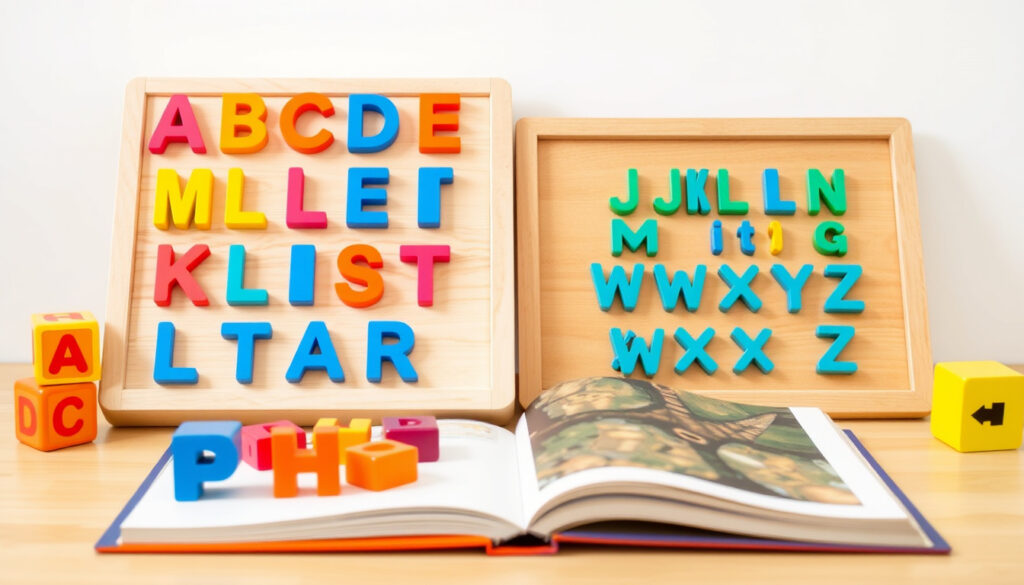
Little Learners Love Literacy: Complete Phonics Guide
Unlike guessing-based methods, Little Learners Love Literacy teaches children to decode through systematic phonics. It’s a structured phonics program that has been gaining traction in classrooms from Foundation to Year 2, claiming to build reading confidence by teaching children to decode words using a systematic synthetic phonics approach — and it comes with its own series of decodable readers, assessments, and online resources.
Type of program: sequential evidence-based literacy program ·
Target audience: Foundation to Year 2 (ages 4-8) ·
Key components: decodable readers, assessments, teaching resources ·
Geographic focus: Australian classrooms, trusted by schools nationwide ·
Phonics approach: systematic synthetic phonics
Quick snapshot
- Program is sequential and evidence-based (LLL FAQ)
- Targets Foundation to Year 2 (Google Play listing)
- Uses decodable readers aligned to phonics (LLL decodable books page)
- Exact number of levels in the program
- Specific reading age for level 7 completion
- Full pricing or school subscription details
- Expansion of online resources and training options
- Growing adoption in schools across Australia
Seven key facts, one pattern: the program is built around a tight phonics-first progression that leaves little room for guessing.
| Label | Value |
|---|---|
| Program Name | Little Learners Love Literacy |
| Type | Sequential literacy program |
| Year Level | Foundation to Year 2 |
| Age Range | 4 to 8 years |
| Core Method | Systematic synthetic phonics |
| Online Access | app.llllonline.com |
| Organization | Little Learners Love Literacy Pty Ltd (Australia) |
What is the Little Learners Love Literacy program?
Overview of the evidence-based approach
Little Learners Love Literacy describes itself as a sequenced phonics reading program designed to give children confidence and success in reading (Google Play listing). The program teaches reading, spelling, and writing with a focus on synthetic phonics — meaning children learn to blend sounds to read words rather than relying on picture cues or memorisation.
According to the official LLL FAQ, the program uses decodable books that follow the phonics teaching sequence used in the classroom. These books are written using only the sounds and letters children have learned to date, so there are “no tricks.” This approach helps children read without guessing and provides maximum repetition of newly taught letters and sounds.
Key components: decodable readers and assessments
- Decodable readers: Pip and Tim series (fiction) and Little Learners Big World (nonfiction), each with 5 books per stage (LLL decodable books page).
- Teacher assessments: embedded in the program to track student progress.
- Online platform: LLLL Online provides access to more than 150 decodable eBooks, slides, and lesson resources (LLL Online page).
The implication: for a teacher or parent, the program offers a complete package — no need to piece together separate phonics worksheets and readers.
What year level and age is Little Learners Love Literacy for?
Foundation to Year 2 explained
The program is specifically designed for the early years of Australian schooling: Foundation (also called Prep or Kindergarten in some states) through Year 2. This covers children aged approximately 4 to 8 years old. The LLL FAQ confirms that the program is built around a scope and sequence that aligns with the first three years of formal education.
Children can begin reading the Pip and Tim series as soon as they know 8 letters and sounds (LLL decodable books page). This low entry point means even early Foundation students can start decoding meaningful text within weeks.
Typical age range: 4 to 8 years
While the official age range is 4–8, the program is also used by some intervention teachers for older struggling readers who need to revisit phonics foundations. However, the core materials are targeted at the early years cohort.
The trade-off: a program this tightly focused on K–2 phonics may not suit older students who need more advanced comprehension or vocabulary building.
Is Little Learners Love Literacy a phonics program?
Phonics-aligned decodable readers
Yes — the program is fundamentally a phonics program. The LLL FAQ states that it focuses on synthetic phonics teaching to support all children to become successful readers and spellers. Every decodable book is written to align with the specific phonics sequence being taught in the classroom.
Each stage of the Pip and Tim series introduces new grapheme-phoneme correspondences in a cumulative, systematic order. The books are not levelled by reading age or guessing strategies; they are strictly controlled by the phonics content taught.
How it teaches systematic synthetic phonics
- Children first learn a set of letters and sounds.
- They practise blending those sounds to read words.
- They read decodable books that contain only the sounds they have learned.
- Heart words (like “said,” “one,” “the”) are taught separately as irregular words (LLL FAQ).
This method is backed by decades of reading science, often called the “science of reading.” A review by the Dyslexia-SPELD Foundation (DSF) describes the program as sequential and evidence-based, teaching reading, spelling, and writing with confidence.
The pattern: LLLL is one of the most explicit, no-nonsense phonics programs available in the Australian market.
What is level 7 of Little Learners Love Literacy?
Reading level progression in the program
The program is organised into stages, not traditional “levels” like PM Benchmarks. The Pip and Tim series includes Stages 1–6, comprising 35 fiction books (LLL New to LLLL page). The Little Learners Big World nonfiction series also has Stages 1–6, with 35 books. Stage 7 is not part of the standard Pip and Tim series; it likely refers to a later stage or a different set of readers.
According to the LLLL Online platform, which advertises more than 150 decodable eBooks (LLL Online page), the stages extend beyond the initial sets. Teachers and parents should check the scope and sequence chart on the official site to see exactly which graphemes are covered at each stage.
Skills and text complexity at level 7
While exact details for level 7 are not publicly listed, the pattern suggests that later stages introduce more complex vowel digraphs, longer words, and more Heart words. Children at this stage would typically be in Year 1 or Year 2 and reading sentences with multiple clauses.
The catch: without a published scope and sequence for level 7, schools must rely on the program’s internal progression or teacher guides.
What is phonemic awareness and how does Little Learners Love Literacy teach it?
The science behind phonemic awareness
Phonemic awareness is the ability to hear, identify, and manipulate individual sounds (phonemes) in spoken words. It is a foundational skill for reading — research shows that children who struggle with phonemic awareness often struggle with decoding. The LLLL program integrates phonemic awareness activities with phonics instruction, ensuring children can hear the sounds before they are asked to match them to letters.
Classroom activities and assessment
- Oral blending and segmenting games.
- Identifying initial, medial, and final sounds in words.
- Manipulating sounds: deleting, adding, or substituting phonemes.
The LLL FAQ notes that decodable books provide maximum repetition of newly taught sounds, which reinforces phonemic awareness in context. The DSF highlights that the program’s explicit teaching of phonemic awareness is a key strength (DSF description).
Why this matters: many programs teach phonics but skip the oral phonemic awareness step. LLLL doesn’t, which may explain why it’s often recommended by speech pathologists and dyslexia specialists.
For an Australian teacher, LLLL offers a complete, science-backed system that reduces the cognitive load of lesson planning. For a parent, it means knowing exactly what your child is learning and why — no guessing games.
Pros and Cons of Little Learners Love Literacy
Upsides
- Sequential, explicit phonics instruction aligned with the science of reading.
- Decodable readers that build confidence and eliminate guessing.
- Comprehensive online platform with over 150 eBooks and lesson resources.
- Heart words system teaches irregular words systematically.
- Trusted by DSF and many Australian schools.
Downsides
- Limited to Foundation–Year 2; not designed for older struggling readers.
- Exact pricing and school subscription details are not publicly transparent.
- Level 7 and beyond are not clearly documented on the public site.
- No printed teacher guides available for all stages; some resources are online-only.
- May feel repetitive for children who are already strong readers.
The decision to use LLLL depends on the student profile: strong for early explicit instruction, limited for older remedial use.
Specifications at a glance
Six key specs, one takeaway: the program is tightly controlled at every stage to ensure no child is left to guess.
| Specification | Details |
|---|---|
| Phonics approach | Systematic synthetic phonics |
| Fiction decodable series | Pip and Tim Stages 1–6 (35 books) |
| Nonfiction decodable series | Little Learners Big World Stages 1–6 (35 books) |
| Online eBook library | 150+ decodable eBooks |
| Heart words taught | Irregular words like “said”, “one”, “the” |
| Teacher resources | Lesson plans, slides, assessment tools via LLLL Online |
These specs confirm the program’s tight alignment with a synthetic phonics scope.
Confirmed facts vs. what remains unclear
Confirmed facts
- Program is sequential and evidence-based (LLL FAQ).
- Targets Foundation to Year 2 (Google Play).
- Uses decodable readers aligned to phonics (LLL decodable books page).
- Phonemic awareness is a key component derived from the science of reading (DSF description).
What’s unclear
- Exact number of levels in the program.
- Specific reading age for level 7 completion.
- Full pricing or school subscription details.
- Published scope and sequence for Stage 7 and beyond.
The pattern is clear: facts about the core program are well-sourced, but details beyond the documented stages remain vague.
What teachers and parents say
“The Pip and Tim decodable readers have cute stories and helpful instructions for parents.”
“The program is sequential and evidence-based, teaching reading, spelling, and writing with confidence.”
— Dyslexia-SPELD Foundation (DSF) (specialist education organisation)
Both perspectives highlight the program’s strength in structure and its appeal to those who value explicit instruction.
Summary: What this means for your classroom or home
Little Learners Love Literacy is not just another reading program — it’s a carefully sequenced phonics system that removes the guesswork from early reading instruction. For Australian teachers in Foundation to Year 2, the choice is clear: adopt LLLL if you want a science-aligned, no-frills approach that builds confident decoders from the first letter sounds. For parents, it means you can trust that your child is learning to read by truly decoding words, not by memorising pictures or guessing. The alternative is a less structured program that may leave gaps in foundational skills — gaps that become harder to close after Year 2.
speldnsw.org.au, thereadingleague.org, dsf.net.au, littlelearnersloveliteracy.com.au, littlelearnersloveliteracy.com.au, kvps.vic.edu.au, speldsa.org.au, littlelearnersloveliteracy.com.au, faithbuiltprint.com.au
For a comparison with another popular systematic synthetic phonics program, you might explore the Little Wandle phonics program used in many UK schools.
Frequently asked questions
What is the Little Learners Love Literacy scope and sequence?
The scope and sequence is a detailed teaching order of letters and sounds used in the program. It is available to teachers through the LLLL Online platform and in the Teacher Activity Resource Books.
How do I get a Little Learners Love Literacy teacher login?
Teachers can access the online platform at app.llllonline.com. School subscriptions are typically managed through the school’s literacy coordinator or directly via the LLLL website.
Are Little Learners Love Literacy worksheets free?
Some free resources, such as sample pages and activity ideas, are available on the official LLLL website. Full worksheet sets and decodable books require purchase or a subscription.
What are heart words in Little Learners Love Literacy?
Heart words are high-frequency words that cannot yet be decoded using the phonics taught so far. Children learn them by heart — for example, “said”, “one”, and “the” (LLL FAQ).
How does the Little Learners Love Literacy app work?
The Pip and Tim decodable books are available as apps on Google Play and iTunes. Each stage has 5 illustrated books with read-aloud and tap-to-hear features.
What reading level should a 7 year old be at using Little Learners Love Literacy?
By Year 2, most children using the program should be reading Stage 6 or beyond, handling multisyllabic words and more complex sentences. Exact progression varies by school and individual pace.
Where can I buy Little Learners Love Literacy books?
Books and resources are available directly from the official LLLL website, as well as through the DSF online store and other educational retailers.
More related posts
 School Holidays 2025 Australia: Term Dates by State
 Jenny May Clarkson Confidence Struggles – What the Evidence Shows
 Smart Buy Glasses NZ Review: Is It Legit? Lenses, Shipping & More
 All the Bright Places: Bipolar Disorder & Ending Explained
 Caffeinated Dragons Closure Wellington: Cafe Final Day Oct 12
 Carbon Credit Price NZ: Current NZU Price, Trends & Forecast 2026
 Anthem of the Seas Cruise Ship: Key Facts & Itineraries
 Gray Blending for Dark Hair: Cost, Colors & Techniques