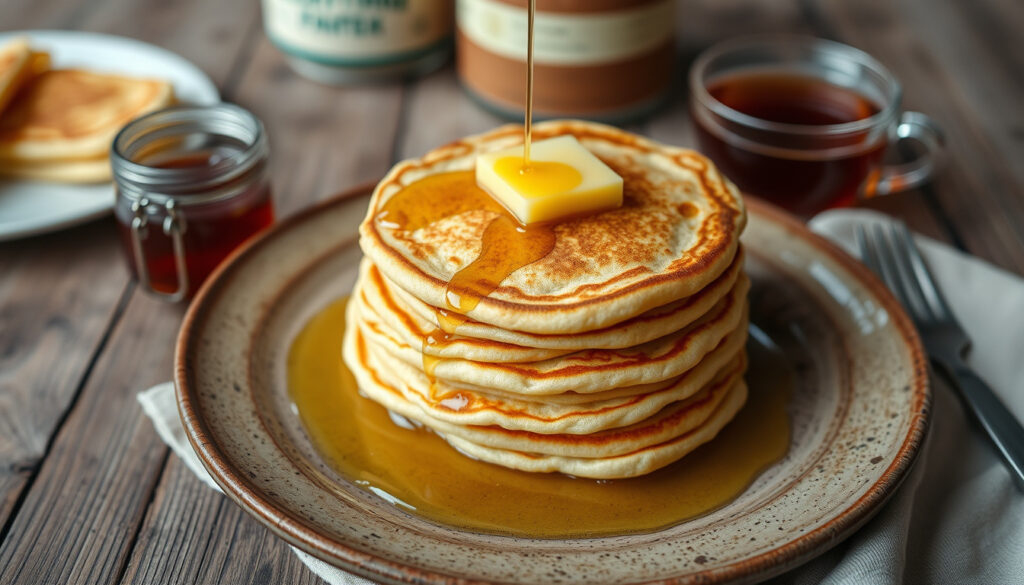
Old-Fashioned Pikelet Recipe: Fluffy Secrets
There’s something quietly magical about pulling a batch of golden, fluffy pikelets off the griddle — especially when the recipe has been tucked away in a handwritten collection since the late 1930s. That’s exactly the kind of old-fashioned pikelet recipe we’re bringing back today, alongside a clear look at why these little drop scones rise so beautifully and how they differ from their pancake and crumpet cousins.
Origin: Wales ·
Key ingredient: Self-raising flour ·
Typical cook time per side: 2–3 minutes ·
Number of basic ingredients: 4 ·
Popular in: Australia, New Zealand, UK
Quick snapshot
- Pikelets originated in Wales (CooksDream food history archive)
- Self-raising flour is the traditional raising agent (NSW Government public-health recipe)
- Resting batter improves fluffiness (PAK’nSAVE Supermarkets official retailer guidance)
- Pikelets are smaller and thicker than pancakes (DifferenceBetween.com food comparison guide)
- Exact date when pikelets first appeared in Australia
- Whether the original 1930s recipe used butter or lard
- The precise etymology of the word “pikelet”
- Late 1930s: Handwritten pikelet recipe recorded by Nana Ling (Australia)
- 19th century: Welsh pikelets documented in British cookbooks
- Early 2000s: Pikelets become a staple in Australian home baking
- More vegan and gluten-free adaptations emerging
- Growing interest in historical recipe revivals
- Potential for pikelets as a healthier snack alternative
Five key facts, one pattern: the old-fashioned pikelet recipe relies on simple ingredients and technique, not gimmicks.
| Fact | Detail |
|---|---|
| Origin | Wales |
| Popular in | Australia, New Zealand, UK |
| Key ingredient | Self-raising flour |
| Typical cook time per side | 2–3 minutes |
| Oldest known handwritten recipe | Late 1930s (Nana Ling) |
| Basic ingredient count | 4 (flour, egg, milk, sugar) |
| Batter consistency | Thicker than crepe batter, spooned not poured |
| Doneness cue | Bubbles appear on surface before flipping |
| Common fat used | Butter or oil |
| Egg-free variant exists | Yes, using just flour, milk, and oil |
What is the secret to good pikelets?
Use self-raising flour for lift
- Self-raising flour already contains baking powder and salt in the right proportions, giving you consistent rise every time (NSW Government public-health recipe).
- If you use plain flour, add 2 teaspoons of baking powder per cup of flour to achieve the same lift.
Don’t overmix the batter
- Overmixing develops gluten, making pikelets tough rather than tender. Stir until the flour is just incorporated — a few lumps are fine (PAK’nSAVE Supermarkets official retailer guidance).
Let the batter rest for 5–10 minutes
- Resting allows gluten to relax and air bubbles to form, leading to a lighter texture. This is one of the most important steps for fluffiness.
Cook on low-medium heat
- Both NSW Government and PAK’nSAVE recipes recommend medium heat with light greasing. High heat will burn the outside before the inside cooks through.
How to make simple pikelets?
4-ingredient pikelet recipe
- Basic ratio: 1 cup self-raising flour, 1 egg, 3/4 cup milk, 1 tbsp sugar (PAK’nSAVE Supermarkets standard recipe).
- Optional: 1 tbsp melted butter or oil for richness.
Using self-raising flour
- Self-raising flour is the traditional choice because it simplifies measurement and ensures consistent rise. Aussie Home Cook home-cook recipe uses it as the base.
Using plain flour and baking powder
- Plain flour requires 2 tsp baking powder per cup. Some old-fashioned recipes from the 1930s may have used this method before self-raising flour became widely available.
Step-by-step method
- Sift self-raising flour into a bowl. Stir in sugar.
- Make a well, add egg and most of the milk. Whisk gently until combined (some lumps okay) (PAK’nSAVE Supermarkets technique guidance).
- Add remaining milk if batter is too thick. Rest 5–10 minutes.
- Heat a non-stick pan over medium heat. Lightly grease with butter or oil.
- Drop spoonfuls of batter (about 2 tbsp each) into the pan.
- Cook until bubbles appear on the surface (2–3 minutes), then flip and cook 1–2 minutes more.
- Serve warm with butter, jam, or cream.
What ingredients are in pikelets?
Eggs – structure and richness
- Eggs bind the batter and add richness. They are not strictly necessary — egg-free recipes using just flour, milk, and oil exist (The Conscious Plant Kitchen vegan variant), but they help binding and fluffiness.
Milk – moisture
- Whole milk gives the richest result, but any milk (including plant-based) works. For extra tenderness, soured milk or buttermilk can be used — a trick from some Australian recipes (Food.com Australian recipe archive).
Sugar – sweetness and browning
- Sugar adds a light sweetness and helps browning. Australian recipes typically use white caster sugar or regular white sugar.
Butter – flavour and tenderness
- Butter adds flavour and a tender crumb. It can be substituted with oil (NSW Government health-oriented version).
Using oil over butter reduces saturated fat and makes pikelets dairy-friendly, but you lose a layer of buttery flavour. For an old-fashioned taste, stick with butter.
Are pancakes and pikelets the same thing?
Pikelets vs pancakes – key differences
- Pikelets are thicker, smaller, and cooked on only one side until bubbles form, then flipped (PAK’nSAVE Supermarkets cooking method).
- Pancakes are larger, thinner, and cooked both sides evenly with a thinner batter.
- Pikelets are often described as having a more delicate texture than standard pancakes (DifferenceBetween.com food comparison).
Pikelets vs crumpets
- Crumpets are more porous and require a cooking ring or mold (DifferenceBetween.com structural difference).
- Pikelets are cooked free-form in a pan without rings, giving them a more irregular shape.
- Some historical accounts describe pikelets as a regional variation of crumpets from Wales and the West Midlands (CooksDream historical etymology).
Pikelets vs crepe batter
- Pikelet batter is noticeably thicker than crepe batter and is spooned rather than poured thinly across the pan (PAK’nSAVE Supermarkets batter consistency).
What country are pikelets from?
Welsh origins
- Pikelets are originally Welsh, with a widely repeated etymology linking the word to Welsh bara pyglyd (pitchy or sticky bread) (CooksDream etymology analysis).
- Historical accounts show the word spread from Welsh usage into the West Midlands, then into Cheshire, Lancashire, and Yorkshire (CooksDream geographic spread).
Australian popularity
- Pikelets became a staple in Australian home baking by the early 2000s, with many family recipes passed down through generations.
- The NSW Government features a pikelet recipe in its public-health cooking guide, showing how embedded the dish is in Australian food culture.
The old-fashioned recipe from the 1930s
- Nana Ling’s handwritten pikelet recipe collection dates back to approximately the late 1930s. As cited on Cooking with Nana Ling: “This is an old fashioned Pikelets Recipe – it’s from Nana Ling’s handwritten recipe collection and dates back to around the late 1930s.”
- Old-fashioned recipes consistently use self-raising flour and whole milk, with butter as the preferred fat.
Knowing the Welsh origins and the migration of the recipe through the British Isles to Australia gives context to why Australian and New Zealand home cooks cherish this dish — it’s a piece of culinary heritage, not just a breakfast item.
fatmumslim.com.au, actnss.org, kiwifamilies.co.nz, cauldronsandcupcakes.com, dejafood.uk
Frequently asked questions
How can I make pikelets without eggs?
Use a recipe with just self-raising flour, milk, and oil. The Conscious Plant Kitchen vegan recipe shows a dairy-free and egg-free version that works well.
Can I substitute milk with buttermilk in pikelets?
Yes. Buttermilk or soured milk adds tenderness. Some Australian recipes use bicarbonate of soda with soured milk instead of self-raising flour (Food.com Australian variant).
How do I make gluten-free pikelets?
Use a gluten-free self-raising flour blend in the same 1:1 ratio. The resting and mixing technique remains the same.
What is the best way to reheat leftover pikelets?
Toast them lightly in a toaster or warm them in a dry pan for 30 seconds per side. Avoid microwaving, which makes them rubbery.
Can I add vanilla extract to my pikelet batter?
Yes. A teaspoon of vanilla extract adds sweetness and warmth. This is a common addition in modern recipes.
How do I make sourdough pikelets?
Replace half the milk with sourdough starter discard. Reduce flour slightly to maintain batter thickness. Let the batter ferment for 30 minutes before cooking.
Why are my pikelets flat and not fluffy?
The most likely reasons are: overmixing the batter, not resting it, cooking on too high heat, or using expired self-raising flour. Check each step carefully.
More related posts
 Travis Fimmel Movies and TV Shows: Vikings, Warcraft & More
 What Is Global Warming – Causes, Effects and Facts
 Project Management Courses NZ: Top Picks and Career Insights
 New Years Festivals NZ 2026: Best Events & Guide
 Motorola Edge 60 Pro Review: Specs, Battery & Price
 ASB Home Loan Calculator: Early Payoff Strategies for 50+
 Trade Me Car Parts: NZ Buying & Selling Guide for Sellers