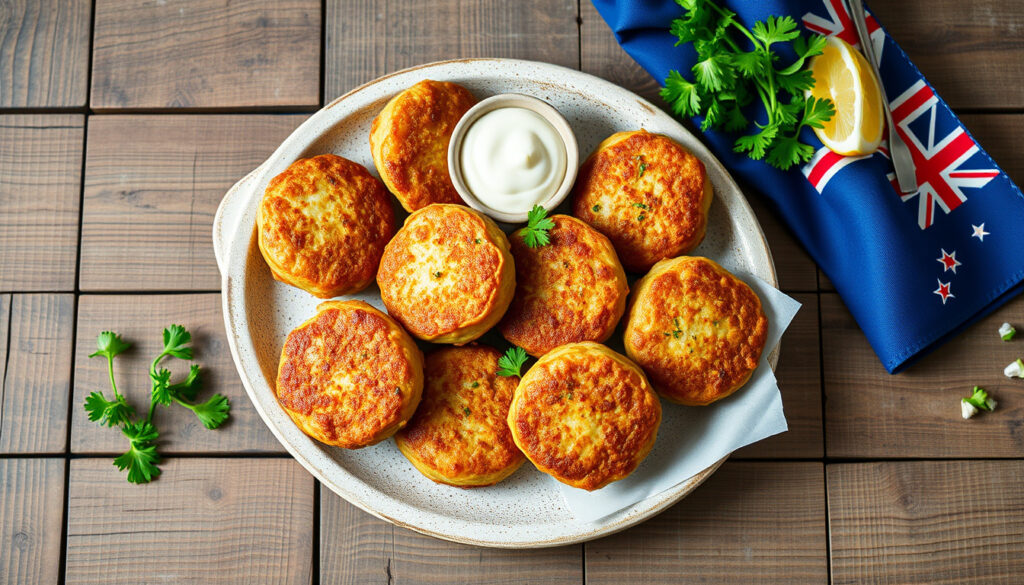
Fish Cakes Recipe NZ: Traditional, Easy & Crispy Guide
There’s something about a golden, crispy fish cake that feels both nostalgic and satisfying. If you’ve ever wondered how New Zealand’s take on this classic stands apart—with local fish varieties and that chippy-style crunch—this guide has you covered.
Prep time: 10–15 minutes ·
Cook time: 15–20 minutes ·
Total time: 30 minutes ·
Servings: 8 fish cakes ·
Difficulty: Easy
Quick snapshot
- Cooked fish, mashed potato, herbs, egg, breadcrumbs, shallow-fried until browned (NZ Herald Eat Well)
- Gurnard or tarakihi are classic choices; smoked kahawai and kūmara a distinctly Kiwi variant (RNZ Recipes)
- 1:1 fish-to-potato ratio plus egg and chilling prevents crumbling (Edmonds Cooking)
- Panko breadcrumbs and medium-high heat create a golden, crunchy crust (New World)
How to make traditional fish cakes?
Selecting the right fish for traditional NZ fish cakes
The foundation of any great fish cake is the fish itself. In New Zealand, classic recipes call for flaky white fish like gurnard or tarakihi, both abundant in local waters and prized for their mild, firm flesh. The Edmonds Cooking (trusted Kiwi brand since the 1950s) recipe uses fish fillets cooked then flaked, while RNZ Recipes (public broadcaster) suggests a smoked kahawai and kūmara version for a distinctly NZ twist. Smoked fish adds depth, but fresh white fish gives a cleaner, more traditional taste.
Preparing the potato base
The potato is just as important as the fish. A 1:1 ratio of fish to mashed potato by weight is the golden rule. Fresh (NZ food hub) recommends starchy potatoes like agria or russet for their fluffy texture when mashed. The potato should be well-drained and dry before mixing—excess moisture leads to soggy cakes that fall apart in the pan. NZ Herald Eat Well adds that mashed potato can be made the day before and refrigerated, saving prep time.
- Use a 1:1 fish-to-potato ratio for balance
- Choose starchy potatoes (agria, russet) for best texture
- Mash potato while hot, then cool completely before mixing
Step-by-step shaping and cooking
Shaping fish cakes is straightforward but pays off with care. Edmonds Cooking instructs cooks to flake fish into the potato along with finely chopped onion, herbs (parsley or tarragon), salt, and pepper, then form 8 flat cakes about 2cm thick. Coat each in seasoned flour, then beaten egg, then breadcrumbs—the classic crumb station. New World (NZ supermarket chain) also sets up flour, egg, and breadcrumbs as separate stages before pan-frying. Shallow-fry in oil (with a knob of butter for flavour) over medium-high heat, about 2-3 minutes per side, until deep golden brown.
The cooking time is short—roughly 6 minutes total—making fish cakes an ideal weeknight dinner for NZ families who want something satisfying without a long kitchen session. The trade-off is that rushing the chilling step will cost you a cleanly fried cake.
What are the ingredients for old fashioned cod fish cakes?
Essential ingredients: fish, potato, herbs
The core ingredients for old-fashioned cod fish cakes are simple and pantry-friendly. Edmonds Cooking’s recipe calls for: 500g cooked fish (traditionally cod in the UK, but gurnard or tarakihi in NZ), 500g mashed potato, 1 small onion (finely chopped), 1 tablespoon fresh tarragon or parsley, salt and pepper, plus flour, egg, and breadcrumbs for coating. Fresh adds lemon zest for brightness—a subtle but impactful upgrade.
The table below organizes the standard ingredient quantities for a recipe serving four people.
| Ingredient | Traditional amount (serves 4) | Purpose |
|---|---|---|
| White fish fillets (cod, gurnard, tarakihi) | 500g cooked weight | Primary protein |
| Mashed potato | 500g | Primary binder and body |
| Onion, finely chopped | 1 small (about 80g) | Flavour and moisture |
| Fresh herbs (parsley or tarragon) | 2 tablespoons | Aroma and freshness |
| Lemon zest | 1 teaspoon | Brightens flavour |
| Salt and pepper | To taste | Seasoning |
| Flour (for dusting) | ½ cup | Initial coating layer |
| Eggs (beaten) | 2 large | Binder for breadcrumb adhesion |
| Breadcrumbs (panko or traditional) | 1 cup | Crunchy crust |
The role of eggs and breadcrumbs
Eggs serve as the second binder, holding the breadcrumb coating to the cake. NZ Herald Eat Well and Fresh both call for eggs in the crumb station. Without egg, the breadcrumbs would fall off during frying. For those who prefer no eggs, RNZ Recipes (public broadcaster) uses cornflour instead to firm up the mixture—a reliable egg-free alternative.
Chippy fish cake ingredients vs homemade
The chippy-style fish cake—sold at NZ fish and chip shops—differs notably from homemade versions. Chippy fish cakes are typically made from a simple mix of fish pieces and mashed potato, sometimes with little seasoning, then crumbed and deep-fried. They’re less herby and more rustic. In contrast, homemade NZ recipes lean into generous seasoning (fresh herbs, lemon) and careful crumbing. Good From Scratch explicitly suggests doubling the herbs for a flavour upgrade over the chippy standard.
If you’re chasing that chippy-style density and crunch, you’ll want a slightly higher potato-to-fish ratio and a deeper fry in hotter oil (175°C). But the trade-off in flavour—losing fresh herbs and lemon—means a less interesting cake overall.
How to make fish cakes that don’t fall apart?
Choosing the right binder: potato, egg, or flour
A fish cake that disintegrates in the pan is the number one frustration. The key is a multi-layered approach to binding. Edmonds Cooking relies on mashed potato as the primary binder—it’s starchy and sticky when cooled. NZ Herald Eat Well adds a beaten egg into the mixture, not just the crumb station, for extra cohesion.
- Mashed potato: Primary structural binder; use 1:1 ratio with fish
- Egg (in mixture): Secondary binder; 1 egg per 500g fish
- Flour (in coating): Creates initial seal before egg and breadcrumbs
Chilling the mixture for firmness
This step is non-negotiable. Good From Scratch recommends chilling the crumbed fish cakes for 30 minutes before frying—this firms the potato binder and helps the crumb coating adhere. Akaroa Salmon (NZ salmon brand) chills their patties for at least 30 minutes as well. NZ Herald Eat Well notes the mixture can even be refrigerated overnight for day-ahead prep.
Breading and frying techniques
The breading process matters almost as much as the binding. Use the standard crumb station: seasoned flour → beaten egg → breadcrumbs. New World emphasises pressing breadcrumbs firmly onto each cake. For frying, NZ Herald Eat Well specifies a deep frying pan with oil heated until it sizzles when a crumb is dropped in—medium-high heat. Avoid overcrowding, which lowers oil temperature and causes greasy, broken cakes.
The implication: The binding system is redundant by design—if one layer fails (e.g., slightly wet potato), the egg and flour backup keep the cake together. It’s the architectural equivalent of cross-bracing.
What’s the secret to crispy fish cakes?
Breadcrumb coating: panko vs traditional
The crunch factor comes down to breadcrumbs. Panko breadcrumbs—coarser and lighter than traditional ones—are the secret behind many NZ recipes. New World uses them exclusively for smoked fish cakes. Fresh notes that panko stays crispier during frying because they absorb less oil. Traditional breadcrumbs (dried and ground finer) give a denser, more even crust. The choice depends on whether you prioritise maximum crunch (panko) or a more traditional coating.
Fat temperature for frying
Temperature control separates a crispy crust from a greasy one. NZ Herald Eat Well recommends medium-high heat, testing readiness by dropping a breadcrumb into the oil—it should sizzle immediately. Edmonds Cooking uses a depth of about 1cm of oil, not full deep-frying. Too low a temperature and the cakes absorb oil like sponges; too high and the outside burns before the inside warms through. Aim for 170-180°C if you have a thermometer.
Oven-baking as alternative
For a healthier take, oven-baking works well. Good From Scratch fries the cakes first for 2 minutes per side to set the crust, then finishes them in a 180°C oven for 10 minutes. This hybrid method yields a crispy exterior with less total oil. New World similarly offers an oven option: bake at 190°C for 15-20 minutes, flipping once.
The pattern: For NZ home cooks, the panko + medium-high heat combo is the most reliable path to that chippy-style crunch.
What gives fish cakes the best flavor?
Herbs and seasonings: parsley, tarragon, lemon
Flavour in fish cakes comes from fresh herbs and citrus. Edmonds Cooking uses tarragon—an aniseedy herb that pairs beautifully with fish. Fresh adds lemon zest and parsley. The combination cuts through the richness of the potato and fried coating. A squeeze of lemon at the table is standard, but folding zest directly into the mixture distributes the flavour more evenly.
Smoked fish vs fresh fish
Swapping fresh fish for smoked dramatically changes the flavour profile. RNZ’s smoked kahawai and kūmara cakes add a smoky depth that fresh fish can’t match. Akaroa Salmon’s recipe uses smoked salmon. The trade-off: smoked fish is saltier and more assertive, so you’ll want to dial back added salt and pair it with milder herbs like parsley rather than tarragon.
Accompaniments: curry mayonnaise, tartare sauce
What you serve alongside matters as much as the cake itself. Good From Scratch pairs their fish cakes with curry mayonnaise—a tangy, slightly spicy complement that’s popular in NZ. Fresh recommends classic tartare sauce and lemon wedges. For a lighter option, a simple yoghurt-based dip with dill and lemon works beautifully.
Smoked fish offers richer flavour but demands careful salt management and shorter fridge life. Fresh fish is more forgiving and versatile. For first-time makers, start with fresh white fish and master the basics before moving to smoked variants.
The pattern: Flavour is layered—herbs in the mixture, zest for brightness, smoked fish for depth, and sauces for contrast. Each layer works independently but together they create a cake that tastes complex despite simple ingredients.
For NZ home cooks, the choice is clear: master the potato-to-fish ratio and the chilling step, and you’ll have a fish cake that holds together and delivers that satisfying crunch every time.
nzwomansweeklyfood.co.nz, laurainejacobs.co.nz, 10knots.co.nz, dish.co.nz
Frequently asked questions
What is the best fish cake recipe ever created?
There’s no single “best” recipe, but the Edmonds Cooking version is a New Zealand classic for its simplicity and reliability. For a smoky twist, RNZ’s smoked kahawai and kūmara cakes offer a uniquely Kiwi take.
What type of potato is best for fish cakes?
Starchy potatoes like agria, russet, or Yukon Gold give the fluffiest, most absorbent mash. Avoid waxy varieties like new potatoes—they’re too moist and won’t bind as well. Fresh specifically recommends agria for their classic recipe.
How to make gluten-free fish cakes?
Substitute flour with cornflour or rice flour, and use gluten-free breadcrumbs (or crushed GF crackers). RNZ’s recipe uses cornflour to firm the mixture, making it naturally adaptable. Ensure all other ingredients (breadcrumbs, seasoning) are certified GF.
Can I use leftover mashed potato?
Absolutely—leftover mashed potato is ideal because it’s already cooled and firm. NZ Herald Eat Well notes the mixture can be made a day ahead. Just ensure the mash isn’t too wet (avoid excess butter or milk) or it’ll make the cakes fragile.
How to freeze and reheat fish cakes?
Freeze uncooked, crumbed fish cakes on a tray until solid, then transfer to a freezer bag. Cook from frozen: add 2-3 minutes per side. Good From Scratch suggests reheating in a 180°C oven for 10 minutes to restore crispiness without making them greasy.
What sauces pair well with fish cakes?
Tartare sauce is the classic pairing (Fresh’s recommendation). Curry mayonnaise (Good From Scratch) adds a spicy Kiwi twist. Other options: lemon aioli, sweet chilli, or a simple yoghurt-dill dip for a lighter finish.
More related posts
 House Washing Near Me: Cost, Frequency, and What to Expect
 City Fitness Staffed Hours: What You Need to Know (2025 Guide)
 Taste Bakery and Roast: Menu, Location & Prices in Henderson
 Best Places to See Cherry Blossoms: Global Guide 2026
 What Is the Capital of New Zealand? Wellington, Not Auckland.
 School Holidays 2026 NZ: Complete Term Dates & Breaks
 What is a Travel Adapter? Guide to Adapter vs Charger vs Converter
 Baby Boy Clothes NZ: Cheap Sales, Online & Boutiques