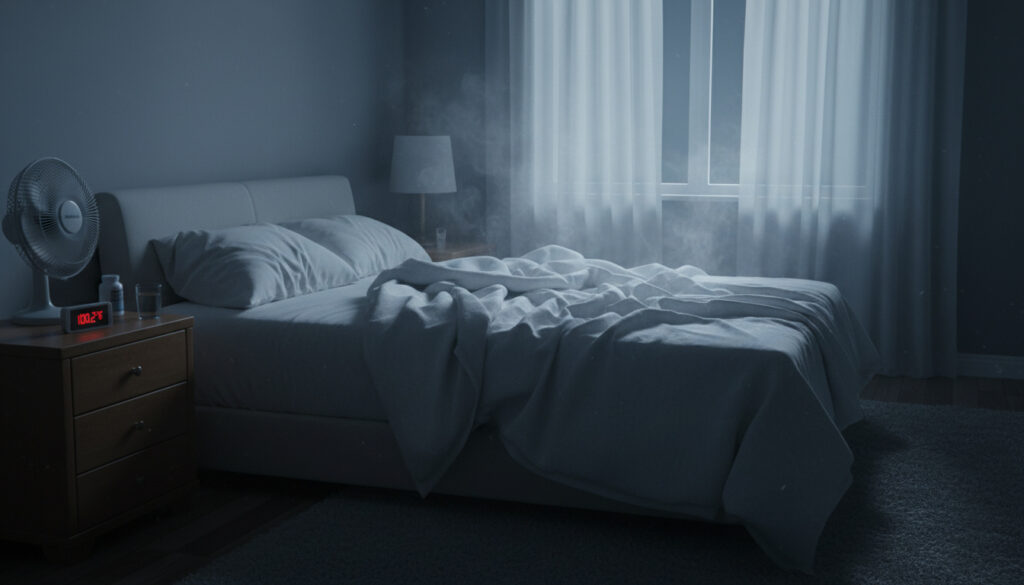
Night Sweats in Women – Causes, Menopause Link and When to Worry
Night sweats disrupt sleep for millions of women, particularly those navigating the hormonal shifts of midlife. These episodes involve excessive sweating during sleep severe enough to soak nightclothes or bedding, often accompanied by sudden heat sensations that jolt women awake.
The experience spans a wide age range, though prevalence increases significantly after age 40. While frequently linked to the menopausal transition, medical data indicates that Night Sweats in Women stem from diverse triggers, ranging from benign lifestyle factors to serious underlying conditions requiring immediate evaluation.
What Causes Night Sweats in Women?
- Estrogen drops 60-80% by menopause, destabilizing hypothalamic temperature regulation
- Progesterone fluctuations amplify temperature sensitivity
- Vasomotor symptoms affect up to 75% of perimenopausal women
- Symptoms often initiate nocturnally before daytime hot flashes manifest
- Primary ovarian insufficiency mimics menopausal symptoms in younger women
- Black women report higher prevalence rates than other ethnic groups
- Contraceptive changes create temporary “mini-menopause” effects lasting 2-3 months
| Trigger Category | Specific Cause | Physiological Mechanism | Risk Level |
|---|---|---|---|
| Hormonal | Perimenopause | Estrogen/progesterone fluctuations destabilizing TNZ | High (75%+) |
| Hormonal | Menopause | 60-80% estrogen drop, hypothalamus sensitivity | Very High |
| Endocrine | Thyroid disease | Temperature dysregulation via metabolic disruption | Moderate |
| Reproductive | Primary ovarian insufficiency | Premature ovarian failure before age 40 | Low |
| Pharmacological | Contraceptive changes | Temporary hormonal disruption | Temporary |
| Oncological | Lymphoma/leukemia | Malignancy-related systemic response | Serious |
| Infectious | Febrile illness | Immune response elevating core temperature | Acute |
| Psychiatric | Anxiety disorders | Heightened autonomic sensitivity to temperature | Moderate |
| Lifestyle | Obesity | Excess adipose tissue insulating, metabolic load | Contributing |
| Lifestyle | Alcohol/caffeine | Vasodilation and thermogenic effects | Contributing |
| Lifestyle | Smoking | Vasomotor symptom amplification | Worsening |
| Demographic | Black ethnicity | Higher reported prevalence, mechanism unclear | Elevated |
Are Night Sweats a Sign of Menopause?
The connection between night sweats and menopause remains one of the most established correlations in women’s health. Research indicates that hormonal fluctuations drive most cases, particularly during perimenopause—the transitional phase beginning in the late 30s to 50s—and menopause, confirmed after 12 consecutive months without menstruation.
The Perimenopausal Window
During perimenopause, vasomotor symptoms impact up to 75% of women. These episodes often commence at night, peaking in intensity immediately before menstruation in regularly cycling women in their late 30s and 40s. The thermoneutral zone narrows as estrogen drops erratically by 60-80%, rendering the hypothalamus hypersensitive to minor temperature shifts.
Post-Menopausal Patterns
Symptoms typically persist for 1-2 years following menopause, affecting 35-50% of women with episodes lasting 5-10 minutes. Harvard Medical School notes that while most women experience resolution within this window, approximately 10% continue reporting symptoms beyond the typical timeframe.
Night sweats typically emerge in the scalp, face, neck, and chest, lasting 5-10 minutes. These episodes begin nocturnally for many women, later extending into daytime hot flashes as hormonal decline accelerates.
When Should You See a Doctor for Night Sweats?
While menopause explains the majority of cases in women over 40, certain patterns warrant professional evaluation. Medical guidance suggests that persistence beyond two weeks, especially when accompanied by systemic symptoms, requires diagnostic workup to exclude thyroid dysfunction, infections, or malignancy.
Red Flag Indicators
Unexplained weight loss, persistent fever, or palpable lumps alongside night sweats demand immediate attention. Clinicians emphasize that lymphoma and leukemia can present initially with isolated nocturnal sweating patterns, particularly in women without clear menopausal links.
Diagnostic Thresholds
Women experiencing irregular periods, mood changes, or fatigue concurrent with night sweats should undergo blood testing. Hormone panels measuring FSH, LH, and estrogen help distinguish menopausal transitions from primary ovarian insufficiency or thyroid disease.
How to Stop or Treat Night Sweats in Women
Treatment strategies bifurcate into hormonal interventions and lifestyle modifications, with selection depending on symptom severity and underlying causation. Current protocols emphasize that combination approaches yield superior outcomes compared to singular interventions.
HRT stabilizes estrogen and progesterone levels, though clinicians note that long-term safety data requires continued monitoring. Blood tests tracking FSH, LH, and anti-Mullerian hormone help confirm menopausal status before initiating therapy.
Alcohol, caffeine, spicy foods, and smoking demonstrably worsen vasomotor symptoms. Obesity intensifies severity, while moderate exercise—not sedentary behavior nor vigorous activity—optimizes symptom control.
Non-hormonal relief includes maintaining cooler bedroom environments, utilizing lighter bedding and moisture-wicking pajamas, and avoiding ultra-processed foods. Weight management proves particularly effective, as adipose tissue amplifies thermoregulatory dysfunction.
How Night Sweats Progress Through Menopause
The temporal trajectory of vasomotor symptoms follows a predictable arc for most women, though individual variation exists based on genetic and environmental factors.
- Early perimenopause begins with occasional nocturnal sweating episodes
- Peak frequency occurs immediately before final menstrual periods
- 12 months without menstruation marks the transition, symptoms often most intense
- Gradual resolution for approximately 85-90% of women
- Persistent symptoms continue in 10% of the population
What Research Confirms vs. What Remains Uncertain
Medical consensus exists regarding primary mechanisms, though significant gaps persist in understanding variation and long-term outcomes.
| Established Information | Information Requiring Further Study |
|---|---|
| Menopause causes 75-85% of cases in women aged 45-55 | Exact physiological mechanism for ethnic variation in symptom reporting |
| Estrogen decline directly correlates with thermoregulatory disruption | Long-term safety profiles of extended HRT use beyond 5 years |
| Black women experience statistically higher prevalence rates | Why 10% of women experience persistent symptoms indefinitely |
| Symptoms typically resolve within 2 years post-menopause | Specific cancer risk percentages associated with isolated night sweats |
| Primary ovarian insufficiency mimics menopausal symptoms before age 40 | Geographic and cultural influences on symptom perception and reporting |
The Clinical Context of Midlife Sleep Disruption
Night sweats represent more than nocturnal inconvenience; they constitute a significant public health concern affecting workforce participation and quality of life. Epidemiological data reveals that women experiencing severe vasomotor symptoms report higher rates of sleep deprivation-related cognitive impairment and mood disturbances.
The clinical approach has shifted from dismissal toward comprehensive evaluation. Previously, women over 40 reporting night sweats received minimal diagnostic attention beyond menopause attribution. Contemporary practice mandates thyroid screening and metabolic panels to exclude secondary causes, particularly in cases presenting without typical perimenopausal markers.
Ethnic disparities in prevalence remain poorly understood despite consistent documentation. Research confirms that Black women experience elevated rates compared to Caucasian counterparts, though whether genetic, environmental, or reporting factors drive this difference remains under investigation.
Expert Perspectives on Nocturnal Hyperhidrosis
Estrogen levels drop erratically by 60-80% by menopause, narrowing the brain’s thermoneutral zone and making the hypothalamus overly sensitive to minor changes. While the exact causes are still being investigated, understanding fibromyalgia symptoms in women is crucial for effective management. Fibromyalgia symptoms in women
— Columbus OB-GYN & Natural Cycles Research
Vasomotor symptoms like night sweats impact up to 75% of perimenopausal women, often starting at night and peaking before menstruation in regularly cycling women.
— ForHers Medical Review, American Academy of Family Physicians
Key Takeaways for Women Experiencing Night Sweats
Night sweats in women over 40 predominantly signal the hormonal transitions of perimenopause or menopause, affecting up to 85% of women during these life stages. While Why Do So Many Women Experience Night Sweats? explains the physiological mechanisms, women must remain vigilant regarding accompanying symptoms like weight loss or fever that suggest non-hormonal pathologies requiring immediate medical intervention.
Frequently Asked Questions
What are common causes of night sweats besides menopause?
Thyroid disease, primary ovarian insufficiency, infections, lymphoma, leukemia, anxiety disorders, and medication changes including hormonal contraception can all trigger nocturnal sweating in women.
Do anxiety cause night sweats in women?
Yes. Anxiety heightens autonomic sensitivity to temperature shifts, triggering excessive sweating during sleep. This mechanism operates independently of hormonal fluctuations but can compound menopausal symptoms.
Are night sweats normal during perimenopause?
Yes. Up to 75% of perimenopausal women experience vasomotor symptoms. These episodes typically begin at night, peak before menstruation, and represent normal physiological responses to estrogen decline.
How long do menopausal night sweats typically last?
Most women experience resolution within 1-2 years following menopause. However, approximately 10% of women report persistent symptoms lasting indefinitely beyond the typical post-menopausal window.
Can primary ovarian insufficiency trigger night sweats in younger women?
Yes. When ovaries fail before age 40, the resulting estrogen drop mimics menopausal symptoms. This condition requires medical evaluation to distinguish from normal perimenopause and manage long-term health risks.
What is the difference between night sweats and hot flashes?
Night sweats occur specifically during sleep and often soak bedding. Hot flashes occur while awake. Both represent vasomotor symptoms, though night sweats typically manifest first during early perimenopause.
Can certain foods trigger night sweats?
Yes. Alcohol, caffeine, and spicy foods exacerbate vasomotor symptoms through vasodilation and thermogenic effects. Ultra-processed foods and smoking similarly intensify both frequency and severity of episodes.
More related posts
 Trade Me Car Parts: NZ Buying & Selling Guide for Sellers
 What Time Is It in the UK? BST/GMT & 2026 Clock Changes
 Australia School Holidays 2026: Dates for All States
 TV Entertainment Unit NZ: Best Buys & Buying Guide 2025
 Princess and the Frog: Tiana, Sequel, and Disney Princess Status
 Tauranga Taupo River Level: Live Data, Maps & Safety Tips
 How to Screenshot on a Laptop: Windows Shortcuts & Fixes
 China Tourist Visa Changes: 30-Day Visa-Free Entry Until 2026