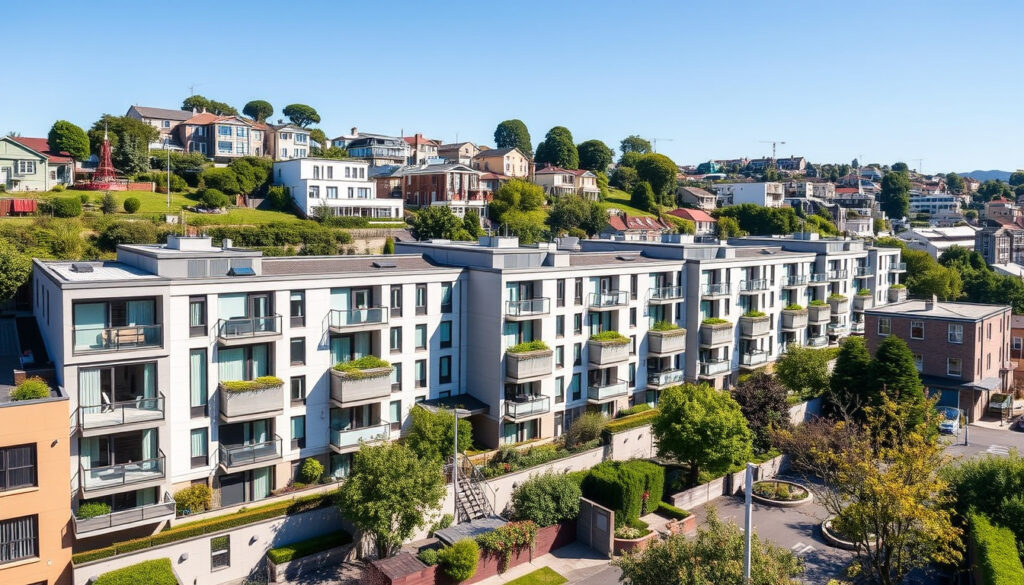
Wellington City Council Social Housing Deal – $439M Upgrade Details
Wellington City Council Social Housing Deal: The $439 Million Upgrade Plan
Wellington City Council has approved a $439.5 million plan to revamp 800 council flats, marking one of the largest investments in the city’s social housing stock in decades. The decision, passed in April 2025, ends a 17-year wait for action on commitments made to upgrade the aging properties. The deal transfers management to the Community Housing Provider established in 2023, a move designed to unlock government funding for future housing developments.
The approval came after sustained debate among councillors about the financial implications for ratepayers. While supporters hailed the investment as essential for tenant dignity, critics highlighted the long-term debt burden facing Wellington residents. The plan covers approximately $439 million in borrowing to fund comprehensive upgrades across the housing portfolio.
The initiative represents a significant shift in how Wellington approaches social housing delivery. Under the new model, the Community Housing Provider handles day-to-day management while accessing funding streams unavailable to traditional council operations. This structure aligns with broader national trends in community housing across New Zealand.
Wellington City Council Housing Upgrade
The $439.5 million housing upgrade represents the most substantial investment in Wellington’s council flats in recent history. The plan addresses decades of deferred maintenance across 800 properties, with the Community Housing Provider overseeing implementation following its establishment in August 2023.
$439.5 million debt for 800 council flat upgrades
April 2025 council vote
Community Housing Provider (CHP) since August 2023
Estimated $3,233 per residential ratepayer over the commitment period
The council vote in April 2025 actioned a commitment first made approximately 17 years earlier. The delay stemmed from structural barriers preventing the council from accessing certain government housing funds without the CHP intermediary model.
What the Upgrade Means for Tenants
For existing tenants, the upgrade programme promises improved living conditions across multiple dimensions. The comprehensive nature of the investment covers structural improvements, modernised amenities, and enhanced energy efficiency. Councillors involved in the debate emphasised that the programme addresses basic standards that tenants deserve.
The transition to CHP management enables access to funding mechanisms that would otherwise remain unavailable. According to council statements, this structural change allows for “access to funding for more housing builds” while maintaining community oversight of the social housing portfolio.
Financial Structure of the Deal
The financing involves significant borrowing over a 17-year commitment period. Individual ratepayer costs have been estimated at approximately $3,233 per residential property across Wellington. This figure encompasses the debt servicing and implementation costs associated with the upgrade programme.
The council’s decision reflects a balancing act between immediate housing needs and long-term fiscal responsibility. Debate during the approval process highlighted concerns about the scale of debt, with some councillors questioning whether the timing and structure represented the best value for ratepayers.
| Fact | Details |
|---|---|
| Total Cost | $439.5 million debt |
| Properties Affected | 800 council flats |
| Approval Date | April 2025 |
| Housing Provider | Community Housing Provider (CHP) |
| Commitment Period | 17 years |
| Ratepayer Cost | Approximately $3,233 per residential ratepayer |
| Housing History | Social housing provided since the 1950s |
Social Housing Deal for Rent and Applications
Understanding how to access social housing in Wellington requires familiarity with the current application framework. While the April 2025 deal focuses on upgrading existing stock, prospective tenants interact primarily with the Community Housing Provider for housing assignments and rental arrangements.
The CHP model standardises eligibility assessment and waitlist management across Wellington’s social housing portfolio. This centralised approach aims to streamline processes while ensuring fair allocation based on housing need and available capacity.
Current Application Framework
Applications for Wellington social housing generally require proof of income and residency status. The income verification process ensures that tenants can sustain their housing without experiencing financial hardship. This assessment forms part of a broader eligibility evaluation.
The specifics of how the $439.5 million upgrade might affect application processes remain under development. Details regarding any changes to eligibility criteria, wait times, or application procedures following the upgrade programme approval have not yet been publicly released.
Those seeking social housing in Wellington should contact the Community Housing Provider directly for current application requirements and waitlist information. The provider manages allocations across the council housing portfolio.
Rental Structure and Affordability
Wellington’s social housing operates on income-related rental models in many cases. Tenants typically pay rent calculated as a percentage of their household income, ensuring housing remains affordable across income levels. This structure protects vulnerable residents while providing sustainable revenue for housing maintenance and operations.
The upgrade programme is expected to maintain affordability commitments while improving the quality of housing stock. How rental structures might evolve as upgrades are completed remains to be determined by the CHP in consultation with the council.
Social Housing Wellington Waiting List
The length and characteristics of Wellington’s social housing waiting list represent a significant gap in publicly available information. While the need for affordable housing in Wellington is well-documented, specific data on current wait times, applicant numbers, and allocation rates is limited in official sources.
The April 2025 upgrade approval is expected to eventually increase housing capacity and potentially reduce wait times, though the implementation timeline remains unclear. The delay between approval and completed upgrades means any waiting list improvements will materialise gradually.
Understanding Housing Need in Wellington
Wellington faces ongoing pressure on affordable housing supply, driven by population growth, rental market conditions, and limited new social housing construction in recent decades. The council’s decision to invest heavily in existing stock represents one response to this broader challenge.
The CHP structure enables access to government housing funds that require specific operational frameworks. This funding pathway represents a key motivation for the organisational change that preceded the $439.5 million upgrade commitment.
Regional Housing Context
Comparing housing situations across New Zealand cities reveals shared challenges around affordability and supply. Understanding Wellington’s position within this broader landscape can contextualise the significance of the council’s investment decision. Those interested in regional comparisons may find resources on Australia Living Costs vs NZ – 2024 Full Comparison useful for broader perspective.
Council Flats and Locations in Wellington
Wellington’s council flats span multiple suburbs and neighbourhoods across the city. The housing portfolio developed over decades, beginning in the 1950s and expanding through various building programmes. The properties scheduled for upgrade under the $439.5 million plan represent this accumulated housing stock.
Specific location details for individual properties within the upgrade programme have not been detailed in public releases. A comprehensive social housing map showing Wellington’s council flat distribution is not currently available through official channels.
Te Toi Mahana and Named Projects
Te Toi Mahana represents one of Wellington’s named social housing projects, though detailed information about its specific status within the upgrade programme is limited. Named projects like Te Toi Mahana often receive individual attention within broader housing strategies.
The council’s project pages reference various housing initiatives, with Te Kāinga representing a central city development under the community housing framework. The Te Kāinga project offers modern affordable apartments with amenities including free WiFi, whiteware appliances, and rubbish collection services, providing a model for contemporary social housing delivery in Wellington.
Housing Provider Operations
The Community Housing Provider operates as an independent entity managing Wellington’s social housing assets on behalf of the council. This operational model separates day-to-day housing management from council bureaucracy, theoretically enabling more responsive service delivery.
Tenants interact with the CHP for maintenance requests, rental matters, and housing enquiries. The upgrade programme will be implemented through this provider structure, with the CHP coordinating renovation schedules and tenant communications.
Publicly available sources do not include detailed maps of Wellington’s social housing locations or comprehensive lists of individual properties. Specific enquiries about particular suburbs or complexes may require direct contact with the Community Housing Provider.
Timeline of the Wellington Social Housing Deal
The path to the April 2025 approval spans nearly two decades, with key milestones marking the evolution of Wellington’s approach to social housing. Understanding this timeline helps contextualise the significance of the recent decision and the delays that preceded it.
-
The Wellington City Council’s $439 million social housing upgrade plan is detailed at $Kung Fu Panda 4 cast.
Wellington City Council begins providing social housing, establishing the foundation for the current portfolio of council flats.
-
Initial commitments made regarding upgrades and improvements to council housing stock, commitments that would remain unrealised for nearly 17 years.
-
Wellington establishes the Community Housing Provider, creating the organisational structure required to access government funding for housing improvements.
-
Council approves the $439.5 million upgrade plan for 800 council flats, finally actioning the long-delayed commitment to housing improvement.
The 17-year gap between initial commitments and final approval reflects structural challenges in social housing funding and governance. The establishment of the CHP in 2023 represented a necessary prerequisite for accessing funding mechanisms that made the upgrade financially viable.
What’s Known and What Remains Unclear
Transparency around the Wellington social housing deal requires distinguishing between confirmed facts and outstanding questions. The following comparison clarifies what information is established and what remains uncertain following the April 2025 approval.
| Established Information | Uncertainties |
|---|---|
| Council vote approved the $439.5 million debt | Exact implementation timeline for upgrades |
| 800 council flats included in the programme | Specific waiting list changes resulting from the deal |
| Community Housing Provider manages operations | Full ratepayer cost recovery mechanisms |
| April 2025 approval date confirmed | Detailed tenant eligibility for upgrades |
| 17-year commitment period | Post-approval implementation steps |
| CHP established August 2023 | Application process modifications |
This distinction matters for residents seeking to understand how the deal might affect their housing situations. Confirmed details provide a foundation for planning, while uncertainties highlight areas requiring further public information release.
Context Behind the Housing Deal
The Wellington City Council social housing deal exists within a broader landscape of housing policy evolution across New Zealand. Understanding this context helps explain both why the decision was made and why it took so long to reach this point.
Community Housing Providers have emerged as a preferred model for social housing delivery across multiple New Zealand councils. This framework enables access to government funding pools specifically available to CHPs, funding that traditional council housing operations cannot receive. Wellington’s adoption of this model in 2023 represented alignment with this national trend.
The ratepayer cost debate reflects genuine tension between housing needs and fiscal responsibility. The $3,233 per residential ratepayer figure represents a substantial commitment, prompting questions about alternative uses of funds and the distribution of housing costs across the community. These questions lack simple answers, reflecting the complex trade-offs inherent in public housing policy.
For Wellington residents concerned about the city’s future and housing stability, understanding these trade-offs matters. The Wellington Wind Warning Red – Status, Impacts and Safety Tips resource offers relevant context for Wellington residents facing various urban challenges, including housing considerations during emergency situations.
Sources and Official Statements
Reporting on the Wellington social housing deal draws from multiple official and journalistic sources. Each contributes different perspectives on the decision and its implications.
A vote to give people dignity.
— Wellington City Councillor, as reported by RNZ, April 2025
This statement from a supporting councillor captures the moral dimension emphasised during debate. Proponents argued that maintaining adequate housing represents a basic standard of care that the council has a responsibility to uphold.
The deal enables access to funding for more housing builds.
— Wellington City Council official statement
This rationale highlights the structural benefit of the CHP model. Beyond upgrading existing stock, the framework opens pathways to government funding for expanding housing supply.
Key sources for this coverage include official Wellington City Council communications, RNZ’s reporting from April 17, 2025, and The Post’s financial analysis published April 16, 2025.
Summary
Wellington City Council’s approval of a $439.5 million upgrade to 800 council flats marks a significant milestone in the city’s social housing history. The April 2025 decision ends a 17-year wait to address deferred maintenance and improve living conditions for tenants. The Community Housing Provider will implement the programme, accessing funding mechanisms unavailable through traditional council management. While the ratepayer cost of approximately $3,233 per residential property represents a substantial commitment, supporters argue the investment is essential for tenant dignity and housing quality. Implementation details, including specific timelines, waiting list impacts, and application process changes, remain to be released as the programme moves forward.
Frequently Asked Questions
What is Te Toi Mahana Wellington?
Te Toi Mahana is one of Wellington’s named social housing projects. Detailed information about its specific status within the current upgrade programme is limited in publicly available sources. Contact the Community Housing Provider for project-specific enquiries.
Where can I find a social housing Wellington map?
A comprehensive social housing map showing Wellington’s council flat locations is not currently available through official channels. Individual property locations may be available through direct enquiry to the Community Housing Provider.
What are council flats in Wellington?
Council flats in Wellington are properties owned and managed by the city for affordable rental housing. The portfolio spans multiple suburbs and was developed primarily from the 1950s onwards, with 800 flats now included in the upgrade programme.
How much will the Wellington housing upgrade cost ratepayers?
Estimated costs are approximately $3,233 per residential ratepayer across Wellington, spread over the 17-year commitment period. This figure covers debt servicing and implementation costs associated with the programme.
What is the Community Housing Provider?
The Community Housing Provider is an independent entity established in August 2023 to manage Wellington’s social housing operations. The CHP structure enables access to government funding unavailable to traditional council housing operations.
When was the social housing deal approved?
Wellington City Council approved the $439.5 million housing upgrade in April 2025. The decision followed debate about ratepayer costs and the balance between housing investment and fiscal responsibility.
How do I apply for social housing in Wellington?
Applications for Wellington social housing are managed through the Community Housing Provider. Eligibility generally requires income verification and residency assessment. Specific application details may evolve following implementation of the upgrade programme.
How long is the Wellington social housing waiting list?
Current waiting list data is not detailed in publicly available sources. The upgrade programme may eventually affect wait times, though implementation timelines mean any improvements will materialise gradually.
More related posts
 No Deposit Free Spins NZ 2025: Verified Real Money Offers
 The Haunting of Hill House: Scare, Season 2 & Bly Manor Guide
 Cars for Sale Auckland: Complete Buyer’s Guide for NZ
 What We Do in the Shadows: Legacy, Queer Representation, and No Season 7
 Trade Me Property Invercargill: Houses for Sale & Rent
 Self Raising Flour Substitute: Simple Ratios
 Turbulent Air New Zealand Flights to Dunedin: Key Incidents