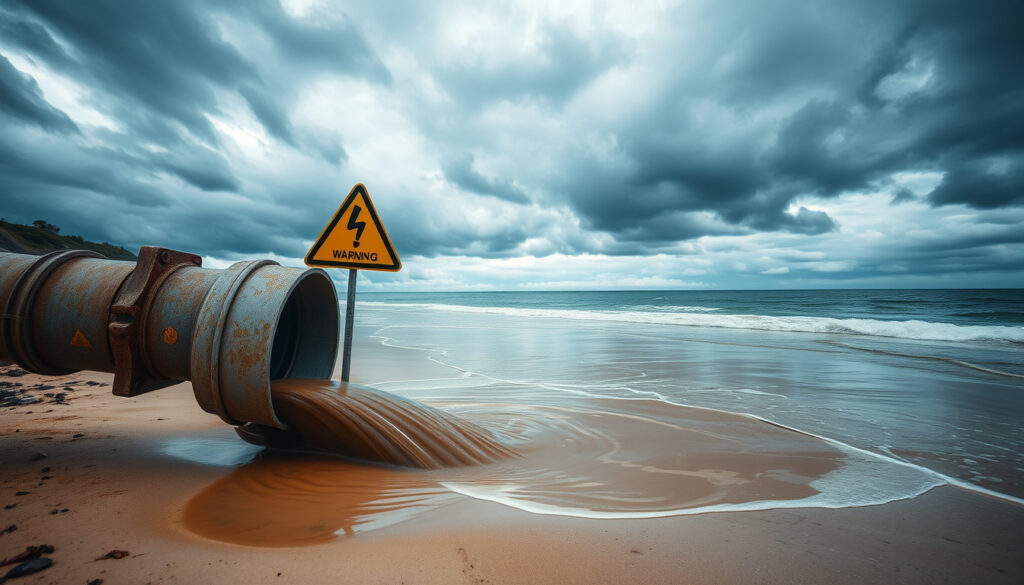
St Heliers Beach Wastewater Overflow: 2025 Safety Update
Few things ruin a summer’s day faster than arriving at the beach to find warning signs and the unmistakable smell of sewage in the air. That’s exactly what happened at St Heliers on 21 December 2025, when a wastewater overflow forced Auckland’s eastern beaches to close.
Date of closure: 21 December 2025 ·
Affected beaches (initial list): St Heliers, Judges Bay, Masefield Beach, Coxs Bay, Meola Creek ·
Current Safeswim status (St Heliers): Green flag (safe to swim) as of 22 Dec 2025 update ·
Wastewater overflow reported by: Watercare
Quick snapshot
- Wastewater overflow flooded St Heliers bay on 21 Dec 2025 (Lions Roar (local news outlet))
- Watercare issued ‘do not swim’ warning; Safeswim black-flagged the beach (NZ Herald (major national daily))
- Watercare completed inspection and sampling (Lions Roar) (Lions Roar (local news outlet))
- Warning lifted and green flag restored by 22 Dec 2025 (Our Auckland (Auckland Council news portal))
- Exact volume of wastewater discharged
- Root cause of pipe blockage and failure
- Duration of lingering health risk from residual contamination
- Long-term impact on marine environment and shellfish beds
- 21 Dec 2025 (evening) — overflow event; beach closed (Lions Roar)
- 21 Dec 2025 (afternoon) — Watercare inspects, begins sampling (Lions Roar)
- 22 Dec 2025 — St Heliers green flag restored (Our Auckland)
- Ongoing — Safeswim monitoring continues across 163 sites (Lions Roar)
- Watercare expected to release root-cause analysis
- Other beaches (Judges Bay) remain under black flag
- Check Safeswim before visiting any Auckland beach
- Environmental groups push for infrastructure investment
Seven key facts about the incident, one pattern: a single overflow exposed how quickly a summer swim can turn into a health hazard, and how uneven the recovery can be across Auckland’s beaches.
| Fact | Detail |
|---|---|
| Beach name | St Heliers Beach |
| Location | Eastern suburbs, Auckland, New Zealand |
| Date of incident | 21 December 2025 |
| Cause | Wastewater overflow from blocked pipe, exacerbated by heavy rainfall (Lions Roar) |
| Initial status | Red / black flag (do not swim) — faecal contamination warning (NZ Herald) |
| Current status (as of 22 Dec 2025) | Green flag (safe to swim) — warning lifted after Watercare inspection (Our Auckland) |
| Authority in charge | Watercare and Auckland Council (Auckland Council (local government body)) |
St Heliers Beach went from a health emergency to a green flag in less than 24 hours — but that rapid turnaround doesn’t erase the underlying question: why did the pipe fail in the first place, and how many more overflows can Auckland’s ageing network withstand this summer?
What beaches are polluted in Auckland?
St Heliers and other eastern suburbs affected
When the wastewater overflow hit St Heliers on 21 December, it wasn’t an isolated event. Watercare and Auckland Council issued warnings for a cluster of eastern-suburbs beaches. The affected list initially included St Heliers, Judges Bay, Masefield Beach, Coxs Bay, and Meola Creek — each one given a ‘do not swim’ advisory as a precaution (NZ Herald).
- St Heliers — black-flagged due to raw sewage contamination
- Judges Bay — remained the only other black-flagged beach in Auckland as of 22 December
- Masefield Beach, Coxs Bay, Meola Creek — issued warnings but not all received black-flag status
List of beaches with ‘do not swim’ warnings
Visitors to Judges Bay in Parnell found the same black pin on the Safeswim map as St Heliers, indicating wastewater overflow risk (NZ Herald). The Safeswim programme, which expanded to 163 monitoring sites for the 2025/26 summer season, provides real-time status for each location (Our Auckland).
The implication: even a single overflow can trigger a multi-beach warning zone. Swimmers in the eastern suburbs need to check not just their local beach but the entire cluster before heading out.
Is St. Heliers safe to swim at?
Current Safeswim forecast for St Heliers
- As of 22 December 2025, St Heliers received a green flag — safe to swim (Our Auckland)
- Watercare completed inspection and sampling, confirming the immediate contamination had cleared (Lions Roar)
- Desley Simpson, Auckland Councillor, posted on Facebook that Watercare’s team had finished its inspection and the beach was safe again
What the green flag means
A green flag on Safeswim means the water quality meets national guidelines for swimming. But the assessment is a snapshot, not a guarantee. Rain, tides, and further infrastructure issues can flip the flag within hours. Last summer, Auckland beaches were suitable for swimming 84.5% of the time, with Safeswim’s predictive models achieving 93% accuracy (Our Auckland).
What this means: green today doesn’t mean green tomorrow. Check the app before you pack the towels.
A green flag tests for current water quality — it does not test for residual pathogens that can survive in sand or sediment after an overflow event. Swimmers with open cuts or compromised immune systems face elevated risk even after the flag turns green.
The pattern: rapid recovery doesn’t guarantee long-term safety.
What caused the wastewater overflow at St Heliers beach?
Infrastructure failure or capacity issue?
The overflow was caused by a major blockage in a critical wastewater pipe, compounded by heavy rainfall that overwhelmed the system’s capacity (Lions Roar). The resulting discharge sent raw sewage into the Waitematā Harbour, forcing immediate beach closures.
- Blockage in critical pipe — likely due to urban debris, grease buildup, or structural damage
- Heavy rainfall — typical summer storm pattern but enough to tip an already strained system
- Watercare dispatched crews for emergency inspection and sampling within hours
Role of underinvestment in wastewater management
Environmental groups have pointed to this incident as evidence of systemic underinvestment in Auckland’s wastewater infrastructure. According to a statement carried by local outlets, groups warn that the pattern of sewage overflows is accelerating as the city’s population grows and pipes age (Lions Roar). Watercare, the agency responsible for Auckland’s wastewater network, faces increasing pressure to accelerate replacement programmes.
Why this matters: each overflow event carries a direct cost — not just in cleanup and monitoring, but in lost public trust and health risk. The St Heliers incident is the latest in a series of warnings that New Zealand’s largest city is outpacing its pipe network.
How does Safeswim work?
Forecast vs real-time monitoring
Safeswim is a joint initiative of Auckland Council, Watercare, Surf Lifesaving Northern Region, and the National Public Health Service (Auckland Council). It uses a combination of real-time water sampling and predictive models that account for rainfall, wind, tides, and faecal indicator bacteria levels (LAWA (official water quality data portal)).
- Forecasts updated every 15 minutes (LAWA)
- Models ingest data from 163 monitoring sites for the 2025/26 season (Our Auckland)
- Accuracy rated at 93% during the 2024/25 summer (Our Auckland)
Flag system explained (green, yellow, red)
The Safeswim system uses a pin-and-flag visual system. A green pin means safe to swim; yellow means caution advised — risk of illness; red means do not swim due to poor water quality. The black pin specifically indicates a wastewater overflow event, as was the case at St Heliers (Safeswim (official water quality platform)).
The trade-off: the system updates every 15 minutes, which is fast but not instantaneous. During a sudden overflow event, the first warning might come from signage on the beach before the app reflects the change.
What is the impact of wastewater overflows on Auckland beaches?
Health risks for swimmers
Wastewater contains bacteria, viruses, and parasites that can cause gastrointestinal illness, respiratory infections, skin rashes, and eye infections. Children, older adults, and people with weakened immune systems face the highest risk. LAWA advises swimmers to avoid contact with water for 2–3 days after heavy rain, even at beaches with normally good water quality (LAWA). During the St Heliers incident, signs were erected along the entire length of the beach warning of extreme contamination risks (Lions Roar).
Environmental consequences
Raw sewage discharged into the Waitematā Harbour affects more than just swimmers. Excess nutrients from wastewater can trigger algal blooms, which deplete oxygen and harm fish and shellfish populations. Shellfish beds in the harbour are particularly vulnerable, as pathogens accumulate in filter-feeding organisms. The long-term impact on marine ecosystems from this event remains unclear, but environmental monitoring groups are expected to track water quality in the harbour over the coming weeks.
Recurrence pattern and infrastructure challenges
Auckland has experienced a rising number of sewage overflow events in recent years, driven by population growth, aging pipe networks, and more intense rainfall events linked to climate change. The St Heliers event is the latest in a pattern that environmental groups say will continue unless investment in wastewater infrastructure accelerates (Lions Roar).
“It’s a stark reminder that Auckland’s wastewater infrastructure is under severe strain. We’ve seen too many of these events this summer already.”
— Environmental groups spokesperson, via Lions Roar
“Watercare has completed its inspection at St Heliers and the beach now shows a green flag on Safeswim. We thank local residents for their patience.”
— Desley Simpson, Auckland Councillor, Facebook update
The infrastructure question remains.
Similar infrastructure challenges have led to Hibiscus Coast wastewater restrictions as Watercare manages capacity across the region.
Frequently asked questions
How long does a beach typically stay closed after a wastewater overflow?
Closure duration depends on the volume of discharge, tide conditions, and sampling results. In the St Heliers case, the beach went from black-flagged to green-flagged in roughly 24 hours. Other events can last 48–72 hours, especially if contamination persists or rain continues.
Can I swim at other Auckland beaches while St Heliers is under warning?
Each beach has its own Safeswim status. During the St Heliers overflow, Judges Bay remained black-flagged, while other eastern beaches fluctuated. Always check the Safeswim app or website for the specific beach you plan to visit.
What should I do if I see sewage or unusual discharge in the water?
Do not enter the water. Report the discharge to Watercare’s 24-hour emergency line (09 442 9292) and check Safeswim for official alerts. Avoid contact with the water and keep children and pets away from the affected area.
How can I report a wastewater overflow to Watercare?
Call Watercare’s 24-hour emergency line at 09 442 9292. You can also report issues through the Watercare website or mobile app. Include the location, time of observation, and a description of what you see.
Who is responsible for Auckland’s wastewater system?
Watercare is the council-controlled organisation responsible for Auckland’s water and wastewater networks. Auckland Council oversees the regulatory framework and environmental monitoring. Safeswim is a joint initiative involving both agencies along with Surf Lifesaving Northern Region and the National Public Health Service (Auckland Council).
Are there any long-term health effects from swimming in sewage-affected water?
Short-term exposure can cause gastroenteritis, respiratory infections, and skin conditions. Long-term effects are rare but possible with repeated exposure. Individuals with compromised immune systems should avoid any contact with water during and immediately after overflow events.
Does the Safeswim app cover all New Zealand beaches?
No. Safeswim currently covers 163 sites across the Auckland region. For beaches outside Auckland, check local council or regional authority websites. LAWA (Land, Air, Water Aotearoa) provides water quality data for some other regions but not in real-time.
More related posts
 Wolff-Parkinson-White Syndrome: Causes, Symptoms & Treatment
 Penman House Demolition Auckland: Location, Timeline & Controversy
 Best Free AI Voice Generators: Top Tools Compared 2025
 Wellington City Council Social Housing Deal – $439M Upgrade Details
 NZ Home Loan Calculator: Repayments & Borrowing Power
 City Fitness Staffed Hours: What You Need to Know (2025 Guide)
 How to Screenshot on a Laptop: Windows Shortcuts & Fixes
 Low Interest Car Finance Ireland 2025: Best Rates & Tips