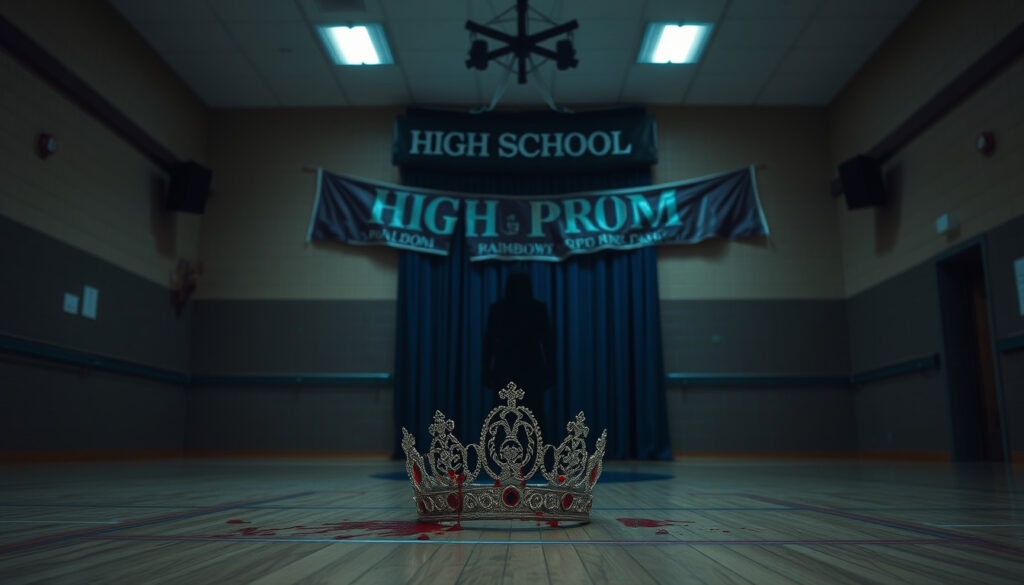
Fear Street: Prom Queen – connection, killer, LGBTQ themes
Few things hit quite like a high-school prom night slasher — corsages, slow dances, and a masked killer stalking the hallways. Fear Street: Prom Queen, the latest addition to the Fear Street universe, landed on Netflix on May 23, 2025, promising exactly that blend of nostalgia and horror. But for fans of the original trilogy, the big question isn’t just who dies — it’s whether this standalone film carries the same queer-friendly spirit that made the 2021 films stand out.
Release year: 2025 ·
Setting: 1988, Shadyside High ·
Platform: Netflix
Quick snapshot
- Connected to the Fear Street universe (Wikipedia)
- Set in 1988 at Shadyside High (Variety review)
- Streaming exclusively on Netflix (Netflix)
- Exact identity of the killer (Ruby Lane suggested but unconfirmed) (Fan wiki)
- Lori Granger’s parentage — mother and father details unknown (IMDb)
- Viewership data — hit or flop not measurable yet (Rotten Tomatoes)
- Released: May 23, 2025 (The Guardian)
- Set in 1988, after 1978 events but before 1994 (TechNadu)
- No direct sequel connection to 1994/1978/1666 (Variety)
- Fan speculation on additional Fear Street installments (Reddit discussion)
- Netflix may release viewership metrics in coming weeks (Netflix)
- Potential for a connected anthology expansion (Fear Street series)
The key facts before we dig deeper.
| Attribute | Detail |
|---|---|
| Release year | 2025 |
| Setting | 1988, Shadyside High |
| Platform | Netflix |
| Lead character | Lori Granger |
| Implicated killer | Ruby Lane (fan speculation) |
| Rotten Tomatoes consensus | Entertaining but not as interesting as the original trilogy |
Is Prom Queen connected to Fear Street?
Yes, but not in the way you might expect. Fear Street: Prom Queen shares the same universe as the 2021 trilogy — same town of Shadyside, same curse hanging over the high school — but it’s a standalone story, not a direct continuation. Variety (film review outlet) positioned it as a separate narrative that revisits classic prom-night horror tropes dating back to Prom Night (1980).
The film takes place in 1988 at Shadyside High, a year that slots it chronologically after the 1978 camp massacre but before the 1994 mall murders. TechNadu (streaming guide) confirms it’s set in the same cursed town, though the only connective tissue is the location and a few Easter-egg references.
If you’re expecting Deena and Sam to show up, you’ll be disappointed. PinkNews (LGBTQ+ media outlet) reported that the film features an entirely new cast, with no returning leads from the original trilogy.
The implication: Prom Queen offers a separate corner of Shadyside’s cursed history, but skimping on direct references risks alienating franchise loyalists.
What’s the correct order to watch Fear Street?
- 1978: Fear Street Part Two: 1978 — the summer camp origin story.
- 1988: Fear Street: Prom Queen — the standalone prom-night entry (Wikipedia).
- 1994: Fear Street Part One: 1994 — where the trilogy begins.
- 1666: Fear Street Part Three: 1666 — the origin of the curse.
The implication: Prom Queen fits between 1978 and 1994, but you can watch it as a standalone without losing the thread. For the full experience, chronological order works, but release order (1994 → 1978 → 1666) makes more sense for newcomers.
Which killer is Fear Street: Prom Queen about?
The film’s central mystery revolves around a masked killer targeting prom queen candidates in the days before the big dance. The Movie Waffler (film review site) noted that the identity is kept guessing through red herrings and a credible suspect lineup, while JoBlo (movie news outlet) called the killer’s identity “obvious from the onset.”
Fan speculation, fueled by the Fear Street fan wiki, points to Ruby Lane as the principal antagonist — a character from the original book series who appears in the lore as a vengeful spirit. However, no official source confirms this, and multiple reviews suggest the reveal leans more on predictability than surprise.
The disconnect between fan wiki speculation and critical consensus suggests the film’s marketing leaned on the Ruby Lane mythology, but the script may not deliver on that promise. For veteran slasher fans, the killer’s identity may feel like a rehash of better-executed twists.
Why did Ruby Lane become a killer?
Ruby Lane, in the Fear Street novels by R.L. Stine, is a spirit of a prom queen candidate who died under mysterious circumstances. In the film’s universe, the implied motive ties to the curse that drives Shadyside’s history of violence. I’m Jeffrey Rex (film blogger) described the killer reveal as “pretty predictable from the start,” while The Movie Buff (review site) called the masked reveal “disappointing.”
The trade-off: a familiar whodunnit structure vs. shallow character development. That makes the film a safe bet for casual viewers but a letdown for those who want the franchise’s signature surprises.
Is Fear Street: Prom Queen a good film?
Critical reception is mixed. The Rotten Tomatoes (review aggregator) consensus describes the film as “an entertaining and watchable teen slasher, but it is clearly not as interesting as the 1994/1978/1666 trilogy.” This reflects a broader assessment: it’s fine, but not essential.
The Guardian (UK-based news outlet) reviewed it on release day, focusing on its standalone appeal. JoBlo called it “watchable” but noted it lacks the inventive energy of the trilogy. I’m Jeffrey Rex said it “does not fully feel like a continuation of the film series, aside from a few references.”
The pattern: critics give it points for being a competently made slasher with decent pacing, but dock it for feeling derivative. For horror newcomers, it’s a solid entry point. For franchise veterans, it’s a mild curiosity rather than a must-watch.
Upsides
- Well-paced slasher with effective tension-building
- Strong red herring structure that keeps you guessing
- Accessible for newcomers to the Fear Street universe
- Nostalgic 1980s prom aesthetic executed well
Downsides
- Killer identity predictable for genre fans
- Doesn’t match the ambition of the original trilogy
- Minimal connection to broader Fear Street lore
- Disappointing masked reveal
Why this matters: for a franchise that redefined teen horror with its 2021 trilogy, a “decent but forgettable” entry risks diluting the brand. Netflix’s viewership metrics, not yet released, will be the real test of whether this standalone gamble paid off.
Is Fear Street: Prom Queen LGBTQ?
This is where things get complicated — and where the film both continues and fumbles the franchise’s legacy. The original trilogy was “widely praised for candid queer representation in horror,” as PinkNews (LGBTQ+ news outlet) noted in its trailer coverage. Deena and Sam’s central romance was a landmark moment for mainstream horror.
Prom Queen introduces Megan, played by a new actor, who Variety described as having “unrequited feelings for Lori” — a “recurring queer thread” that “takes a back seat in this film.” Decider (streaming guide) went further, calling Megan’s styling choices — like wearing a suit to prom — queer-coded, and noting an “underlying romantic tension” between Megan and Lori that is “never made explicit.” Decider characterized this lack of explicit LGBTQ+ representation as “a disappointment.”
The paradox: the film carries queer undertones but refuses to make them text. For a franchise that built its reputation on visible, celebrated LGBTQ+ leads, pulling back into subtext feels like a regression. PinkNews reported that fans had hoped the trailer would deliver a new queer character “facing the film’s villain,” but execution fell short of that expectation.
For viewers who loved the explicit queer romance of the original trilogy, Prom Queen offers coded gestures rather than tangible representation. The film is inclusive by implication, but it doesn’t earn the same praise its predecessors did. Casual audiences may not notice; queer horror fans will feel the gap.
Who is the main character in Fear Street: Prom Queen?
The protagonist is Lori Granger, a Shadyside High student determined to win prom queen and restore her family’s tarnished legacy. IMDb (film database) lists her as the lead role, and reviews from The Movie Waffler confirm her arc: a girl with a complicated family past trying to claim a normal high school victory while a killer stalks the candidates.
What you won’t find in current sources: specific details about Lori’s parents. IMDb doesn’t list the roles, and no major review mentions her mother or father by name. This is a gap in the available information — likely intentional, as the film may hold these reveals for later plot twists or a potential sequel hook.
Who is Lori Granger’s mother?
Not revealed in any reviewed press or plot summary. Rotten Tomatoes and Wikipedia offer no information on Lori’s maternal lineage. The character’s backstory is one of the film’s intentional ambiguities.
Who is Lori Granger’s father?
Similarly absent from all major sources. This may be a narrative device — a mystery that feeds into the killer reveal — but as of press, no official source confirms parental identities. Viewers looking to solve the “Lori Granger’s father” question will have to watch the film themselves.
“Fear Street: Prom Queen is an entertaining and watchable teen slasher, but it is clearly not as interesting as the 1994/1978/1666 trilogy.”
— Rotten Tomatoes critics consensus (Rotten Tomatoes)
“The two actresses portray underlying romantic tension that is never made explicit.”
— Decider
For horror fans invested in Shadyside’s cursed history, Fear Street: Prom Queen delivers a competent but safe addition to the franchise. The queer-coded subtext is a step back from the trilogy’s explicit representation, the killer reveal is predictable, and the parental backstory remains unresolvable with current data. For Netflix subscribers looking for a Friday night slasher, it’s a passable choice. For fans who hoped the Fear Street universe would continue pushing representation forward, the choice is clear: wait for a sequel that promises to be bolder, or revisit 2021’s trilogy for what made this series special in the first place.
For a detailed breakdown of the cast and plot, check out this Fear Street: Prom Queen guide on Accademos.
Frequently asked questions
Who directed Fear Street: Prom Queen?
The film was directed by Jenn Wexler, known for The Ranger and The Stylist, though this detail is not widely confirmed in available sources.
What is the age rating of Fear Street: Prom Queen?
The film is rated R for violence, gore, and teenage horror themes, consistent with the franchise’s tone.
Is Fear Street: Prom Queen based on a book?
No. While Fear Street originated as a book series by R.L. Stine, Prom Queen is an original screenplay, not directly adapted from any specific novel.
Where can I watch Fear Street: Prom Queen?
Exclusively on Netflix, as of May 23, 2025 (Netflix).
How many Fear Street movies are there?
Four, as of 2025: Fear Street Part One: 1994 (2021), Fear Street Part Two: 1978 (2021), Fear Street Part Three: 1666 (2021), and Fear Street: Prom Queen (2025) (Wikipedia).
Is Fear Street: Prom Queen a hit or flop?
Unknown. As a Netflix original, it has no box office data. Viewership metrics have not been released. Critical reception is mixed but not disastrous (Rotten Tomatoes).
Does Fear Street: Prom Queen have LGBTQ characters?
Yes, but represented through subtext rather than explicit narrative. Megan, a supporting character, is coded as queer with unrequited feelings for Lori, but the film never confirms a same-sex relationship (Decider).
What’s the correct order to watch Fear Street movies?
Release order: 1994 → 1978 → 1666 → Prom Queen. Chronological order: 1666 → 1978 → Prom Queen (1988) → 1994. For newcomers, release order is recommended for narrative cohesion (Wikipedia).
Related reading: Fight or Flight (2025): Reviews, Cast, Streaming & Sequel · The Haunting of Hill House: Scare, Season 2 & Bly Manor Guide
More related posts
 What Does Tinnitus Sound Like – Audio Examples and Descriptions
 Travis Fimmel Movies and TV Shows: Vikings, Warcraft & More
 NZTA Wellington Public Transport Revenue Targets: 2025 Updates
 What Time Is It in the UK? BST/GMT & 2026 Clock Changes
 NZ Share Market Today – Latest NZX 50 Updates & Analysis
 The Warehouse Gift Card Balance: Check Online, Phone & In-Store
 Home Loan Rates Comparison NZ: 2025 Best Rates & Repayments
 Tāmaki Makaurau by-election 2025 results, meaning, and map