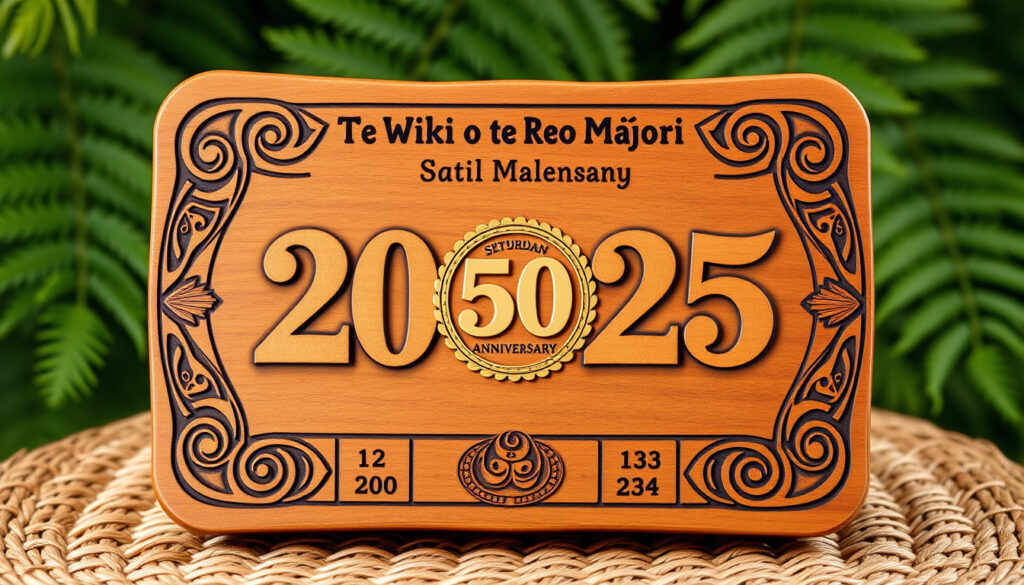
Te Wiki o te Reo Māori 2025: 50th Anniversary Dates & History
There’s something special about a language that refuses to fade. Te Wiki o te Reo Māori, New Zealand’s Māori Language Week, turns 50 in 2025 — and the celebration runs from 14 to 20 September with the theme “Ake ake ake – A forever language”. This guide covers everything you need to know: the dates, the history, key phrases, and how to join in.
50th Anniversary: 2025 marks 50 years of Te Wiki o te Reo Māori ·
Dates: 14 – 20 September 2025 ·
Duration: 7 days ·
Inception Year: 1975
Quick snapshot
- Te Wiki o te Reo Māori 2025 runs 14–20 Sep (Hewa Kā Tāpu (community language trust))
- 2025 is the 50th anniversary, first held in 1975 (Hewa Kā Tāpu)
- Theme: “Ake ake ake – A forever language” (Christchurch City Libraries (public library network))
- Official theme wording has not yet been published by government sources
- Full national event calendar is still developing
- Some regional event details remain unconfirmed
- 1972: Petition with 30,000+ signatures delivered to Parliament (Hewa Kā Tāpu)
- 1975: First Māori Language Week held (Fire and Emergency New Zealand (government agency))
- Mahuru Māori (Māori Language Month) runs 23 Aug – 22 Sep 2025 (Fire and Emergency New Zealand)
- Te Taura Whiri i te Reo Māori will release official resources (Fire and Emergency New Zealand)
Six key details that frame the 2025 celebration:
| Detail | Value |
|---|---|
| Start Date | 14 September 2025 |
| End Date | 20 September 2025 |
| Anniversary | 50th |
| Theme Slogan | Ake ake ake – A forever language |
| Inception | 1975 |
| Official Language Status | Te reo Māori is an official language of New Zealand |
When is Te Wiki o te Reo Māori 2025?
What are the exact dates for 2025?
Te Wiki o te Reo Māori 2025 runs from 14 to 20 September — a full week dedicated to celebrating and learning te reo Māori. The dates align with the original Māori Language Day (14 September), which itself traces back to a landmark petition in 1972 (Hewa Kā Tāpu (community language trust)).
Is there a theme for 2025?
Yes — the 2025 theme is “Ake ake ake – A forever language”. It was set by Te Taura Whiri i te Reo Māori, the language commission responsible for the annual theme (Christchurch City Libraries (public library network)). The phrase reflects the resilience and enduring nature of te reo Māori.
For non-Māori New Zealanders, the 50th anniversary is a rare chance to see how far the revitalisation movement has come — from a 1972 petition with 30,000 signatures to a nationally celebrated week with official government backing.
The timing also overlaps with Mahuru Māori, Māori Language Month, which runs from 23 August to 22 September 2025. Mahuru Māori was initiated in 2014 by Paraone Gloyne to normalise everyday use of te reo (Fire and Emergency New Zealand (government agency)).
The implication: The week is now part of a broader month-long push, making it easier for beginners to find events, resources, and community support.
What is the history of Te Wiki o te Reo Māori?
When did Māori Language Week first begin?
The first Te Wiki o te Reo Māori was held in 1975, around 14 September (Fire and Emergency New Zealand). But the movement started three years earlier, on 14 September 1972, when a petition bearing more than 30,000 signatures was delivered to Parliament calling for te reo Māori to be taught in schools (Hewa Kā Tāpu). That day became Māori Language Day.
Why was it created?
The week was born of activism — a response to decades of decline in the number of fluent speakers. After the petition, momentum built quickly: the first bilingual school opened at Rūātoki in 1978, the first kōhanga reo (Māori language preschool) in 1982, and the Māori Language Act 1987 made te reo an official language of New Zealand (Hewa Kā Tāpu).
- 1972: Petition delivered — Māori Language Day established
- 1975: First Māori Language Week
- 1978: First bilingual school (Rūātoki)
- 1982: First kōhanga reo
- 1987: Māori Language Act — official language status
While the legislative wins were critical, the real test of revitalisation is daily use. The 50th anniversary highlights how far the language has come — and how much depends on New Zealanders choosing to speak it outside of one week a year.
The pattern: What started as a grassroots petition has grown into a state-supported annual celebration. The 50-year arc shows that language revival is a marathon, not a sprint.
How do you say “I love you” in Māori?
What is the phrase?
The most common translation is “Aroha ana ahau ki a koe”. “Aroha” means love, compassion, or empathy, and the full phrase carries deep cultural weight beyond romantic love (Christchurch City Libraries).
Are there other ways to express love?
Yes. “Kei te aroha au ki a koe” is a more casual variation. For family or friends, “Aroha nui” (much love) is common. The pronunciation of “Aroha” is ah-raw-hah, with the “r” rolled lightly.
The catch: “Aroha” isn’t just romantic — it’s used for deep affection toward whānau (family) and community. Using it during Te Wiki o te Reo Māori is a small but meaningful gesture.
What does “ake ake” mean?
How is “ake ake” used in the 2025 theme?
“Ake ake” translates to “forever” or “for eternity”. The full 2025 theme, “Ake ake ake – A forever language”, emphasises the enduring commitment to keeping te reo Māori alive (Christchurch City Libraries).
What is the full phrase?
“Ake ake ake” is a Māori idiom meaning forever and ever. It’s often used in speeches and songs to convey timelessness. The theme positions te reo Māori as a language that will not just survive but thrive across generations.
Why this matters: For learners, “ake ake” is one of the easiest Māori phrases to remember — and it carries a powerful promise of continuity.
What is the meaning of “Pākehā”?
Is “Pākehā” a derogatory term?
No — “Pākehā” is not considered offensive by most New Zealanders. It refers to a New Zealander of European descent. The term originates from pre-colonial Māori language, possibly from “pākehakeha” (mythical pale-skinned beings) or “pakepakehā” (Christchurch City Libraries).
What does it refer to?
Pākehā distinguishes European New Zealanders from Māori, Pacific Islanders, and other ethnic groups. It is widely used in everyday conversation, media, and official documents. While some individuals dislike the label, surveys show the majority of European New Zealanders accept it.
The trade-off: Using “Pākehā” shows respect for te reo Māori in daily life. Choosing not to use it may reflect personal preference, but the term itself is not inherently negative.
Timeline
- 1975 – First Māori Language Week held (Fire and Emergency New Zealand)
- 1980s – Growing government and community support for te reo revitalisation (Hewa Kā Tāpu)
- 2000s – Te Wiki o te Reo Māori becomes a nationally recognised event (Hewa Kā Tāpu)
- 14–20 September 2025 – 50th anniversary with theme “Ake ake ake – A forever language” (Christchurch City Libraries)
Confirmed facts
- Dates 14–20 September 2025 (Hewa Kā Tāpu)
- 50th anniversary (Hewa Kā Tāpu)
- Originated from activism in 1975 (Fire and Emergency New Zealand)
- Theme phrase “Ake ake ake – A forever language” (Christchurch City Libraries)
What’s unclear
- Official theme wording not yet published by government
- Exact national event schedule still developing
- Regional event details may vary
- 2026 dates not yet confirmed
“Te Wiki o te Reo Māori celebrates te reo Māori as a taonga (cultural treasure) for all New Zealanders since 1975.”
Christchurch City Libraries (public library network)
“The 2025 theme ‘Ake ake ake – A forever language’ symbolizes the resilience and endurance of te reo Māori.”
Fire and Emergency New Zealand (government agency)
“Mahuru Māori was initiated in 2014 by Paraone Gloyne to normalize te reo Māori usage.”
Fire and Emergency New Zealand
The 50th anniversary is not just a milestone — it’s a reminder that language revitalisation requires sustained effort from every New Zealander. For learners and speakers alike, the choice is clear: use te reo Māori beyond one week, or risk the gains of five decades.
Frequently asked questions
What is the official website for Te Wiki o te Reo Māori?
Te Taura Whiri i te Reo Māori (Māori Language Commission) is the lead agency. Their site at tetaurawhiri.govt.nz provides official resources and event listings.
How can I get involved in Te Wiki o te Reo Māori 2025?
Attend local events, use te reo in daily conversation, and follow social media hashtags like #TeWikiOTeReoMāori and #AkeAkeAke. Many libraries and councils host free workshops (Christchurch City Libraries).
Are there free resources for learning te reo during the week?
Yes — Te Aka Māori Dictionary (maoridictionary.co.nz) is free, and many councils provide phrase sheets. The Reo Māori website (reomaori.co.nz) offers daily challenges.
Why is Māori Language Week celebrated in September?
It aligns with Māori Language Day (14 September), the date the 1972 petition was delivered to Parliament (Hewa Kā Tāpu).
Can non-Māori participate in Te Wiki o te Reo Māori?
Absolutely. The week is for all New Zealanders and visitors. Learning a phrase, attending an event, or using te reo in emails and signs is encouraged (Fire and Emergency New Zealand).
What is the correct pronunciation of “Te Wiki o te Reo Māori”?
Teh Wee-kee oh teh Ray-oh Mah-oh-ree. Break it into four parts: Te Wi-ki o te Re-o Mā-o-ri.
Are there regional events near me?
Check your local council website or the Reo Māori events calendar at reomaori.co.nz. Many libraries, museums, and community centres host free sessions.
More related posts
 Best Hair Clippers NZ: Top Picks from Experts & Locals
 Lulutox Detox Tea NZ: Reviews, Ingredients & Safety Guide
 T&G Global: CEO, Company Profile, and Chat Slang Meanings
 The Rest Is History: Meaning, Hosts, Popularity & FAQs
 iPhone 6s Plus to Buy – Refurbished Deals in New Zealand
 How to Get Rid of a Stye Fast: 3 Proven Home Treatments
 1/2 Cup in Grams: Conversions for Flour, Sugar & Butter
 Old-Fashioned Pikelet Recipe: Fluffy Secrets