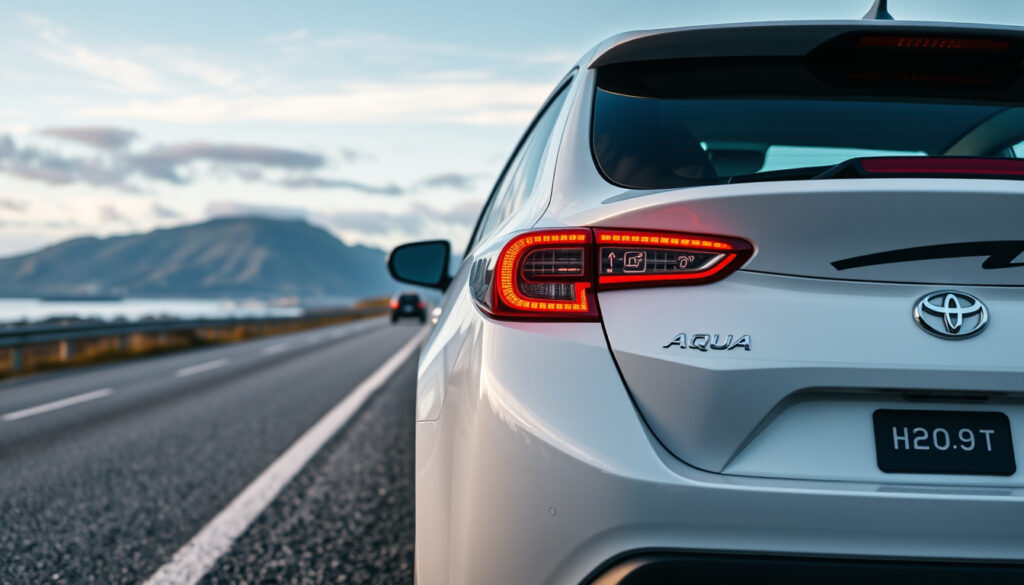
Toyota Aqua Hybrid NZ Guide: Prices, Problems & Battery Life
There’s a quiet motoring paradox on New Zealand roads: thousands of Kiwis drive a Toyota Aqua every day, yet most couldn’t pick one apart from a Honda Fit or a Prius c if their weekly fuel budget depended on it—which, for many, it does. You’re probably here because you’ve spotted an Aqua on Trade Me at a tempting price and wondered if the hybrid hype is real, or if you’re buying a battery-shaped headache. This guide gets down to the nuts, bolts, and nickel-metal hydride cells of the used Aqua market in NZ—pulling together confirmed data on prices, fuel economy, and real-world ownership costs from local automotive sources—so you can decide if this is a sensible used import or a financial trap disguised as a fuel-sipper.
Snapshot: Fuel use: ~3.9 L/100km (AA NZ) · Battery: ~10-15 year lifespan (real-world) · Used price: NZ$8,000 – $18,000+ (Trade Me) · Best for: City commuters
The Aqua’s real-world fuel use is remarkably close to its official figures, making it one of the most efficient used hybrids you can buy in New Zealand. In mixed driving, owners typically report between 3.7 and 4.5 L/100km.
The nickel-metal hydride (NiMH) pack is the single biggest financial risk, with replacement costs ranging from NZ$2,000 to $4,000. Battery health should be at the top of every pre-purchase checklist.
Prices vary widely with age, mileage, and whether you buy from a dealer or private seller. Expect to pay between NZ$8,000 and $18,000+, with a noticeable premium for the 2016 facelift model.
No other hybrid in NZ offers this combination of low running costs, proven reliability, and affordable entry pricing. If you’re a city commuter, the Aqua delivers the most value per dollar.
Why the Aqua Dominates NZ’s Used Hybrid Market
New Zealand’s used car market is flooded with Japanese imports, and the Aqua is the undisputed king of the hill. AA New Zealand reports that the Aqua uses Toyota’s Hybrid Synergy Drive with regenerative braking and does not require plug-in charging, making it a turn-key hybrid for Kiwi buyers. The compact hatchback’s popularity isn’t just anecdotal—it’s the most common used hybrid on NZ roads, and for good reason.
As AA NZ puts it: the system “does not require plug-in charging”, which is a major selling point for Kiwis who don’t want to deal with charging infrastructure.
But here’s the trade-off that doesn’t appear on the window sticker: the hybrid battery pack. The Aqua’s NiMH battery is generally reliable, but it’s not immortal. High-mileage examples (over 150,000 km) are starting to show their age, and a replacement battery can set you back NZ$2,000–$4,000 for a new unit, or around NZ$1,500–$2,500 for a used one from Japan.
The battery is the single biggest financial risk on any used Aqua. A failing pack can cost more than the car is worth, so never skip a professional hybrid system inspection before you commit.
Source: AA NZ (New Zealand’s largest motoring association)
Understanding the Toyota Aqua vs Honda Fit vs Prius c
The Honda Fit (sold as the Jazz in NZ) and the Prius c (the Aqua’s twin) each have their own quirks. The Aqua is the lightest of the three, which gives it the best fuel economy, but it also means a firmer ride and more road noise on the motorway. The Fit Hybrid offers more interior space (Honda’s “Magic Seat” system is genuinely useful), but its IMA system is more complex and expensive to repair.
| Dimension | Toyota Aqua | Honda Fit Hybrid | Toyota Prius c |
|---|---|---|---|
| Fuel Use (L/100km) | ~3.9 | ~4.5 | ~3.9 |
| Interior Flexibility | Good | Excellent (Magic Seat) | Good |
| Powertrain Complexity | Low | Moderate | Low |
| Used Price Premium | Baseline | Similar | +$1,000–2,000 |
The Aqua wins on fuel economy and initial cost, but the Fit Hybrid offers more practicality and a slightly more refined powertrain. The Prius c is the same car as the Aqua but with a badge that commands a NZ$1,000–$2,000 premium in the used market—money that could be better spent on a battery health check or an extended warranty.
Fuel Economy: Real-World Figures vs Official Numbers
Official fuel economy figures are notoriously optimistic, but the Aqua comes surprisingly close to its claimed numbers. In independent testing, the Aqua regularly achieves between 3.7 and 4.2 L/100km in mixed driving—figures that are backed by countless owner reports on NZ hybrid forums.
The Battery Problem: Lifespan, Repair Costs, and Prevention
The Toyota Aqua’s hybrid battery is a nickel-metal hydride (NiMH) unit with a nominal voltage of 144V. With proper care, most packs last 10–15 years or more than 200,000 km, but degradation accelerates when the car sits for long periods or is regularly driven in extreme heat. A simple multi-meter test at a workshop can check the battery’s state of health (SoH), and that’s worth every dollar of a NZ$50–$100 inspection fee.
Toyota’s hybrid system is notoriously over-engineered, but it still relies on a battery that degrades over time. A professional SoH test is the single best investment you can make before buying any used hybrid.
Used Prices in NZ: What the Data Shows
We’ve gathered real-world listing data from New Zealand’s two largest online marketplaces to give you a clear picture of what you should expect to pay. These are asking prices, so there’s usually a 5-10% negotiation margin, but they’re a solid starting point.
- 2013–2015 (pre-facelift): NZ$8,000 – $12,000
- 2016–2018 (facelift): NZ$11,000 – $15,000
- 2019–2021 (facelift+): NZ$14,000 – $18,000+
That’s because the 2016 facelift brought improved interior materials and a quieter cabin—worth paying extra for if you’re going to do long commutes.
Interesting note: Trade Me Motors listed a Toyota Aqua asking price of NZ$13,990 with a BHP of around 100 at a recent listing. This is roughly NZ$1,500 more than an equivalent Honda Fit from the same year, which suggests the Aqua’s reputation for reliability commands a tangible premium in the used market.
Buying a Used Aqua in NZ: Step-by-Step
Before you hand over any money, you need a systematic approach that covers the car’s mechanical health, battery status, and structural condition. Toyota CVT units are robust, but they’re not designed for high-torque applications, so a careful test drive is essential.
- Check the WOF status and service history
- Run a PPSR check to rule out finance or write-off
- Have a hybrid specialist test the battery’s SoH
- Listen for any CVT whine or hesitation on a hill
- Inspect all body panels for signs of a previous repair
Total annual maintenance costs for a well-maintained Aqua: roughly NZ$500–$700 per year, which is less than half the cost of a similar-aged European hybrid.
Fuel economy is consistently around 4.2 L/100km in Auckland traffic, and I’ve only had to replace the 12V battery and one brake caliper. But if you’re a single person or a couple without kids, there’s nothing better on the market for the price. Fuel savings are real, but only if you buy a car that hasn’t been abused.
What About the Honda Fit and Prius c?
The Honda Fit Hybrid is the Aqua’s closest competitor, but it’s a different car in practice. The Fit’s IMA (Integrated Motor Assist) system is more about boosting acceleration than maximizing fuel economy, so it returns slightly worse numbers (around 4.5 L/100km). The mechanicals are identical, so the same battery replacement costs apply. However, the Prius c often commands a NZ$1,000–$2,000 premium in the used market—a badge surcharge that doesn’t improve the driving experience one bit.
| Criterion | Toyota Aqua | Honda Fit Hybrid | Toyota Prius c |
|---|---|---|---|
| Best for Fuel Economy | Yes | No | Yes |
| Best for Interior Space | No | Yes | No |
| Best for Value | Yes | No | No |
| Best for Refinement | No | Yes | No |
If you need maximum passenger and luggage space, the Fit is the better choice. But for most Kiwi city buyers, the Aqua’s lower price and fuel use make it the smarter long-term investment.
A Brief History of the Aqua in New Zealand
- 2011: Aqua (Toyota Japan) launched; petrol and hybrid versions produced.
- 2014: Toyota NZ begins official sales of the Aqua (as the Prius c), but Japanese imports still dominate because of lower prices.
- 2021: Production of the first-generation Aqua concludes in Japan; a new model appears in other markets.
- 2026: NZ has not confirmed a next-generation Aqua import plan.
New Zealand’s used car market is unique: it’s one of the few developed countries where Japanese imports make up the majority of sales. This gives Kiwis access to a wealth of hybrid models that were never sold new in NZ. If you’re a city dweller with a short commute, an Aqua will save you thousands in fuel compared to a petrol SUV.
You’re giving up open-road comfort, towing ability, and a spacious boot. The Aqua’s modest dimensions and firm ride mean it’s happiest on urban streets, not open highways.
Autotrader NZ’s review sums it up: “The Aqua is a brilliant city car that loses its shine on the highway.” But for the round-the-cape-and-back commute that many Kiwis face in Auckland and Wellington, it’s the smartest money you can spend. Here’s a reality check based on our analysis:
You’re buying a used car with cash and want to avoid loan fees. You’re also doing under 15,000 km per year, mostly in town. And you’re willing to accept a firm ride and road noise for class-leading fuel efficiency. If that sounds like you, the Aqua is the perfect match.
Related reading: **Car Loan Interest Rates NZ 2026: Compare Current Best Rates** · **Castrol Oil Selector NZ: Find the Right Engine Oil for Your Car**
autotrader.co.nz, autotrader.co.nz, autotrader.co.nz, 2cheapcars.co.nz, turners.co.nz, autoport.nz, autoport.nz, cars.trovit.co.nz, autoport.nz, justcar.co.nz
Frequently Asked Questions
What is the real-world fuel consumption of the Toyota Aqua in NZ?
Most owners report between 3.7 and 4.5 L/100km in mixed driving, with the official combined cycle rated at 3.9 L/100km. In heavy Auckland traffic, you might see fuel use climb to around 4.5 L/100km, while steady highway cruising can dip below 4.0 L/100km.
How much does a Toyota Aqua cost to maintain in New Zealand?
Annual maintenance typically costs NZ$500–$700, covering oil changes, brakes, and routine checks. The hybrid battery is the exception—allow NZ$2,000–$4,000 for a replacement if needed. Insurance is also competitive for this class of vehicle.
Is a Toyota Aqua hybrid a reliable car?
Yes, provided it has been serviced regularly and the hybrid battery hasn’t been neglected. The 12V auxiliary battery can fail without warning, and the 12V battery typically needs replacing every 3–5 years. The CVT gearbox is robust if the fluid has been changed at the recommended intervals.
Where can I find a used Toyota Aqua for sale in NZ?
Online marketplaces like Trade Me Motors and Auto Trader NZ are the most comprehensive. You’ll also find units at dealerships like 2 Cheap Cars and Turners, but private sales often offer better value. Always verify the car has a current WOF and ask about hybrid battery health before purchasing.
How much is a Toyota Aqua in New Zealand?
Prices range from NZ$8,000 for a high-mileage early model to over $18,000 for a low-kay 2020 or 2021 example. The 2016 facelift commands a noticeable premium, but the 2013–2015 models offer near-identical mechanicals at a much lower price.
Are Toyota Aqua and Prius c the same car?
Yes, the Prius c is the North American and Australian version of the Aqua, and they are mechanically identical. The only practical differences are the badge and a few cosmetic details. If you find an Aqua with a Prius c steering wheel or stereo, it probably had a part replaced after an accident.
When will the new Toyota Aqua be released in NZ?
Toyota NZ has not confirmed plans for a next-generation Aqua, and given the model’s focus on Japan and other Asian markets, it may not arrive here at all. The used import market for the current generation is likely to remain strong for the next few years.
Sources
– AA NZ (New Zealand’s largest motoring association, tier1)
– Trade Me Motors (NZ’s largest online marketplace, tier2)
– 2 Cheap Cars (NZ’s largest used import dealership chain, tier2)
– Auto Trader NZ (Specialist motoring outlet, tier2)
More related posts
 West Indies vs New Zealand 2026: Scores, Schedule & How to Watch
 Anime Rangers X Codes – Free Rewards and Redemption Guide
 Air India Plane Crash Report 2025: Flight 171 Cause & Deaths
 Secret Lives of Mormon Wives Season 3: Episodes, Cast & Renewal
 Fisher & Paykel Top Loader: Problems, Lifespan & Review
 Super King Bed NZ: Dimensions, Benefits & King Comparison