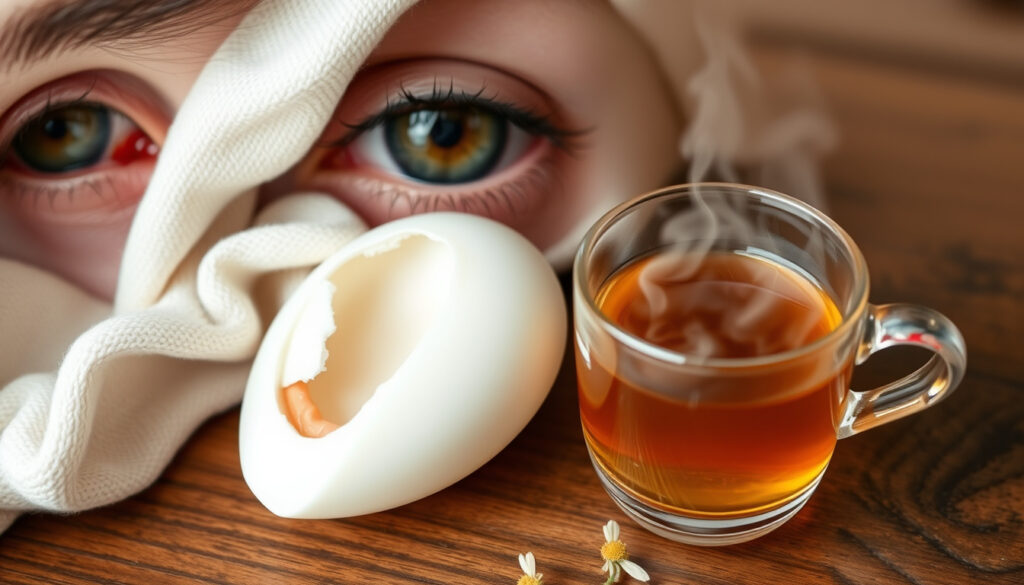
How to Get Rid of a Stye Fast: 3 Proven Home Treatments
Anyone who’s woken up with a tender, red lump on their eyelid knows the mix of annoyance and worry it brings. The good news is that most styes are harmless and treatable at home with a simple warm compress routine — a method backed by every major eye health organisation. This guide walks through the evidence-backed steps to speed up healing, separates fact from folklore, and helps you avoid common mistakes that can make things worse.
Common name: Stye (hordeolum) ·
Typical healing time without treatment: 7 to 10 days ·
Recommended warm compress duration: 5 to 10 minutes, 3 to 4 times daily ·
Leading cause: Bacterial infection (Staphylococcus aureus)
Quick snapshot
- Styes are caused by a bacterial infection of an eyelid oil gland (Mayo Clinic)
- Warm compresses are the primary evidence-based home treatment (Cleveland Clinic)
- Most styes resolve on their own within 1 to 2 weeks (Harvard Health)
- Whether green tea bags offer benefits beyond a standard warm compress is not clinically proven
- The precise role of stress in triggering styes is debated; evidence is largely correlational
- Day 1-2: Swelling and tenderness appear; start warm compresses immediately
- Day 5-7: Stye may rupture and drain on its own; swelling subsides
- After 7 days: Consult a doctor if no improvement
Six key facts about styes, one pattern: the condition is almost always bacterial, responds to heat, and resolves without medical intervention in the vast majority of cases.
| Label | Value |
|---|---|
| Medical Term | Hordeolum |
| Common Cause | Staphylococcus aureus infection |
| Usual Duration | 7 to 10 days |
| Key Home Remedy | Warm compress (5-10 min, 3-4x daily) |
| Typical Location | Upper or lower eyelid, inside or outside |
| Risk Groups | Individuals with blepharitis, diabetes, or high stress |
The pattern here is consistent: location and duration vary, but the treatment protocol remains the same regardless of where the stye sits.
How do you get rid of a stye fast?
Apply a warm compress
- Use a clean, damp washcloth at a comfortably warm temperature — not hot — and hold it over the closed eye for 5 to 10 minutes (NYU Langone Health). Re-wet the cloth when it loses heat (Mayo Clinic).
- Repeat this 3 to 4 times per day (GoodRx). The American Academy of Ophthalmology notes there are no set maximum-time guidelines, but most ophthalmologists recommend heat for about 5 minutes at a time (American Academy of Ophthalmology).
- Use a fresh cloth each time and never share it between eyes to avoid spreading bacteria (Cleveland Clinic).
Consistent warm compresses are the single most effective home treatment, backed by every major eye health organisation. The key is frequency — three to four times daily — not duration.
Clean your eyelid gently
- After each compress, use a clean finger or a cotton swab to gently massage the eyelid in a circular motion toward the lash line (Mayo Clinic).
- Wash hands thoroughly before and after touching the affected area (Rexall).
- Do not squeeze or try to puncture the stye — doing so can push bacteria deeper into the eyelid and cause cellulitis (Healthline).
Use over-the-counter pain relief
- If the stye is painful, ibuprofen or acetaminophen can help reduce discomfort (Cleveland Clinic).
- Avoid topical antibiotic ointments unless prescribed — they are not typically needed for a simple stye and may delay proper treatment.
What causes a stye and what can trigger them?
Bacterial infection from Staphylococcus aureus
- More than 90% of styes are caused by Staphylococcus aureus bacteria that infect an oil gland at the base of an eyelash (Mayo Clinic).
- An external stye forms on the outside of the eyelid at the lash follicle; an internal stye develops inside the eyelid against the eyeball and can be more painful.
Blepharitis and poor eyelid hygiene
- Chronic blepharitis — inflammation of the eyelid margins — is a major risk factor because it creates a favourable environment for bacterial overgrowth (Cleveland Clinic).
- Can a dirty pillow cause a stye? Yes — bacteria can transfer from a soiled pillowcase to the eyelid, especially if you sleep on your side or stomach (Rexall).
- Not removing eye makeup every night and using old or contaminated cosmetics can also introduce bacteria (Rexall).
Stress and a weakened immune system
- Being run down can lower your body’s resistance to infection, potentially triggering a stye — though the evidence for a direct causal link is correlational rather than definitive.
- People with diabetes or those who are immunocompromised are at higher risk for recurrent styes (University of Utah Health).
Squeezing a stye can push bacteria deeper into the eyelid, turning a minor infection into cellulitis that requires prescription antibiotics. If an internal stye does not begin to drain with compresses, never attempt to lance it yourself.
Will an eye stye go away on its own?
Typical healing timeline without treatment
- Most styes resolve in 7 to 10 days without medical intervention (Harvard Health).
- Can a stye heal in 24 hours? Unlikely — the infection needs time to come to a head and drain. Even with consistent warm compresses, the earliest improvement is usually seen on day 3 or 4.
- Warm compresses can shorten the course by encouraging the stye to drain naturally (American Academy of Ophthalmology).
Signs you need to see a doctor
- The stye does not improve after one week of home treatment (Rexall).
- Swelling spreads to the entire eyelid or cheek, pain increases, or your vision is affected (Harvard Health).
- A doctor may lance the stye with sterile equipment if it does not drain on its own (Rexall).
Do tea bags help styes?
How a used tea bag can act as a warm compress
- A warm, moist tea bag held over the closed eye can mimic the effect of a standard warm compress — the heat is the active ingredient (Harvard Health).
- Some believe that caffeine in black or green tea has anti-inflammatory properties that might reduce swelling, though this is not clinically proven.
Evidence and safety considerations
- No strong clinical evidence shows that tea bags are more effective than a clean washcloth for treating a stye (Cleveland Clinic).
- Always wrap the tea bag in a clean tissue or paper towel before applying it to the eyelid to avoid introducing bacteria from the bag’s surface.
- Do not use the same tea bag on both eyes, and discard it after a single use.
Tea bags are a convenient alternative but offer no proven advantage over a standard washcloth. The real benefit is the consistent heat — use whichever method you’ll stick with three to four times daily.
How to get rid of a stye on upper or bottom eyelid
Treating a stye on the upper eyelid
- The treatment protocol is identical regardless of whether the stye is on the upper or lower lid: warm compresses for 5 to 10 minutes, 3 to 4 times daily (University of Utah Health).
- For an upper-lid stye, gently massage the area downward toward the lash line after the compress to encourage drainage.
Treating a stye on the lower eyelid
- Same compress routine applies. For a lower-lid stye, massage upward toward the lash line after compressing (NYU Langone Health).
- How to draw a stye out? Continue warm compresses consistently — the stye will likely come to a head and drain naturally within a few days.
- Do not attempt to pop or squeeze it. If it does not drain, a doctor can lance it safely (Rexall).
Special care with eyelash extensions
- Getting rid of a stye with eyelash extensions requires extra gentle cleaning to avoid loosening the lashes or introducing bacteria.
- Use a clean, damp cotton pad instead of a washcloth, and avoid rubbing the lash line (Healthline).
- Do not apply new eyelash extensions until the stye has fully healed, and replace any mascara or eyeliner used during the infection to prevent reinfection (Rexall).
Timeline signal
| Period | What to expect |
|---|---|
| Day 1-2 | Swelling and tenderness appear; start warm compresses immediately (Mayo Clinic) |
| Day 3-4 | A small pus-filled lump becomes visible; compress to encourage drainage (Cleveland Clinic) |
| Day 5-7 | Stye may rupture and drain on its own; swelling subsides (Harvard Health) |
| After 7 days | Symptoms should resolve. If no improvement, consult a doctor (Rexall) |
The pattern: most styes follow a predictable arc from swelling to drainage. If the timeline stalls or worsens after day 7, that is the signal to seek medical care.
Clarity check
Confirmed facts
- Styes are caused by bacterial infection of an eyelid oil gland (Mayo Clinic)
- Warm compresses are the primary evidence-based home treatment (Cleveland Clinic)
- Most styes go away on their own in 1-2 weeks (Harvard Health)
- Do not squeeze or pop a stye (Healthline)
What’s unclear
- Whether green tea bags offer benefits beyond a standard warm compress is not clinically proven
- The precise role of stress in triggering styes is debated; evidence is largely correlational
Expert perspectives
“A warm compress applied for 10 to 15 minutes several times a day is the most effective home treatment for a stye. You can also take over-the-counter pain relievers like ibuprofen if needed.”
Cleveland Clinic (leading academic medical centre)
“Apply a warm washcloth over the closed eye for 5 to 10 minutes, then gently massage the eyelid. Repeat this 2 to 3 times a day to help the stye drain on its own.”
Mayo Clinic (tier 1 research hospital)
“Avoid wearing contact lenses and eye makeup while a stye is present. Throw away any eye makeup you used during the infection to prevent reinfection.”
Rexall (Canadian pharmacy and health guidance)
For anyone dealing with a stye, the choice is straightforward: commit to a consistent warm compress routine for three to four days, keep hands and pillowcases clean, and resist the urge to squeeze. Doing so can cut the typical healing time by half and avoid the complications that send people to the doctor. For Auckland readers, the same advice applies — if the stye hasn’t improved after 10 days, a visit to your GP or an optometrist is the next step.
Frequently asked questions
How can you tell if it is a stye or a chalazion?
A stye is usually painful, red, and sits at the lash line (external) or inside the eyelid (internal). A chalazion is a blocked oil gland that forms a firm, painless lump further from the lash line and develops more slowly (Harvard Health).
Can you use antibiotic ointment without a prescription for a stye?
Over-the-counter antibiotic ointments are not typically recommended for a simple stye. Warm compresses are the first-line treatment. If a doctor prescribes an antibiotic, it is usually for recurrent or severe cases (Cleveland Clinic).
Is it safe to wear contact lenses with a stye?
No — avoid wearing contact lenses until the stye has fully healed. Switch to glasses to prevent introducing bacteria to the eye and to avoid further irritation (Rexall).
Can a stye cause vision problems?
Most styes do not affect vision. If the swelling spreads to the entire eyelid, or if you experience blurred vision, seek medical attention promptly — this could indicate cellulitis or another complication (Harvard Health).
What is the difference between an internal and external stye?
An external stye forms at the base of an eyelash, is visible from the outside, and often comes to a head quickly. An internal stye develops inside the eyelid on the oil gland, is more painful, takes longer to resolve, and may require medical drainage if it does not drain on its own (NYU Langone Health).
How can you prevent a stye from coming back?
Wash hands before touching your eyes, remove eye makeup every night, replace mascara and eyeliner every 3 months, wash pillowcases weekly, and manage blepharitis if you have it (Rexall).
Is it okay to use eye makeup when you have a stye?
No — avoid all eye makeup (mascara, eyeliner, eyeshadow) until the stye has completely healed. Throw away any products you used during the infection to prevent reinfection (Rexall).
More related posts
 Mac and Cheese Recipe NZ: Tips, Best Cheeses & Easy Methods
 Dresses for Wedding Guest – 2025 Dress Code Guide
 School Holidays 2025 Australia: Term Dates by State
 Secret Lives of Mormon Wives Season 3: Episodes, Cast & Renewal
 Street Fighter Movie 2026: Cast, Release Date, and Updates
 Best Down Duvet Inner NZ: Buying Guide & Top Picks
 Doubtful Sound Overnight Cruise: Worth It? Guide & Reviews
 What Do Cockroaches Eat? Diet, Favorite Foods & Facts