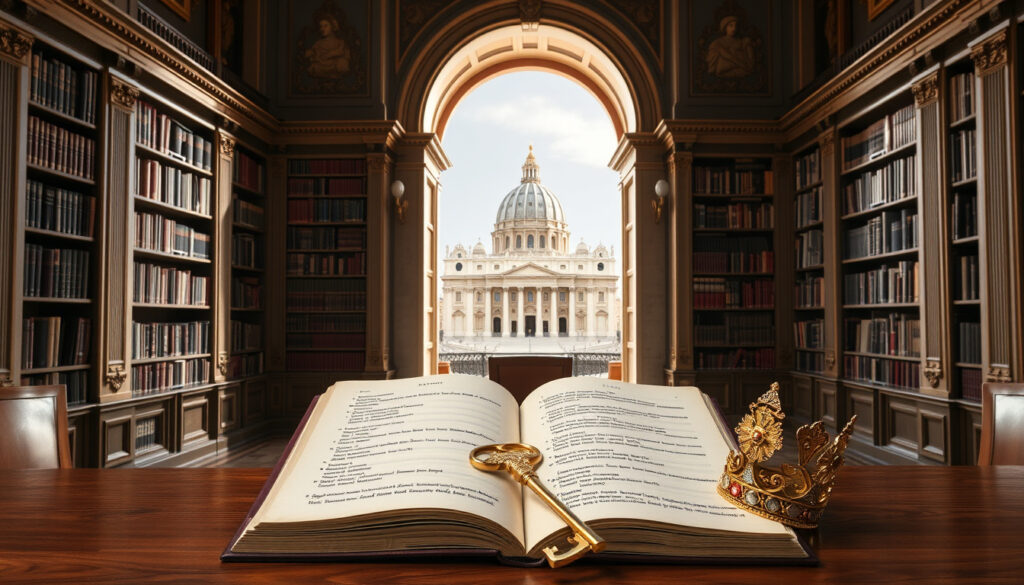
How Many Popes Have There Been? Total Count and Fascinating Facts
Ask the same question in two different pews and you’ll get two different numbers: 266, 267, or even 268, because the answer depends on which list you trust, how you count a pope who died before his consecration, and what you do with a pope who served three separate times. What stays constant is the thread — a succession that runs from St. Peter in the first century to Leo XIV, elected in May 2025 as the 267th pope on the commonly cited list.
Total (common list): 267 with Leo XIV ·
Count through Francis: 266 ·
Current pope: Leo XIV (since May 2025) ·
First pope: St. Peter (1st century) ·
Longest reign: Pius IX (31 years) ·
Shortest reign: Urban VII (13 days)
Quick snapshot
- Leo XIV is the 267th pope on the commonly cited list (Nelson MCBS (papal list catalog)).
- Francis was conventionally counted as the 266th (GCatholic (Catholic data site)).
- The succession begins with St. Peter as pope number one (The Times of India (Indian daily)).
- Stephen II died before consecration, so many modern lists exclude him (Wikipedia (crowd-sourced reference)).
- Benedict IX appears three separate times, which inflates the entry count (Pope History (papal database)).
- 8 May 2025 — Leo XIV was elected, moving the commonly cited count to 267 (TODAY.com (U.S. news site)).
- The entry-count vs. individual-count gap will keep papal totals contested (Nelson MCBS (papal list catalog)).
- The next election will move every total up by one.
Six rows, one pattern: the total changes with the counting convention, not with the history.
| Label | Value |
|---|---|
| Current pope | Leo XIV, 267th on the common list (Pope History (papal database)) |
| First pope | St. Peter, first century (The Times of India (Indian daily)) |
| Count through Francis | 266 (Newsweek (U.S. news magazine)) |
| Count with Leo XIV | 267 (Nelson MCBS (papal list catalog)) |
| Longest reign | Pius IX, 1846-1878, about 31 years (AS (Spanish daily)) |
| Shortest reign | Urban VII, 1590, 13 days (AS (Spanish daily)) |
How many popes have there been since Peter?
The short answer is 267 — with a built-in “it depends.” The conventional list counts St. Peter as pope number one, with his dates usually placed in the first century (GCatholic (Catholic data site)).
Number of popes from Peter to Francis
- Counting through Francis, before the May 2025 conclave, the mainstream total was 266 (Newsweek (U.S. news magazine)). The Times of India’s full list from the same period makes the same count (The Times of India (Indian daily)).
- Adding Leo XIV, the commonly cited total becomes 267 — the number used by catalogs like Nelson MCBS’s “All 267 Popes” (Nelson MCBS (papal list catalog)).
- The 266/267 split isn’t a typo: numbering was not continuously standardized from the beginning of the papacy (Wikipedia (crowd-sourced reference)). Even the first few names wobble — the third pope appears in older lists as Anacletus or Cletus.
What makes the count feel slippery is that “how many popes” can mean three different things: how many numbered entries a list holds, how many individual men held the office, and how many were legitimate in the eyes of later historians. The three totals are not the same.
Disputed counts including antipopes
The catch with “267” is that two careful people can look at the same history and count differently. One is counting entries; the other is counting men.
- Benedict IX alone appears three separate times on the list, so the roster of entries runs longer than the roster of men.
- Stephen II, elected in the eighth century, died before consecration — some lists give him a number, and those lists run one entry higher.
- Antipopes add another layer: rival claimants during schisms are excluded from the official line, but they surface in older timelines and inflate some historical totals.
The pattern is worth stating plainly: in papal counting, the source of disagreement is rarely history and almost always bookkeeping.
The pattern: the number follows the list, and the list follows the convention.
Who is the 267th pope?
As of May 2025, the commonly cited answer is Leo XIV — number 267 in the sequence that runs Francis (266) to Leo XIV (267) (Nelson MCBS (papal list catalog)).
Pope Leo XIV and the 2025 transition
- Newsweek’s pre-conclave timeline described Francis — first elected in 2013 — as the 266th pope and St. Peter as the first (Newsweek (U.S. news magazine)).
- With Leo XIV added to that same line, the total moved to 267 — the number now used by the most popular papal lists.
Why some lists called Francis the 267th
- Lists built on the Vatican’s Annuario Pontificio have carried 267 numbered entries, which is why Francis appeared as No. 267 in some references.
- Mainstream outlets counted the same history as 266 through Francis, treating the yearbook’s method as one convention among several.
- The difference is small in number and large in optics: “the 267th pope” stopped meaning Francis in May 2025.
The implication: the number attached to a pope depends on which ledger you open — and the ledger changed at the 2025 conclave.
Who was the first Black pope?
Two early popes anchor the “first Black pope” question: Victor I (189-199) and Miltiades (311-314), both described in early papal records as coming from Africa (AS (Spanish daily)).
Pope Victor I, 189-199
- Victor I is the pope most often called the first Black pope; his African origin is the reason the question starts with him.
- His reign closed the second century, and he appears in every standard list of early popes, usually with his dates given as 189-199.
Victor also matters for the count itself: he is an early example of a pope whose dates are secure even when the details of his biography are thin.
Pope Miltiades, 311-314
- Miltiades is the second name in the conversation — another early pope of African descent, reigning just before Constantine’s favor reshaped the church’s position in the empire.
The caveat, stated honestly: “Black” is a modern label, and historians apply it cautiously to ancient figures. What the early records support is African origin; what popular lists add is the modern shorthand.
What pope had a child?
It is the scandal-adjacent trivia question that keeps resurfacing, and the historical record obliges: several popes were fathers, and papal fatherhood was once part of the political furniture.
Popes who were fathers
- Alexander VI (1492-1503) acknowledged several children, and their careers shaped Renaissance Italy and the Vatican’s alliances.
- Pius IX — the same pope who later set the record for the longest reign — had a son before he entered the priesthood.
The deeper point is that the Renaissance papacy operated like a family firm. Fatherhood was not the secret; the scandal was how openly heirs were promoted.
Has any pope ever had a wife?
- In the church’s first centuries, married men were ordained, and several early popes were married before priestly celibacy became the rule.
- The modern answer is simpler: no recent pope has been married, because the celibacy requirement applies before ordination.
The “pope had a child” headline flattens a deeper pattern: for much of papal history, dynasties, nephews, and acknowledged children were part of how the office worked — not a shameful footnote.
The pattern: the rules changed, so the same office looks different across centuries.
What is the Pope’s salary?
Few papal facts get more search traffic than the salary question, and the answer is not what most people expect. The pope does not draw a salary in the way a head of government does.
No formal salary, but a supported life
- The pope receives no formal salary from Vatican accounts.
- The Vatican covers his food, housing, transportation, and household expenses.
- He receives a monthly personal allowance for discretionary needs, according to reporting on Vatican finances.
The catch: the Vatican does not publish a “papal compensation” line item, so the exact allowance figure circulates as reporting rather than as official budget data.
For a pope, “no salary” is a technicality. The real compensation is institutional support that arrives without a pay stub — and it comes with the office, not with a contract.
The implication: the salary question gets an answer only if the office’s support structure is counted as compensation.
Which celebrities met the Pope?
A conclave always brings its own entertainment, and the internet’s favorite papal genre is the celebrity meeting. The most searched connection is Justin Bieber, which is also the most misunderstood.
Justin Bieber and the Pope: no direct relation, just a meeting
- Justin Bieber met Pope Francis in 2015.
- The “related to the Pope” search is a mix-up: Bieber is not related to Francis; a famous meeting became a family rumor.
- Bieber’s own faith is Protestant Christianity, not Catholicism.
The pop-religion file: Swift, Gomez, Grande, Bieber
- Taylor Swift was raised in a Protestant church.
- Selena Gomez was raised Catholic and attended a Catholic school.
- Ariana Grande has expressed belief in God without aligning herself to a specific Christian denomination.
- Hailey Bieber was raised Christian.
One accuracy note for the Swifties: despite persistent search interest, there is no confirmed report of Taylor Swift meeting the pope. The curiosity is real; the meeting is not.
Every papal trip produces a fresh wave of celebrity-meeting headlines. The useful distinction — “met the Pope” vs. “related to the Pope” — rarely survives the caption.
The pattern: proximity and kinship are different facts, and search queries keep blurring them.
Timeline signal: the dates behind the count
Four moments hold the count together.
- 1st century: St. Peter is counted as the first pope (GCatholic (Catholic data site)).
- 189-199 / 311-314: Victor I and Miltiades — the two popes at the center of the “first Black pope” discussion.
- 1590 / 1846-1878: the extremes — Urban VII’s 13-day reign, then Pius IX’s 31-year reign.
- 8 May 2025: Leo XIV (Robert Francis Prevost) is elected, moving the commonly cited count from 266 to 267 (TODAY.com (U.S. news site)).
Confirmed facts
- St. Peter is counted as the first pope (GCatholic (Catholic data site)).
- Mainstream pre-2025 lists put Francis at No. 266 (Newsweek (U.S. news magazine)).
- The post-2025 common list puts Leo XIV at No. 267 (TODAY.com (U.S. news site)).
- Benedict IX appears three times, so entries are not individuals (Pope History (papal database)).
What’s unclear
- Whether the real total is 266, 267, or 268 depends on Stephen II and the antipope question (Wikipedia (crowd-sourced reference)).
- Some early popes’ exact dates are not firmly established (GCatholic (Catholic data site)).
- The Vatican’s yearbook entry count has differed from mainstream totals (Pope History (papal database)).
- The pope’s salary is reported rather than officially itemized.
The pattern: the timeline is stable; only the tally shifts.
Voices on the count
“The numbering of popes was not continuously standardized from the beginning of the papacy.”
The List of popes article on Wikipedia (Wikipedia (crowd-sourced reference))
“Some lists cite 268 rather than 267 because of the disputed status of Stephen II, who died shortly after election and before consecration.”
Pope History (papal database)
So how many popes have there been? The honest answer is a trifecta: 266 through Francis, 267 with Leo XIV, and 268 on lists that give Stephen II a number. None of those totals is a mistake — they are different counting conventions doing exactly what they were built to do.
For anyone quoting a papal total in a paper, a sermon, or a trivia-night answer, the choice is clear: say “267 as of Leo XIV,” or name the list you are using and let 266, 267, or 268 speak for itself.
The pattern: every authority names a convention, not a hidden truth.
Frequently asked questions
How many popes have there been in the 20th century?
Nine popes served at some point during the 20th century, from Leo XIII, who was still pope when the century opened, to John Paul II, who died in 2005.
How many popes have there been since 1948?
Eight men have served as pope since 1948: Pius XII, who was already in office in that year, followed by John XXIII, Paul VI, John Paul I, John Paul II, Benedict XVI, Francis, and Leo XIV.
How many popes were there in the last 100 years?
Nine popes have been elected in roughly the last century, from Pius XI in 1922 through Leo XIV in 2025.
Is Pope Francis the 266th or the 267th pope?
Both numbers appear in reputable references. Mainstream lists counted Francis as the 266th pope; lists built on the Vatican’s Annuario Pontificio carried 267 entries, which is why Francis was sometimes numbered 267th. After Leo XIV’s election in 2025, the commonly cited sequence reads Francis (266) to Leo XIV (267).
Why do some lists say there have been 268 popes?
Because of Stephen II, an eighth-century pope-elect who died before his consecration. Lists that number him as a pope run one entry higher, which is why some totals reach 268.
How many popes have been saints?
Roughly 80 popes are recognized as saints in the church’s liturgical calendar, most of them from the early Christian centuries; canonizations of modern popes are rare exceptions.
More related posts
 What Is a Dead Pixel? Causes, Detection, and Fixes
 Flights to Gold Coast from Auckland: Times, Tips & Airlines
 Missing Person Found Dead Today in NZ: Mangōnui Case
 Redmi 1S to Buy: Price, Specs & Is It Still Worth It
 How to Organize Kitchen Pantry: 7 Zones, Deep Shelves, Tips
 WWE Hall of Fame 2025: Inductees & Ceremony Recap
 NZ Interest Rates Forecast 2026-2028: Drop or Rise
 Rose Park Hotel Auckland: Reviews, Location & Prices