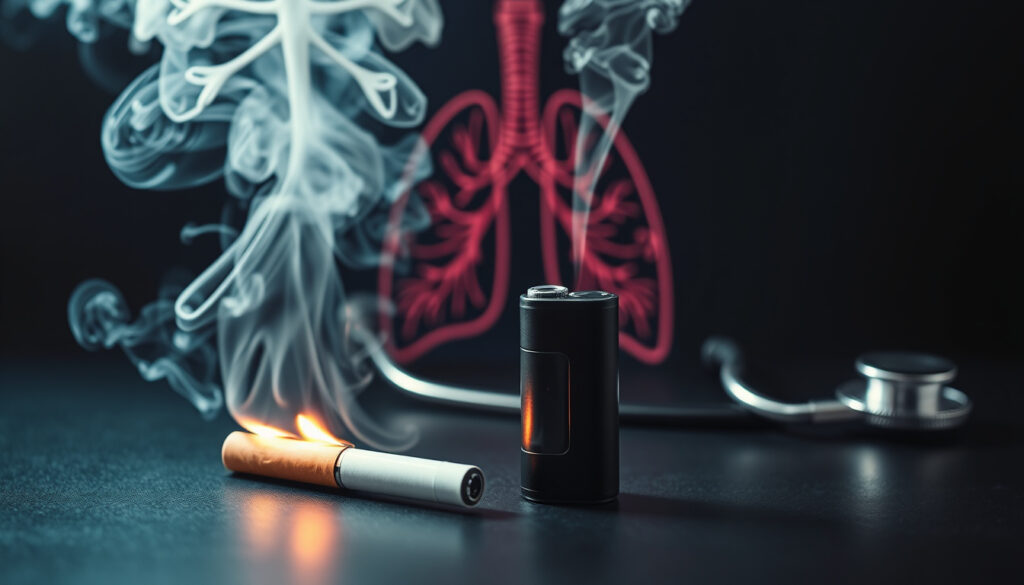
Is Vaping Worse Than Smoking? Facts and Risks
Few questions spark as much debate as whether vaping is worse than smoking. With smoking’s well-documented toll and vaping’s rapid rise, many people want a straight answer on which choice carries fewer risks — so we sifted through the latest research from leading health authorities to give you an evidence-based comparison that goes beyond the headlines.
EVALI cases in 2019: nearly 500 ·
Vaping and smoking similarity: similar lung and heart effects ·
Nicotine levels in vapes: can be higher than cigarettes
Quick snapshot
- Smoking: thousands of toxic chemicals, including many known carcinogens (American Cancer Society)
- Vaping: fewer chemicals, but includes nicotine, heavy metals, and ultrafine particles (American Lung Association)
- Smoking: proven cause of lung cancer, COPD, and heart disease (American Cancer Society)
- Vaping: linked to EVALI, lung inflammation, and cardiovascular effects (University of Utah Health)
- Smoking: high addiction due to rapid nicotine delivery to the brain (American Heart Association)
- Vaping: variable, but high-nicotine salts can cause rapid dependence (Johns Hopkins Medicine)
- Smoking: heavily regulated, taxed, age-restricted worldwide (American Cancer Society)
- Vaping: varying regulations, age restrictions in many countries, but less consistent oversight (Yale Medicine)
Here are the key facts comparing vaping and smoking at a glance.
| Attribute | Value |
|---|---|
| Cigarette chemicals | 7,000 (American Cancer Society) |
| Known carcinogens in cigarettes | 70 (American Cancer Society) |
| UK health body position | Vaping is less harmful than smoking (American Heart Association) |
| Years of widespread vaping | ~15-20 (PubMed Central 2023) |
| Nicotine in typical cigarette | ~10-12 mg (American Heart Association) |
| Nicotine in typical vape pod (5%) | ~40 mg per pod (Henry Ford Health) |
Which is worse for you, vaping or smoking?
Short-term health effects
- Smoking immediately raises heart rate and blood pressure, damages lung tissue, and exposes the body to thousands of chemicals. The American Heart Association states that both smoking and vaping introduce harmful substances into the lungs.
- Vaping can cause acute lung injury, known as EVALI, with symptoms like cough, chest pain, and shortness of breath. Yale Medicine reports that EVALI can develop rapidly in otherwise healthy individuals.
Long-term unknowns
- Smoking’s long-term effects are well-documented: lung cancer, COPD, heart disease, and stroke. The American Lung Association confirms that e-cigarette aerosol contains toxic substances that may harm the lungs over time.
- Vaping has only been widespread for about 15-20 years. A 2023 review in PubMed Central concludes that there is still insufficient evidence on long-term respiratory effects.
The trade-off is clear: smoking kills millions each year with certainty, while vaping’s long-term toll remains an open question. For a smoker, switching to vaping reduces exposure to combustion toxins; for a never-smoker, vaping introduces preventable risk.
The implication: for smokers, switching to vaping reduces immediate risk, but non-smokers gain no benefit.
How many puffs of a vape is equal to 1 cigarette?
Nicotine delivery differences
Cigarettes deliver nicotine rapidly through the lungs, with peak blood levels reached within minutes. Vapes vary widely: the device, coil resistance, wattage, and e-liquid composition all affect how much nicotine reaches the bloodstream. Henry Ford Health notes that some e-cigarettes can deliver higher concentrations of nicotine than traditional cigarettes, making puff equivalency highly variable.
Device and e-liquid variability
- A standard 5% nicotine salt pod (e.g., JUUL) contains about 40 mg of nicotine per pod, roughly equivalent to a pack of cigarettes.
- Typical estimate: 10-15 puffs of a 5% nicotine vape ≈ 1 cigarette, but this depends on puff duration, inhalation depth, and tolerance.
- The American Cancer Society emphasizes that nicotine addiction is a risk regardless of the delivery method.
The implication: there is no universal conversion. Anyone trying to switch should monitor their own nicotine intake and aim to reduce it over time.
Will my lungs heal if I vape instead of smoking?
Lung recovery after quitting smoking
The lungs have an impressive ability to repair once smoking stops. Cilia regrow, inflammation decreases, and the risk of respiratory infections drops. Johns Hopkins Medicine reports that vaping can still introduce irritants and potential damage, so healing may be incomplete if vaping continues.
Vaping’s impact on lung tissue
- Diacetyl, a chemical found in some vape flavors, has been linked to “popcorn lung” — permanent scarring of small airways (Johns Hopkins Medicine).
- A 2025 report from ASBMB Today links nicotine exposure through e-cigarettes to irreversible lung damage via free radicals.
Switching from smoking to vaping removes combustion toxins, but the aerosol still carries chemicals that can cause lung injury. Complete healing requires total cessation of inhaled substances, not just substitution.
The pattern: complete lung healing requires total cessation, not substitution.
Is vaping better for blood pressure than cigarettes?
Nicotine and cardiovascular effects
Nicotine itself is a vasoconstrictor that raises blood pressure and heart rate, regardless of how it’s delivered. Both smoking and vaping trigger acute increases in blood pressure. A 2020 review in PubMed Central found similar effects on cardiovascular function between the two.
Short-term vs long-term blood pressure changes
- Smoking has a cumulative effect on arterial stiffness and hypertension risk over decades.
- Vaping’s long-term cardiovascular impact is still being studied, but early evidence suggests it may be less harmful than smoking in the short term. The American Heart Association says there is not enough evidence to conclude vaping is safe for the heart.
The pattern: any nicotine use stresses the cardiovascular system. For heavy smokers transitioning to vaping, blood pressure may improve as combustion-related toxins are eliminated, but the benefit is partly offset by the continued nicotine effect.
Is vaping more addictive than cigarettes?
Nicotine absorption speed
Cigarette smoke delivers nicotine to the brain within 10 seconds, creating a powerful reinforcement. Vaping devices can deliver nicotine almost as fast, especially with high-nicotine salt formulations. Johns Hopkins Medicine describes nicotine in e-cigarettes as “highly addictive.”
Addiction potential comparison
- The Centers for Disease Control and Prevention (CDC) linked the 2019 EVALI outbreak to youth use of vaping products, highlighting how quickly dependence can develop (Boston University The Brink).
- Some devices allow users to increase nicotine strength or puff more frequently, potentially raising addiction risk above that of cigarettes.
The trade-off: smoking delivers nicotine faster, but the flexibility of vaping can lead to higher total nicotine intake per day. Both carry addiction risks, and the most addictive delivery method depends on user behavior.
Upsides
- Vaping exposes users to fewer toxic chemicals than combustible cigarettes (American Lung Association)
- Switching from smoking to vaping can reduce respiratory symptoms and improve lung function in the short term
- Vaping may help some smokers quit when used as a formal cessation aid under medical guidance
Downsides
- Vaping still delivers nicotine and harmful chemicals (American Heart Association)
- Risk of EVALI and lung injury, especially with unregulated products (Yale Medicine)
- Long-term health effects remain unknown — less than 20 years of data available
- May lead to nicotine addiction in non-smokers, particularly youth
Confirmed facts
- Cigarette smoking causes lung cancer, heart disease, and COPD (American Heart Association)
- Vaping exposes users to toxic substances that may harm the lungs (American Lung Association)
- Nicotine is addictive in both forms (Johns Hopkins Medicine)
What’s unclear
- The 2019 EVALI outbreak involved nearly 500 cases and five confirmed deaths (Baptist Health)
- Long-term health effects of vaping beyond 20 years (PubMed Central 2023)
- Exact puff equivalency between vapes and cigarettes (Henry Ford Health)
- Whether vaping leads to smoking initiation in non-smokers at the population level (Boston University The Brink)
- Whether vaping causes irreversible lung damage in the long term (ASBMB Today 2025)
“Vaping is less harmful than smoking, but it is not harmless.”
American Heart Association
“The aerosol from e-cigarettes can contain harmful and potentially harmful substances, including nicotine, heavy metals, and cancer-causing chemicals.”
American Lung Association
“If you are a non-smoker, don’t start vaping. If you smoke, switching completely to vaping can reduce your exposure to harmful chemicals.”
Johns Hopkins Medicine
“The 2019 EVALI outbreak showed that vaping, especially with unregulated products, can cause serious lung disease in young people.”
Yale Medicine
For a current smoker considering a switch, the available evidence suggests that vaping reduces exposure to the most dangerous combustion byproducts. But for a never-smoker — especially a young person — the verdict is clear: avoid both. The respiratory and cardiovascular consequences of vaping may not surface for decades, as they did with cigarettes. For anyone who does not already smoke, the only safe choice is to never start vaping.
For a detailed expert breakdown comparing vaping and smoking, see our guide on comparing vaping and smoking.
Frequently asked questions
Can vaping cause popcorn lung?
Yes. Diacetyl, a chemical used in some vape flavors, has been linked to bronchiolitis obliterans, known as “popcorn lung.” Johns Hopkins Medicine notes that diacetyl exposure can cause permanent scarring in the smallest airways.
Is secondhand vape aerosol harmful?
The aerosol exhaled from e-cigarettes contains nicotine, heavy metals, and fine particles. According to the American Lung Association, it poses health risks to bystanders, particularly those with respiratory conditions.
Does vaping help you quit smoking?
Some people use vaping as a cessation tool, and public health agencies in the UK endorse it as a harm-reduction strategy for smokers. However, the American Cancer Society cautions that the effectiveness varies and that people who use both products do not reduce their health risks.
What are the side effects of vaping?
Common side effects include coughing, dry mouth, throat irritation, and headaches. More serious effects include lung injury (EVALI) and cardiovascular strain from nicotine. Yale Medicine lists shortness of breath, chest pain, and nausea as warning signs.
Is vaping legal for minors?
In the United States, the federal minimum age to purchase vaping products is 21. Many countries enforce similar age restrictions. Despite these laws, youth vaping rates have been high, prompting regulatory crackdowns.
How long does nicotine stay in your system from vaping?
Nicotine’s half-life is about 2 hours, but its metabolite cotinine can be detected for days. Cotinine may appear in urine for up to 3-4 days after last use, depending on frequency and dosage.
Can you get nicotine poisoning from vaping?
Yes. Ingesting or inhaling high concentrations of nicotine from e-liquids can cause nicotine poisoning, with symptoms including nausea, vomiting, increased heart rate, and seizures. The American Heart Association warns that children are especially vulnerable to accidental exposure.
More related posts
 Sex on the Beach Cocktail: Recipe, Ingredients, and Tips
 Houses for Sale in Auckland – Budget Under $500k to $800k
 West Coast Wildlife Centre: See Kiwi in Franz Josef | Guide & Tickets
 NZ Screen Awards Guest Aggressive: Arrest and Trespass
 Canterbury Red Wind Warning: 160km/h Gusts Hit NZ
 Countdown Mailer This Week – Step-by-Step Setup Guide
 Castrol Oil Selector NZ: Find the Right Engine Oil for Your Car