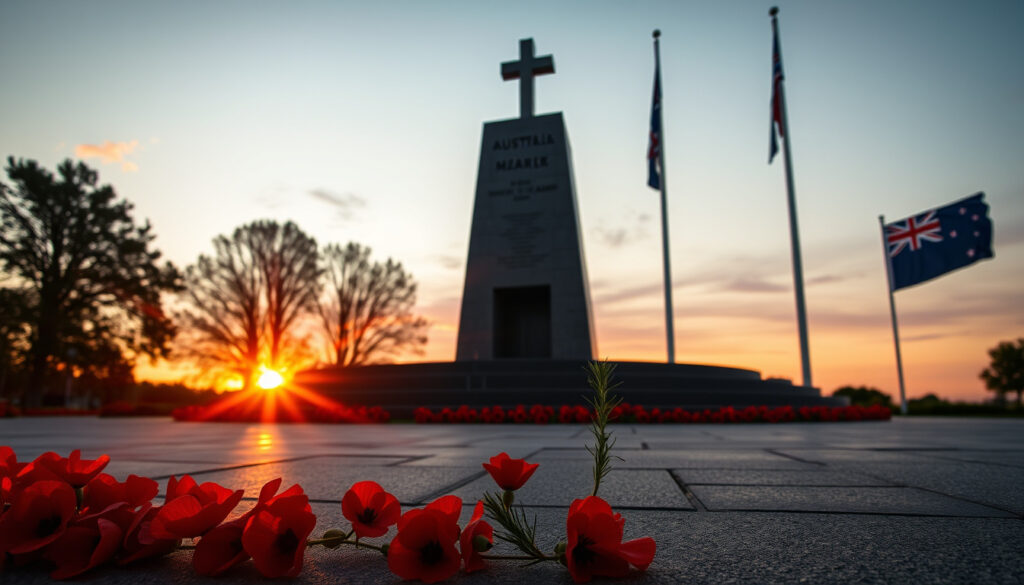
What Day is Anzac Day? Date, History & Traditions
There’s a date that stops two nations each year — not for celebration, but for something quieter, more deliberate. April 25 is Anzac Day, and whether you’re Australian or New Zealander, the question “what day is anzac day” is one most people answer from memory.
Date observed: 25 April ·
First observed: 1916 ·
Countries: Australia, New Zealand ·
Commemorates: Australian and New Zealand soldiers who died in war
Quick snapshot
- Anzac Day is observed on 25 April each year (Australian Department of Veterans’ Affairs — official portal)
- First observed in 1916 (New Zealand Parliament)
- Public holiday in New Zealand and Australia (New Zealand Parliament)
- Exact casualty numbers at Gallipoli vary by source (Parliament of Australia)
- Who was primarily to blame for the campaign’s failure remains debated (Parliament of Australia)
- The exact number of ANZAC troops that landed on the first day is uncertain (Parliament of Australia)
- 25 April 1915 — Gallipoli landing (Anzac Portal — DVA)
- 1916 — First observance (National Museum of Australia)
- 1927 — Public holiday in every Australian state (National Museum of Australia)
- Anzac Day 2025 falls on Friday 25 April — a long weekend in both countries (Anzac Portal — DVA)
- Dawn services and marches across Australia and New Zealand (Australian War Memorial)
Here is a quick reference overview of the core details of Anzac Day.
| Label | Value |
|---|---|
| Observed on | 25 April |
| First observed | 1916 |
| Also called | Anzac Day |
| Type | National day of remembrance |
| Significance | Commemorates Australian and New Zealand soldiers who died in war |
What day is Anzac Day?
Anzac Day falls on 25 April every year — no shifting, no long-weekend scheduling. That fixed date is enshrined in legislation in both New Zealand and Australia, tracing back to the first anniversary of the Gallipoli landing.
Is Anzac Day always on April 25?
Yes. Unlike some public holidays that land on a Monday, Anzac Day is tethered to the calendar date. When 25 April falls on a weekend, the public holiday is observed on the actual date in most jurisdictions, though each Australian state has its own legislation for substitute holidays (Anzac Portal — Australian Department of Veterans’ Affairs).
What year did Anzac Day start?
The first official Anzac Day was observed on 25 April 1916 — exactly one year after the landings. In New Zealand, it was a half-day holiday (New Zealand Parliament). In Australia, Acting Prime Minister George Pearce officially named the day in 1916 (National Museum of Australia).
The date is April 25, full stop. For anyone planning ahead for Anzac Day 2025 or Anzac Day Australia 2026, mark the calendar: it’s a Friday in 2025, giving a three-day weekend in both countries.
The pattern is clear: Anzac Day is fixed to the calendar, and its observance is rooted in a specific historical event.
Why is Anzac Day celebrated on April 25th?
The date was not chosen by committee. It marks the moment on 25 April 1915 when Australian and New Zealand Army Corps (ANZAC) troops landed at a place that would become known as Anzac Cove on the Gallipoli Peninsula.
What happened on April 25, 1915?
At dawn on that day, the first wave of ANZAC troops came ashore under fire from Turkish defenders. The landing was intended to support a broader Allied campaign to capture the Ottoman capital, Constantinople. Instead, they faced steep cliffs and fierce resistance. The fighting at Gallipoli continued for eight months (Anzac Portal — DVA).
Why was the date chosen?
The date commemorates the first major military action fought by independent Australian and New Zealand forces during the First World War. As the Australian War Memorial notes, it began as a commemoration of that single battle and has since broadened to honor all conflicts involving both nations.
It began as a commemoration of that single battle and has since broadened to honor all conflicts involving both nations.
Australian War Memorial
The Gallipoli campaign was a military failure — Allied forces withdrew in December 1915 after massive casualties. Yet that failure became the founding story of national identity for both Australia and New Zealand.
The implication is that a military failure became a source of national pride.
What actually happened on Anzac Day?
Strictly speaking, “Anzac Day” refers to the commemoration, not the battle itself. But the question often blends both. Here’s what actually unfolded.
What was the Gallipoli campaign?
The Gallipoli campaign was an Allied operation launched in April 1915 with the goal of opening a sea route to Russia and capturing Constantinople. The plan was devised by Winston Churchill, then First Lord of the Admiralty. The ANZAC troops formed part of a larger British, French, and Commonwealth force. By January 1916, after months of stalemate and heavy casualties on both sides, the Allies evacuated the peninsula.
Where is Anzac Cove?
Anzac Cove is a small beach and bay on the Gallipoli Peninsula in modern-day Turkey. The landing site was narrow — only about 600 metres long — and overlooked by steep hills, making the operation incredibly dangerous. Today, the area is a memorial site visited by thousands each year for the Anzac Day dawn service.
Gallipoli was a terrible tragedy.
Winston Churchill, in his memoirs
Key figures at Gallipoli, including General Sir Ian Hamilton, later described the campaign as a combination of bravery and flawed planning. Churchill himself called Gallipoli “a terrible tragedy” in his memoirs.
What this means is that the day’s meaning has expanded far beyond the original battle.
What are you supposed to do on Anzac Day?
The traditions have evolved over a century, but there’s a standard calendar of observances that millions follow each year. The day is structured, solemn, and, for many, personal.
What is a dawn service?
The dawn service is the best-known tradition — a commemorative ceremony held at war memorials starting before sunrise. It mirrors the timing of the Gallipoli landing at dawn. Services include prayers, the Last Post bugle call, a minute of silence, and the laying of wreaths (Australian War Memorial).
What are the traditions of Anzac Day?
- Two-minute silence — observed at 11 am in Australia (matching the time of the Gallipoli landing’s official end) or at dawn in many New Zealand services.
- Marching — veterans, current service members, and descendants march through towns and cities (Australian War Memorial).
- Wearing of rosemary — a sprig of rosemary is worn as a symbol of remembrance, especially in Australia.
- Red poppies — sold as fundraisers, echoing Remembrance Day symbolism.
- Anzac Day football matches — in Australia, the annual AFL and NRL matches on Anzac Day draw huge crowds.
- Find a local dawn service and plan to arrive before sunrise.
- Observe the two-minute silence at the designated time.
- Wear a sprig of rosemary or a red poppy to show remembrance.
- Participate in the Anzac Day march if you are a veteran, service member, or descendant.
- Share Anzac biscuits with family and friends.
For New Zealanders, the Anzac Day march is a central tradition, often followed by community events at local RSA (Returned Services’ Association) halls.
Anzac Day has strict trading restrictions in parts of Australia. In many states, shops cannot open until after 1 pm. For anyone planning activities, check local regulations — especially in South Australia and Queensland.
The catch is that local regulations can affect how freely you can mark the day.
Is Anzac Day a full public holiday in NZ?
Yes — and it has been for over a century. The Anzac Day Act was passed in New Zealand in 1920, making 25 April a full public holiday. In Australia, the picture is more layered.
Is Anzac Day a public holiday in Australia?
Anzac Day is a public holiday in all Australian states and territories. However, the rules differ when it falls on a weekend. By the late 1920s, every Australian state observed a public holiday on Anzac Day (Parliament of Australia).
What are the holiday rules?
In New Zealand, the Anzac Day Act 1920 formalized the holiday. In Australia, the Anzac Day Act 1995 (Cth) governs the national commemoration. Each state has its own legislation for substitute public holidays when Anzac Day falls on a Saturday or Sunday (Anzac Portal — DVA).
For example, when Anzac Day falls on a weekend in New South Wales, the following Monday is a public holiday. In Victoria, no substitute holiday is granted — the day itself remains the observance date.
The implication for travelers: check the holiday rules ahead of time.
What is the history of Anzac Day?
Anzac Day’s evolution from a single-day battle anniversary to a broad national day of remembrance took decades and two world wars.
Key timeline of Anzac Day observance
- 25 April 1915 — Landing at Gallipoli by Australian and New Zealand forces
- 1916 — First official Anzac Day observed; half-day holiday in New Zealand, named in Australia by Acting PM George Pearce
- 1920 — New Zealand’s Anzac Day Act passed
- 1927 — Every Australian state observed a public holiday on Anzac Day for the first time (National Museum of Australia)
- 1960s — Anzac Day formally declared a public holiday across both countries
- 1995 — Australia’s Anzac Day Act (Cth) passed, codifying national observance
- Present — Commemorates all conflicts involving Australian and New Zealand forces
The Encyclopaedia Britannica notes that Anzac Day has broadened from Gallipoli remembrance to a memorial for all who served and died in conflicts involving Australia and New Zealand.
en.wikipedia.org, qoshe.com, en.wikipedia.org, digital-classroom.nma.gov.au, news.com.au, teara.govt.nz
Frequently asked questions
Is Anzac Day a public holiday in Australia?
Yes. Anzac Day is a public holiday in all Australian states and territories. When it falls on a weekend, substitute holiday rules vary by state.
Can you drink on Anzac Day?
In New Zealand, no special restrictions apply. In Australia, trading restrictions mean many pubs cannot open before 1 pm in several states, but they can operate afterward. Check local laws — South Australia has particularly strict rules.
What is the significance of the red poppy?
The red poppy is a symbol of remembrance for war dead, inspired by the poem “In Flanders Fields.” While more strongly associated with Remembrance Day (11 November), poppies are worn and sold on Anzac Day as well.
What is the difference between Anzac Day and Remembrance Day?
Anzac Day (25 April) commemorates all Australians and New Zealanders who served and died in wars, with a focus on the Gallipoli landing. Remembrance Day (11 November) marks the end of World War I and honors military dead from all conflicts, primarily in the Commonwealth.
What is the Anzac Day march?
The march is a parade of veterans, current service members, and their descendants, held in cities and towns across Australia and New Zealand. It follows the dawn service and is a way for the public to show respect.
What food is traditionally eaten on Anzac Day?
Anzac biscuits — a simple, long-lasting oat-based cookie — are the iconic food. Originally sent to soldiers during World War I, they are now baked and eaten on Anzac Day as a tradition. Many families also have a shared meal after the dawn service.
How do New Zealanders observe Anzac Day?
New Zealanders attend dawn services, participate in marches, and gather at RSA halls for community events. The day is solemn but not entirely somber — many families spend the afternoon together. The New Zealand Parliament notes that the day has strong public participation, with attendance at services growing significantly since the 1990s.
For Australian families planning around school terms, School Holidays 2025 Australia provides dates that intersect with Anzac Day. And for those in New Zealand looking to attend events, What’s On in Wellington lists commemorative services and community gatherings.
More related posts
 IRD Mileage Rate 2024: Km Rates for Business Vehicles
 Park Hae-soo: Wife, Squid Game Role, Controversy & English
 Queen Bed Width: US, UK & Ireland Compared
 Filco Farm & Sport Nelson – Motorcycle Dealer & Top Brands
 Spanish Language Classes Near Me for Seniors
 Best Free AI Voice Generators: Top Tools Compared 2025
 Easy Meal Ideas NZ – Quick Recipes for Busy Kiwi Families